9.1. Justification of Part 1 Policy
9.1.1. The health of a society is governed by the
physical and mental well being of its citizens. At a local level this means
ensuring that all in the community have access to the kind of recreation and
leisure activities which secure and improve the quality of their lives.
9.1.2. The Government does not prescribe national
standards for sport and recreation provision given the varying circumstances
between areas. Local Authorities are, therefore, requested to formulate
their own standards in accord with guidance set out by the National Playing
Fields Association (NPFA) and the Sports Council for Wales (SCW).
9.1.3. National policy guidance recognises the importance
of all kinds of sports and recreational facilities for all members of the
community, including elderly people and those with disabilities. The
planning system should ensure that adequate land and water resources are
allocated both for organised and informal sport and recreation, taking
account of the provision and protection of public open space, the multiple
use of facilities and the impact on the location.

Part 2
9.2. Introduction
9.2.1. Recreation can broadly be divided into two
categories, formal and informal recreation. It is important that both forms
are catered for. Formal recreation includes organised games requiring
specialist facilities, equipment and specific locations, whilst informal
recreation such as walking, and the enjoyment of the countryside, generally
does not require specialist equipment and skills. The provision of such
facilities directly contributes to the quality of life in an area and can
have additional economic benefit in terms of tourism.
9.2.2. There is considerable competition for the use of
sites suitable for development within the County Borough. It is the aim of
the Unitary Development Plan (UDP) to balance these various demands and to
ensure that sufficient land and other resources are allocated for
recreational purposes.
9.2.3. The amount of additional land and facilities
required in the County Borough for the various formal recreational
activities has been calculated in accord with guidance set out by the
National Playing Fields Association (NPFA) and the Sports Council for Wales
(SCW), although demand can be difficult to evaluate, as the level of use of
existing facilities is only a potential indication of demand, and must be
considered against the adequacy of these facilities and people’s ability to
reach alternatives.
9.2.4. Sport and recreation within Bridgend County
Borough is delivered, organised, coached and administered by the Council,
voluntary clubs and associations, schools, national governing bodies and
private sector organisations. To provide and facilitate effective sport and
recreation opportunities, it is essential that a partnership approach is
fostered. Essentially partnerships should focus on people development,
facility upgrades and development, participation, resourcing and creation of
quality standards.
9.2.5. Much of the sport and recreation budget is
committed to existing services and facilities. It is likely that some
developments that benefit a specific locality will become the responsibility
of Town and Community Councils.
9.2.6. Generally, recreational facilities need to be
located within reasonable proximity of the residential areas they serve, and
to public transport routes. Particular emphasis is therefore placed on
maximising the use of existing recreational facilities and developing
further opportunities for recreation within urban areas. The relationship of
the facilities to the transport system is vital, in particular the public
transport network, as the most important factor influencing participation in
recreational activities is access. Opportunities for participation will
decrease progressively as the distance from the facility increases.
9.2.7. In terms of facilities the Council currently
operates or contracts a range of sport and recreational facilities that are
used for community and individual development. These include:-
TABLE REC1
SPORT & RECREATION FACILITIES USED FOR COMMUNITY & INDIVIDUAL DEVELOPMENT IN
BRIDGEND COUNTY BOROUGH
|
FACILITY |
NO. |
|
SWIMMING POOLS |
7 |
|
BOWLING GREENS |
15 |
|
SPORTS CENTRES |
5 |
|
TENNIS COURTS |
18 |
|
DUAL USE SPORTS FACILITIES |
3 |
|
CRICKET SQUARES |
15 |
|
PLAYING FIELDS |
74 |
|
ATHLETICS TRACK |
1 |
COMMUNITY CENTRES
(+WIDE RANGE OF SCHOOL FACILITIES) |
21 |
9.2.8. Priority should be given to maximising use of
existing facilities. Any new developments should be compatible with
strategic objectives and with identified community need.
9.3. General Recreation
9.3.1. Traditionally, recreation has tended to
concentrate on sport, but it is important that both formal and informal
recreation be catered for. A wider range of recreational activities will
contribute to improving the quality of life and will support other efforts
in respect of housing and employment opportunities in the County Borough.
9.3.2. At the present time the Council is the major
provider of recreational facilities in the County Borough. It has limited
funding however, and cannot provide for the full range of recreational
facilities the community with its increasing leisure time demands. The
Council therefore recognises that the private sector also has a significant
and growing role to play in this area. Although any private sector proposal
will be judged on its merits, the provision of those facilities which may be
considered to be complementary to facilities provided by the Council will be
encouraged. Any private scheme to provide these facilities is expected to be
of a high standard in terms of layout, scale and design. With respect to the
provision of sport and recreation facilities:-
9.3.3. SPORT AND RECREATION AND
LEISURE DEVELOPMENT
POLICY RC1(A)
PROPOSALS FOR NEW INDOOR SPORT AND RECREATION AND LEISURE DEVELOPMENT WILL
BE PERMITTED WHERE THE DEVELOPMENT WOULD COMPLY WITH ALL THE FOLLOWING
CRITERIA:-
1. THERE IS A DEMONSTRATED NEED FOR ADDITIONAL FACILITIES;
2. IN SEQUENTIAL ORDER OF PREFERENCE, ALL SUITABLE TOWN CENTRE,
EDGE-OF-CENTRE, DISTRICT CENTRE AND OUT-OF-CENTRE SITES HAVE BEEN ASSESSED;
3. THE PROPOSAL, EITHER SINGULARLY OR CUMULATIVELY WITH OTHER EXISTING OR
PERMITTED DEVELOPMENTS, DOES NOT THREATEN THE VITALITY AND ATTRACTIVENESS OF
TOWN AND DISTRICT CENTRES;
4. IT IS WELL RELATED TO PUBLIC TRANSPORT AND THE NEEDS OF THE NON-CAR
TRAVELLER;
5. THE HIGHWAY NETWORK IS CAPABLE OF ACCOMMODATING THE TRAFFIC GENERATED BY
THE PROPOSALS WITHOUT AN UNACCEPTABLE EFFECT ON TRAFFIC FLOW AND PATTERNS,
SAFETY, ENERGY USE OR OTHER EMISSIONS;
6. IT WILL HAVE SATISFACTORY CAR PARKING;
7. THE DEVELOPMENT CAN BE SYMPATHETICALLY ASSIMILATED INTO THE ENVIRONMENT
IN TERMS OF SITING, SCALE, DESIGN AND LANDSCAPING; AND
8. THE FUNCTIONING OF OTHER USES AND THE EXISTING
AMENITIES ENJOYED BY THE LOCAL POPULATION WOULD NOT BE ADVERSELY AFFECTED.
POLICY RC1(B)
PROPOSALS FOR NEW OUTDOOR SPORT AND RECREATION FACILITIES WILL BE PERMITTED
WHERE THE DEVELOPMENT WOULD COMPLY WITH ALL THE FOLLOWING CRITERIA:-
1. THE DEVELOPMENT WOULD BE READILY ACCESSIBLE FOR POTENTIAL USERS, AND MEET
THE NEEDS OF THE NON-CAR TRAVELLER;
2. THE HIGHWAY NETWORK IS CAPABLE OF ACCOMMODATING THE TRAFFIC GENERATED BY
THE PROPOSAL WITHOUT AN UNACCEPTABLE EFFECT ON TRAFFIC FLOW AND PATTERNS,
SAFETY, ENERGY USE OR OTHER EMISSIONS;
3. IT WILL HAVE SATISFACTORY CAR PARKING;
4. THE DEVELOPMENT CAN BE SYMPATHETICALLY ASSIMILATED INTO THE ENVIRONMENT
IN TERMS OF SITING, SCALE, DESIGN AND LANDSCAPING;
5. THE FUNCTIONING OF OTHER USES AND THE EXISTING AMENITIES ENJOYED BY THE
LOCAL POPULATION WOULD NOT BE ADVERSELY AFFECTED.
9.3.4.
Policy RC1(A and
B) provides the criteria against
which any proposed sport and recreation facilities will be assessed. Leisure
facilities and indoor sport and recreation development will therefore be
assessed under the terms of
Part A of Policy RC1, whereas proposals for
outdoor sport and recreation will be assessed under
Part B of the same
Policy. The Policy aims to encourage a diverse range of sport and recreation
facilities at appropriate locations within the County Borough whilst
ensuring that proposed developments are of a high standard in terms of
layout, scale and design; and satisfy the Council’s approved guidelines on
car parking requirements. The Council will encourage and adopt a positive
approach towards the diversification of farm enterprises and the rural
economy through appropriate sport and recreation uses. With respect to
criterion 1 of Policy RC1(B) relating to facilities in the countryside it is
recognised that they may not be accessible by public transport.
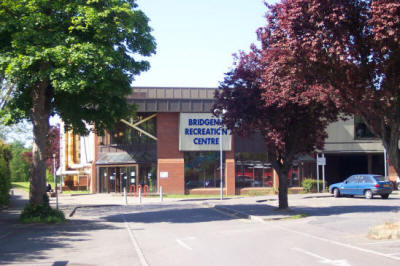
9.3.5. Sport and recreation developments in the
countryside should normally be limited to those for which such locations are
appropriate. Uses such as golf courses, driving ranges, horse related
activities, commercial leisure developments etc are subject to appropriate
safeguards in line with National Guidance and the Environmental Policies of
the Plan. The weight of any restriction will increase with the environmental
importance of the location within which the development is proposed. The
conversion and improvement of suitable redundant buildings to sport and
recreational usage will also be encouraged providing they do not conflict
with Policy RC1.
9.3.6. It is important that the needs of minorities are
not overlooked; the disabled, the elderly and those without access to a car.
By adapting existing facilities, and by the careful design of new ones, the
recreation needs of the disabled and the elderly can be met. Those members
of the community without cars obviously can only participate with ease in
recreation where the facilities are close of their homes or to a public
transport route. However, even the latter alternative may involve
prohibitive costs, especially for family groups. Accordingly:-
9.3.7. SPORT AND RECREATION FOR THE
DISABLED AND ELDERLY
POLICY RC2
SPORT AND RECREATION PROPOSALS WILL BE FAVOURED WHERE THEY MEET THE NEEDS OF
THE DISABLED AND ELDERLY: -
1. BY ADAPTING EXISTING FACILITIES AND GIVING CAREFUL CONSIDERATION TO THE
PROVISION OF NEW FACILITIES; AND
2. BY TAKING DUE ACCOUNT OF PUBLIC TRANSPORT SERVICES WHEN CONSIDERING THE
PROVISION OF NEW FACILITIES.
9.3.8. Existing recreation facilities, such as playing
fields, allotment gardens, play areas etc, whether users of land or
buildings built or adapted for recreational use, represent substantial
investments. They can, however, come under pressure for replacement by, for
example, housing, industrial or retailing developments. Accordingly:-
9.3.9. PROTECTION OF RECREATIONAL
FACILITIES
POLICY RC3
DEVELOPMENT WHICH ADVERSELY AFFECTS AN EXISTING OR PROPOSED RECREATION
FACILITY, WHETHER FORMAL OR INFORMAL, WILL BE PERMITTED ONLY WHERE:-
1. THE DEVELOPER IS PREPARED TO PROVIDE ALTERNATIVE FACILITIES OF EQUIVALENT
COMMUNITY BENEFIT; OR
2. IN THE VIEW OF THE LOCAL PLANNING AUTHORITY THERE IS AN EXCESS OF SUCH
PROVISION IN THE AREA; OR
3. FACILITIES CAN BEST BE RETAINED AND ENHANCED THROUGH THE REDEVELOPMENT OF
A SMALL PART OF THE SITE.
9.3.10. There may be exceptional circumstances where a
recreational facility is redundant due to an excess of provision (due for
example to population decline or general social change) and in such cases
retention would not be necessary. Similarly, there may be instances where
the siting of a particular facility is no longer appropriate, and
re-location might be beneficial.
9.3.11. Sport and recreational facilities are provided by
a variety of different agencies, with the Council playing a particularly
important role. In the present economic situation, the opportunities for
increasing the supply of new facilities are very limited. However, some
facilities owned or used by organisations are not open to use by the general
public and are not used to their full capacity. Joint provision and
management can provide the opportunity to optimise the use of these
facilities by making them available to the community, and can be seen as a
means of sharing the costs of running them. As such:-
9.3.12. MULTI-USE OF SPORT AND
RECREATIONAL FACILITIES
POLICY RC4
SPORT AND RECREATION PROPOSALS WHICH RESULT IN THE WIDER COMMUNITY USE OF
BUILDINGS AND LAND WILL BE FAVOURED.
9.3.13. In this context, public multi-use of existing and
proposed facilities has the double benefit of avoiding duplication of
expenditure and protecting other land from development. Given the overall
shortage of suitable large flat sites particularly in the Valley areas, the
Council considers it essential to make the maximum use of existing resources
and facilities with regard to playing fields and ancillary facilities.
Policy RC4 encourages wherever possible, the provision of dual use
facilities, thereby increasing recreation opportunities as well as
economising on the uptake of development land.
9.4. Open Space
9.4.1. ‘Open Space’ is a generic term that encompasses
Public Open Space (POS) and Outdoor Playing Space (OPS). Public Open Space
(POS) is a useable green area where the public have a legitimate right of
informal enjoyment. Outdoor Playing Space (OPS) consists of Outdoor Sport
and Children’s Playing Space as defined by the NPFA. The NPFA defines
Outdoor Playing Space as “space which is available for sport, active
recreation or children’s play, which is of suitable size and nature for its
intended purpose, and safely accessible and available to the general public.”
9.4.2. Policy RC5 sets out the basis upon which the Open
Space requirement of all new housing developments will be assessed. It will
apply to sites identified in the Plan and other housing sites which may
emerge over the Plan Period.
9.4.3. PROVISION OF OPEN SPACE FOR
NEW HOUSING DEVELOPMENTS
POLICY RC5
PROVISION OF A SATISFACTORY LEVEL AND STANDARD OF OUTDOOR SPORT AND
CHILDREN’S PLAYING SPACE AND PUBLIC OPEN SPACE WILL BE REQUIRED FOR ALL NEW
HOUSING DEVELOPMENTS.
9.4.4. The Council has become increasingly aware of the
problems associated with the lack of Open Space in residential areas.
Although the Council plays a major part in the provision of these
facilities, there is a need for developers to include these facilities in
their proposed housing schemes.
Policy RC5 is designed to ensure that as the
size and the population of settlements increase, the provision of Open Space
keeps pace. In this respect, the Council will expect developers to enter
into Planning Agreements/Obligations under Section 106 of the Town and
Country Planning Act, 1990, where contributions will be required to remedy
local or strategic deficiencies in recreation provision, and thereby secure
the appropriate provision of such facilities; which shall be provided in
accordance with NPFA standards, and the County Borough Council’s
Supplementary Planning Guidance.
9.4.5. The Council’s proposed minimum standard of 2.4
hectares per 1000 population for ‘Open Space’ is derived from the NPFA’s
recommendation for Outdoor Playing Space which includes Children’s Playing
Space and Outdoor Sport and an additional requirement for Public Open Space.
This minimum standard should be met or exceeded wherever possible in
all new housing developments. Developers will be required to secure the
provision of open space and other recreational facilities in accordance with
planning conditions or through planning agreements/obligations. The exact
requirements for each proposal will, thereby, be subject to agreement with
the Council, and will address any community loss and/or increased deficiency
in recreation provision resulting from the proposed development(s). Areas
with existing deficiencies in recreation facilities are highlighted in the
ensuing Policies of the UDP, and further baseline information regarding
deficiencies and proposed provision of facilities can be obtained from the
Council’s published SPG on ‘Public Open Space and Development’. Together,
these documents provide clear guidance to developers as to what will be
reasonably expected of them when the Council is considering open space
provision in an area in relation to their proposals. Also, detailed design
guidance and information on the amount and type of open space preferences
are set out in greater detail in the relevant SPG document(s).
9.4.6. In some circumstances the particular
characteristics of the site or of the development proposed may make a
variation from the normal appropriate provision. For example, where
development comprises or includes sheltered housing a more appropriate
on-site amenity provision will be sought in place of the normal recreational
space appropriate to family housing. Provision of Open Space for special
needs groups housing will also be considered having regard to the needs of
the occupiers of those developments.
9.4.7. Outdoor Playing Space provision will normally be
sought within the development site. In certain circumstances where
application of the Council’s standards are impractical e.g. the site is too
small to provide a meaningful area of Outdoor Playing Space or perhaps where
a site is adjacent or near to an existing area of Outdoor Playing Space
capable, by improvement, of satisfying the Outdoor Playing Space
requirements of the proposal, the Council may be prepared to negotiate
off-site contributions directly related to the development. Furthermore,
where a number of residential developments are proposed in one locality,
consideration could be given to combining their Outdoor Playing Space
provision to form a larger, more useable and more manageable area.
9.4.8. In all negotiations with developers the Council
will satisfy itself that the Outdoor Playing Space benefits sought are
reasonably related to the development and that the need for them arises from
the development.
9.4.9. The Council’s Policy and Strategy Document
“Development and Management of Children’s Play Areas” (Nov 1998) sets the
parameters for a review of the level and standard of the current service and
provides the framework for its future management and development. Periodic
reviews of this policy will be carried out to ensure the continued evolution
and improvement in line with developments in children’s play.
9.5. Outdoor Sport (youth & adult use)
9.5.1. The NPFA recommended advisory standard for Outdoor
Sport is 1.6 -1.8 hectares per thousand of the population. Outdoor Sport
includes:-
-
Facilities such as pitches, greens, courts, athletics
tracks and miscellaneous sites such as croquet lawns and training areas
owned by the County Borough Council;
-
Facilities described in 1 within the educational sector and which, as a
matter of practice and policy, are available for public use;
-
Facilities described in 1 which are within the voluntary, private,
industrial and commercial sectors, and serve the leisure needs for outdoor
recreation of their members, or the public.
9.5.2. Included within this standard is a specific
allocation of 1.2 hectares per thousand population for pitch sports. Playing
fields and their associated facilities are the most extensive type of formal
outdoor recreation facility, placing the greatest demand on the amount of
land required. “Playing fields” in this context is used as a generic term
for the space required for a number of organised recreational activities
such as rugby, football, cricket, hockey, tennis, netball, bowls etc.
9.5.3. The need to target scarce resources means that the
upgrading of existing pitches is currently taking priority over provision of
new ones. New pitches will be developed on the land identified as resources
become available, but this is likely to be limited within the plan period.
More importantly, Policy RC6 gives the land long-term protection.
9.5.4. Ideally, the Plan should satisfy the recommended
advisory standards by settlement in order to ensure a reasonable
distribution of facilities. However, playing fields and their ancillary
facilities require large areas of flat land which is at a premium. In view
of land opportunities and constraints, and of the need to ensure reasonable
distribution of facilities throughout the County Borough:-
9.5.5. GENERAL PROVISION OF PLAYING
FIELDS & ASSOCIATED FACILITIES
POLICY RC6
LAND WILL BE ALLOCATED IN THE FOLLOWING LOCATIONS FOR THE PROVISION OF
PLAYING FIELDS AND ASSOCIATED FACILITIES:-
RC6(1) PART OF THE INTERNATIONAL COLLIERY RECLAMATION
SITE, BLAENGARW; (Link
to Map 2 Central)
RC6(2) PART OF THE FORMER CENTRAL WASHERY SITE, OGMORE
VALE; (Link to Map 12 Central)
RC6(3) PART OF FORMER CAERAU COLLIERY, CAERAU; (Link to Map 1 Central)
RC6(4) SOUTH OF NEUADD DOMOS FARM, CWMFELIN; (Link to Map 10)
RC6(5) WEST OF TUDOR PARK, YSTRAD CELIN, MAESTEG; (Link to Map 5 West)
RC6(6) FORMER MAESTEG WASHERY SITE, MAESTEG; (Link to Map 5 Central)
RC6(7) SOUTH PLATEAU OF FORMER COEGNANT COLLIERY,
NANTYFFYLLON; (Link to Map 5 Central)
RC6(8) HEOL TY GWYN INDUSTRIAL ESTATE, NANTYFFYLLON; (Link to Map 5 West)
RC6(9) WEST OF GRASSHOLM WAY, REST BAY, NOTTAGE; (Link to Map 25 West)
RC6(10) NORTH OF LOCKS LANE, NOTTAGE; (Link to Map 29 West)
RC6(11) NEWBRIDGE FIELDS EXTENSION, BRIDGEND; (Link to Map 27)
RC6(12) HEOL WEST PLAS, BRIDGEND; (Link to Map 21 East)
RC6(13) BRYNCETHIN CLAY PITS, BRYNCETHIN; (Link to Map 15 East)
RC6(14) BRYNDU, KENFIG HILL AND PYLE; (Link to Map 19 East)
RC6(15) SOUTH OF WAUNBANT ROAD, KENFIG HILL AND PYLE; (Link to Map 20 West)
RC6(16) EAST OF CROWN ROAD, WAUN CIMLA, KENFIG HILL AND PYLE; (Link to Map 20 West)
RC6(17) MAENDY FARM, YNYSAWDRE; (Link to Map 15 Central)
RC6(18) PANDY PARK EXTENSION, YNYSAWDRE; (Link to Map 21 Central)
RC6(19) LAND BETWEEN HEOL FACH AND M4 MOTORWAY, NORTH CORNELLY; (Link to Map 19)
RC6(20) NORTH OF PENYFAI HOSPITAL, PENYFAI. (Link to Map 21 Central)
9.6. Children’s Playing Space
9.6.1. The Council is of the opinion that the play areas
to be provided by Policies RC7 and
RC8 in conjunction with those provided by
Policy RC5 will satisfy both the current under provision, and future demand,
for this type of facility over the plan period.
9.6.2. The NPFA recommended advisory standard for
Children’s Playing Space is 0.6 – 0.8 hectares per thousand of the
population. Children’s Playing Space includes:-
-
Outdoor equipped playgrounds for children of whatever
age;
-
Other designated play facilities for children which
offer specific opportunity for outdoor play, such as adventure
playgrounds, ‘street’ sport etc;
-
Casual or informal playing space within housing
areas.
9.6.3. The requirement should be achieved where
appropriate by the provision of Local Areas of Play (LAP's), Local Equipped
Areas of Play (LEAP’s) and/or Neighbourhood Equipped Areas of Play (NEAP’s)
(including kickabout areas), in locations based upon walking time, and
providing the balance as casual playing space within areas of amenity open
space within the overall development which are in ‘safe’ locations. Detailed
information on design standards will be provided as supplementary planning
guidance that accords with NPFA guidance. Over and above these
classifications the Council has identified and provided a handful of
Strategic Equipped Areas of Play (SEAP’s) which it seeks to manage for its
own purposes.
9.6.4. Whilst the provision of adequate areas of playing
space is a vital community requirement, its proper distribution and
location, as well as ease of access, is also of great importance if it is to
serve its purpose properly and to attract maximum use.
9.6.5. Children’s playgrounds can often be accommodated
on plots of land whose shape, size, or topography would be unsuitable for
other land uses. They should be sited so that they do not adversely affect
the amenity of nearby residents and are not themselves affected by proximity
to roads, railways or rivers which might cause danger to children.
9.6.6. Ideally the Council would wish to achieve the NPFA
standard throughout the County Borough. However, in many residential areas
there is an existing deficiency in play space and in some locations density
of development has meant that sufficient suitable space to construct an
equipped children’s play area is no longer available. Areas which have been
identified as being deficient in play areas are detailed in Policies
RC7 and
RC8. (Also refer to
paragraph 9.4.5 earlier). To attempt to achieve the
recommended standards:-
9.6.7. GENERAL PROVISION OF
CHILDREN’S PLAY SPACE
POLICY RC7
THE COUNTY BOROUGH COUNCIL WILL SEEK TO REMEDY THE DEFICIENCY IN CHILDREN’S
PLAY SPACE DURING THE PERIOD OF THE UDP, PARTICULARLY IN THE FOLLOWING
AREAS:-
ABERKENFIG
BRACKLA
BRIDGEND
BRYNCOCH
BRYNMENYN
BRYNTIRION
CAERAU
CAERAU ROAD;
CEFN CRIBBWR
COYCHURCH
GLYNOGWR
HEOL-Y-CYW
KENFIG HILL & PYLE BRYNDU ROAD;
LALESTON
LITCHARD
LLANGEINOR
CRAIGLAS;
MAESTEG
GARTH, NEATH ROAD, YR YSFA, BRYN CELIN, LLWYDARTH ROAD;
NANTYFFYLLON
GARNWEN ROAD, CAVAN ROW;
NEWTON DANYGRAIG, BEACH ROAD, PWLL-Y-WAUN;
NORTH CORNELLY
SOUTH & EAST;
NOTTAGE
OGMORE VALE
PANTYRAWEL
PENCOED
HENDRE ROAD, EAST PENCOED;
PENYFAI
PORTHCAWL
WEST DRIVE/ESPLANADE, LOCKS COMMON, SANDY BAY;
PONTRHYDYCYFF
PONTYCYMMER
OXFORD STREET;
SHWT
SOUTH CORNELLY
WERN FAWR
WYNDHAM
9.6.8. GENERAL PROVISION OF
KICKABOUT AREAS
POLICY RC8
THE COUNTY BOROUGH COUNCIL WILL SEEK TO REMEDY THE DEFICIENCY IN KICKABOUT
AREAS DURING THE PERIOD OF THE UDP, PARTICULARLY IN THE FOLLOWING AREAS:-
ABERKENFIG
BETTWS
BLACKMILL
BLAENGARW
BRIDGEND
BRYNCETHIN
BRYNMENYN
BRYNTIRION
CAERAU
CEFN CRIBBWR
COITY
COYCHURCH
CWMFELIN
EVANSTOWN
KENFIG
LALESTON
LLANGEINOR
MAESTEG
NANTYFFYLLON
NANTYMOEL
NEWTON
NORTH CORNELLY
NOTTAGE
OGMORE VALE
PANTYRAWEL/LEWISTOWN
PENCOED
PONTRHYDYCYFF
PONTYCYMMER
PORTHCAWL
PYLE
SOUTH CORNELLY
TONDU
WYNDHAM
9.7. Public Open Space
9.7.1. Public Open Space is an important facility
associated with residential areas and should always be provided on-site
however small the housing scheme. It can make a significant visual and
environmental impact in urban areas and in some instances can also provide
for passive or informal recreation. Regardless of their scale and use, areas
identified as Public Open Space have a major role to play in improving the
quality of urban life.
9.7.2. In view of the difficulty involved in measuring
all Public Open Space areas in practice and identifying demand for such
facilities, it is not possible to propose a specific standard as Public Open
Spaces are often associated with more formal recreational facilities such as
playing fields and playgrounds.
9.7.3. Incidental parcels of land on, for example,
residential development sites can be landscaped and provided with seating
facilities to create pleasant spaces to enjoy passive recreation. In
addition, Public Open Space often adds to the visual and environmental
quality of the built environment through contrast with adjacent development.
It is therefore proposed:-
9.7.4. GENERAL PROVISION OF PUBLIC
OPEN SPACE
POLICY RC9
THE COUNTY BOROUGH COUNCIL WILL PROMOTE THE PROVISION OF PUBLIC OPEN SPACE
WHEREVER SUITABLE OPPORTUNITIES ARISE. IN THIS RESPECT, THE FOLLOWING AREAS
ARE SPECIFICALLY ALLOCATED:-
RC9(1) THE COED, MAESTEG; (Link to Map 5 Central)
RC9(2) BLAENGARW AND PONTYCYMMER LINEAR PARK; (Link to Map 2 Central)
RC9(3) PART OF FORMER WESTERN COLLIERY SITE, NANTYMOEL; (Link to Map 7 Central)
RC9(4) OGMORE VALLEY LINEAR PARK; (Link to Map 7 Central)
RC9(5) PART OF FORMER CENTRAL WASHERY SITE, OGMORE VALE; (Link to Map 12 Central)
RC9(6) DIMBATH AVENUE, GLYNLLAN, BLACKMILL; (Link to Map 12 Central)
RC9(7) THE COLLWYN, PYLE; (Link to Map 19 Central)
RC9(8) HEOL WASTAD WAUN, PENCOED; (Link to Map 22 East)
RC9(9) NANT HEOL Y GEIFR, PENCOED; (Link to Map 22 East)
RC9(10) PWLL-Y-WAUN, PORTHCAWL; (Link to Map 29 East)
RC9(11) LOCKS COMMON, PORTHCAWL; (Link to Map 29 West)
RC9(12) TREMAINS WOOD, BRACKLA, BRIDGEND; (Link to Map 28 West)
RC9(13) BRACKLA RIDGE AND ASSOCIATED AREAS, BRIDGEND; (Link to Map 27 East)
RC9(14) LAND ADJACENT TO WORDSWORTH AVENUE AND HEOL Y NANT, CEFN GLAS;
(Link to Map 27)
RC9(15) LAND WEST OF THE PROPOSED COMMUNITY CENTRE, PENYFAI; (Link to Map 21 Central)
RC9(16) LAND ADJACENT TO THE PHEASANT, PENYFAI; (Link to Map 21 Central)
RC9(17) PART OF FORMER COITY SIDINGS, BRIDGEND; (Link to Map 21 Central)
RC9(18) LAND AT MAENDY FARM, YNYSAWDRE. (Link to Map 15)
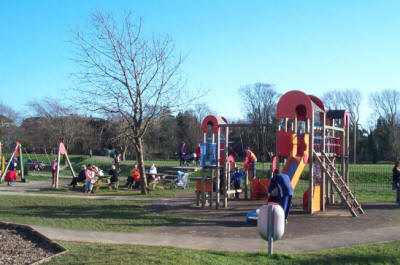
9.7.5. In considering the development of land for
residential purposes, due account should be taken of the need to provide
Public Open Space in accordance with
Policy RC5 (and, where appropriate,
Policy RC9).
9.8. Informal Recreation
9.8.1. It is generally recognised that informal
recreation is the most popular form of outdoor leisure time activity in
Britain and as leisure time increases, the demand for informal recreation
facilities will also grow. While many local people are aware of the informal
recreational opportunities in their area, they are often not aware of the
facilities immediately beyond their local environs. Accordingly, the
potential for informal recreation is not being fully realised. The further
development of existing and new facilities, as well as publicity, is
therefore required to encourage more members of the community and visitors
to use and enjoy the natural environment.
9.8.2. The Council provides a number of recreational
areas which allows the visitor the opportunity of enjoying the countryside
at a number of different levels from formally managed country parks to
informal picnic sites and footpaths. Bryngarw House is the site of the only
Country Park in the County Borough. It has forty six hectares of ground for
recreational use in the form of walks and picnic sites through its varied
woodland, gardens and along the banks of the Garw River. The Park has the
role of acting as a “gateway” into the wider countryside and improving
public awareness of the countryside in general. Sites managed more
specifically for another purpose, such as tourism and heritage sites, also
offer informal recreational opportunities. Included in this category are the
Ogwr Ridgeway Walk, Coed Morgannwg Way, Craig Y Aber, Park Pond Nature
Reserve and various sites along the Glamorgan Heritage Coast, including
Dunraven Park.
9.8.3. For a great many people the ability to walk, sit,
look at a view, to picnic or simply to visit places is their main enjoyment
of the countryside and forms a major part of their informal recreation
activities. The most popular areas for this type of activity are the
uplands, river corridors and forestry areas of the County Borough as well as
the coastal regions and the villages and countryside of the County Borough.
9.8.4. It is considered that the potential for nature
trails, signposting, picnic areas, scenic country drives, small car parks
etc, is not being fully realised throughout the County Borough and further
development and publicity of such facilities is required to encourage people
to enjoy the countryside. Therefore:-
9.8.5. GENERAL PROVISION OF INFORMAL
RECREATIONAL AREAS
POLICY RC10
THE COUNTY BOROUGH COUNCIL WILL PROMOTE AND ENCOURAGE THE USE OF THE
FOLLOWING AREAS FOR INFORMAL RECREATION:-
RC10(1) CWMDU BOWL & FORMER ST. JOHN’S COLLIERY; (Link to Map 5 East)
RC10(2) THE DARREN VALLEY; (Link to Map 5 East)
RC10(3) CWM SYCHBANT; (Link to Map 5 West)
RC10(4) MYNYDD CAERAU; (Link to Map 1 East)
RC10(5) GARN WEN; (Link to Map 5 West)
RC10(6) BLAENOGWR; (Link to Map 3 Central)
RC10(7) WAUN CIMLA; (Link to Map 20 Central)
RC10(8) CRAIG Y PARCAU; (Link to Map 27 Central)
RC10(9) Y CWM BLAENGARW; (Link to Map 2 Central)
RC10(10) GARW FECHAN; (Link to Map 11 Central)
RC10(11) CEFN MACHEN WOODS; (Link to Map 15 East)
RC10(12) CWM DIMBATH; (Link to Map 12 East)
RC10(13) CWM Y FUWCH; (Link to Map 7 Central)
RC10(14) TONDU IRONWORKS; (Link to Map 15 West)
RC10(15) VILLAGE FARM WOODLAND AND POND; (Link to Map 19 East)
RC10(16) FORMER GARW COLLIERY SITE, BLAENGARW; (Link to Map 2 Central)
RC10(17) PART OF FORMER COEGNANT COLLIERY SITE, CAERAU. (Link to Map 1 Central)
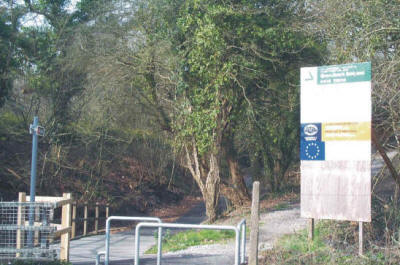
9.9. Public Rights of Way
9.9.1. There is a significant and growing use of Public
Rights of Way for recreational use. The Countryside Council for Wales
regards the Right of Way network as the single most important means by which
the public can enjoy the countryside. Its document “Priorities in Action”
identifies the improvement of Public Rights of Way as a key task. The
Council fully supports the aim of the Countryside Council for Wales to
create a Welsh network of Public Rights of Way, and will work with this
organisation, the Ramblers Association, and Groundwork Bridgend in promoting
an access network within the County Borough.
9.9.2. The majority of paths in the County Borough have
existed for at least one hundred years. Their purpose was to link
communities together and often to provide routes from peoples homes to their
place of work. The system of paths evolved in a vastly different social and
economic era and consequently bear little relationship to present land use
patterns or the demand, existing and potential, for their use.
9.9.3. There are over 300 miles of footpaths and nearly
100 miles of bridleways in the County Borough. It is the responsibility of
the Council to keep these routes in reasonable repair and deal with
landowners who wilfully obstruct or neglect the routes on their land. The
Council will investigate the possibility of providing new Rights of Way in
acknowledgement that these are very popular recreational facilities.
Priority will be given to those routes which are relevant to present day
recreational needs, in particular those within walking distance of
residential areas and those areas of the open countryside which are readily
accessible by car and public transport.
9.10. Community Routes
9.10.1. Although the existing footpath network throughout
the County Borough is extensive, the routes available for other forms of
non-motorised transport are limited both in number and distribution. Whilst
a number of “Community Routes” are already in existence, the Council
proposes that a further number of “Community Routes” will be created
throughout the County Borough to provide safe routes within, and between,
settlements and points of interest. These routes have suitable gradients and
surfaces to facilitate their use by all members of the community and will
provide the opportunity for linear green spaces to be created in urban
areas. Where possible these routes will utilise the existing Rights of Way
network, derelict land, river corridors and former transport corridors which
include disused railway land.
9.10.2. GENERAL PROVISION OF
COMMUNITY ROUTES
POLICY RC11
THE COUNTY BOROUGH COUNCIL WILL PROMOTE AND ENCOURAGE THE PROVISION OF
COMMUNITY ROUTES BETWEEN THE FOLLOWING LOCATIONS: -
BLACKMILL AND EVANSTOWN;
BLAENGARW AND BRYNMENYN;
BRIDGEND AND BRYNMENYN;
CAERAU AND BRYNMENYN;
BRYNMENYN AND WERN TARW VIA HEOL Y CYW;
KENFIG POOL AND BRYNMENYN, VIA WAUN CIMLA;
NANTYMOEL AND BRYNMENYN.
9.10.3. The Council has the responsibility for
identifying the location of each route and will also examine the possibility
of expanding the network of Community Routes throughout the County Borough,
whilst Groundwork Bridgend will be involved in partnership with the Council
to secure finance and develop the Community Routes. In this sense, the
routes of all Community Routes designated under
Policy RC11, as shown on the
Proposals Map, except those sections which have already been constructed,
and/or have the benefit of planning permission, should be regarded as being
‘aspirational’ on the part of the Council. From the Council’s viewpoint, the
routes of all Community Routes, as shown on the Proposals Map, are
‘indicative of their most desirable locations in principle’ on the basis of
the best available information available to it when the UDP was prepared. In
due course, the final locations of all Community Routes will reflect the
outcome of planning applications for their proposed development, which will
reflect the Local Planning Authority’s decisions having taken into account
all detailed material planning considerations, for example, local amenity
considerations, drainage investigations, accessibility audits etc. It is the
holistic approach taken by the Council to Community Route provision in the
County Borough which the UDP seeks to convey.
9.11. Cycle Paths
9.11.1. Cycling as a means of transport and as a
recreational activity is becoming increasingly popular. However, the
increase in traffic has made the conditions on many roads less attractive
through, for example, increased noise and pollution, and indeed dangerous
for cyclists.
9.11.2. Most highway improvements over the last few
decades have been designed either to speed up the flow of vehicles or
increase the capacity of roads, both of which have had serious repercussions
for cyclists. Of particular concern are roundabouts, gyratories, one way
systems, and slip roads. Highway engineers should consider the needs of
cyclists when designing road layouts. Ideally cyclists should have their own
carriageway taken from the roadspace or their own paths, completely
separated from the highway.
9.11.3. Suitably located cycle routes offer great
potential for local journeys to work, shopping, and safe routes to schools,
as well as for recreational use, and can have a wider potential use as a
tourist attraction. In assessing the potential of any proposed cycle route,
the Council will consider the following criteria:-
-
Is the route accessible to the local community for
journeys to work, shops, school or recreation or for recreation itself?
-
Can it be easily linked to the wider cycle path
network?
-
Will it take advantage of the opportunities presented
by, for example, land reclamation or highway improvement schemes?
-
Does it have potential as a tourist attraction in its
own right or provide access to, or links between, sites of tourist
interest?
9.11.4. In the long term, in addition to the Community
Routes detailed in Policy RC11, the Council intends to provide a variety of
cycle paths throughout the County Borough. During the timespan of the Plan:-
9.11.5. GENERAL PROVISION OF CYCLE
ROUTES
POLICY RC12
THE COUNTY BOROUGH COUNCIL WILL PROMOTE AND ENCOURAGE THE PROVISION OF CYCLE
ROUTES BETWEEN THE FOLLOWING LOCATIONS WHERE PRACTICABLE:-
BRIDGEND AND PENCOED;
BRIDGEND AND BRYNMENYN;
BRIDGEND AND PORTHCAWL;
BRIDGEND AND THE VALE OF GLAMORGAN.
9.11.6. The Council will prepare Planning Briefs
indicating the precise location of each route following close consultation
with various bodies including the Vale of Glamorgan County Borough Council
regarding the adjoining Cycle Route Network. In many cases there will be
opportunities to combine these cycle paths with community routes.
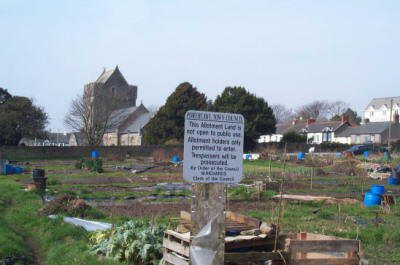
9.12. National Cycle Network
9.12.1. The Council are working in partnership with the
South Wales Cycle Route Consortium in order to implement and promote the
National Cycle Network Millennium Project in South Wales, where the route
between Kidwelly and Newport is known as the Celtic Trail/Lon Geltaidd. The
Route runs east to west across the County Borough, from the eastern boundary
at Gilfach Goch through Blackmill, Brynmenyn, Tondu and Kenfig Hill. There
will be significant tourism and economic benefits of implementing the route
as well as benefits to the local community in providing a sustainable
transport and leisure route. Development proposals for accommodation or food
and drink establishments associated with the needs of cyclists using the
national cycle network will be supported in principle. However such
proposals must also accord with other relevant policies of the Plan, in
particular, the policies contained in the Environment, and Tourism and
Leisure Chapters of the UDP, and any other pertinent development control
criteria.
9.12.2. PROVISION FOR THE NATIONAL
CYCLE NETWORK
POLICY RC13
THE COUNTY BOROUGH COUNCIL WILL PROMOTE AND ENCOURAGE THE PROVISION OF THE
NATIONAL CYCLE NETWORK BETWEEN THE FOLLOWING LOCATIONS WHERE PRACTICABLE: -
BLACKMILL AND EVANSTOWN;
BRYNMENYN AND BLACKMILL;
KENFIG HILL AND BRYNMENYN;
BRIDGEND AND BRYNMENYN;
BRIDGEND AND PORTHCAWL;
KENFIG HILL AND PORTHCAWL.
9.12.3. Where land is owned by a third party it is the
policy of the Council to secure an interest in the land by means of either
Footpath Creation Agreements or Footpath Creation Orders. The newly
registered public footpaths are then converted to Cycle Tracks under the
terms of the Cycle Tracks Act 1984. Both Public Footpaths and Cycle Tracks
are defined as Highways in the Highways Act 1980. Where the route runs over
land which is Highway Verge Section 65 of the Highways Act 1980 enables the
Council to construct a cycle track in or by the side of a highway
maintainable at the public expense. It will not be necessary, therefore, to
make a Creation Order for that particular section of the route.
9.13. Allotment Gardens
9.13.1. Allotments have the dual function of being an
important form of adult recreation as well as a useful source of fresh
produce.
9.13.2. The provision of allotments in the County Borough
is related to expressed demand. At present there is no evidence of any
excess demand that cannot be met from the existing supply of allotments. Due
to the uncertainty of the demand for allotments, actual sites for further
allotment gardens will not be allocated in the Plan. However:-
9.13.3. PROVISION FOR ALLOTMENT
GARDENS
POLICY RC14
THE PROVISION OF ALLOTMENTS ON SUITABLE SITES THROUGHOUT THE COUNTY BOROUGH
WILL BE FAVOURED WHEREVER A PROVEN NEED FOR SUCH FACILITIES IS DEMONSTRATED.
9.13.4.
Policy RC14 will operate, providing locational
and detailed site and environmental considerations are satisfactory, and
such sites are not otherwise required for any alternative specific use
proposed in the Plan.
9.13.5. Given the progressive loss of ‘Private’ and
‘Temporary’ allotment sites, every endeavour should be made to provide a
replacement site. This reflects the Council’s desire to ensure the
availability of, and adequate protection for, good quality open spaces
within our urban areas.
9.13.6. PROTECTION OF ALLOTMENT
GARDENS
POLICY RC15
THE DEVELOPMENT OF ALLOTMENTS FOR OTHER USES WILL NOT BE PERMITTED UNLESS
ALTERNATIVE EQUIVALENT PROVISION, OF SIMILAR SIZE AND QUALITY, CAN BE MADE
IN THE VICINITY, OR IT CAN BE DEMONSTRATED THAT THE ALLOTMENTS ARE SURPLUS
TO LONG TERM REQUIREMENTS.
9.13.7. Replacement sites are required to be not normally
more than three quarters of a mile from the centre of demand, although this
distance may be increased if the plot-holders are willing to travel further.
9.14. Indoor Recreation Facilities
9.14.1. Multipurpose indoor recreation centres have done
most to influence the public’s perception of expected and desired
opportunities to play and learn sport. They provide opportunities for both
individuals and groups of all ages and abilities to participate in a wide
variety of recreational activities. Unmet demand for sports halls in the
County Borough, as identified by the Education and Leisure Directorate,
justifies the need for the identification of an additional facility at
Brackla, Bridgend. Therefore:-
9.14.2. PROVISION OF A MULTI-PURPOSE HALL AT BRACKLA
POLICY RC16 (Link to Map 27 East)
DEVELOPMENT OF A MULTI-PURPOSE HALL AT BRACKLA WILL BE FAVOURED.
9.14.3. In addition to the main recreation centres, it is
recognised that the smaller more localised Community Centres have an
important role to play in the provision of recreational facilities. As their
functions extend beyond the field of sport and recreation, all policies
relating to this topic have been included in the Chapter relating to Social
and Community Facilities.
<<
Previous Chapter |
Next Chapter
>> |