15.1. Justification of Part 1 Policy
15.1.1. A Regeneration Strategy provides a mechanism whereby the policies and
proposals of the UDP can be implemented in a comprehensive and focused way in a
defined location. Often, it is most effectively promoted through a partnership
of public sector and private/commercial interests, with a significant amount of
financial and resource investment by all parties based on agreed funding
programmes. A Regeneration Strategy will also have received general public
support through a process of participation and community involvement.
15.1.2. In this respect, a Regeneration Strategy can have a long lead-in time
and implementation period. It will deal with such matters as improvements to the
physical and cultural environment; community development; the building-up, and
longer term maintenance, of business confidence; the attraction of new
investment; the redefinition of an area’s image; and the revival of public
interest and pride in the locality.
15.1.3. It can, however, be easily compromised by inappropriate development
which runs counter to, or destroys future options for, planned developments.
Policy 21 is designed to prevent this.

Part 2
15.2. Introduction
15.2.1. Regeneration is concerned with both urban and rural areas and can be
defined as a process of investing in an area where there is, or has been, an
identified decline to improve and enhance the physical, economic and social
fabric. Investment in transport, employment, housing, retailing, tourism and the
environment can all lead to the regeneration of an area. Regeneration therefore
also falls to be considered under the various landuse topics of the UDP which
impact on it. In addition, investment in employment and educational skills and
human resources can also lead to the regeneration of an area.
15.2.2. Regeneration is often most effectively promoted through a partnership of
public sector and private/commercial interests, with a significant amount of
financial and resource investment by all parties based on agreed funding
programmes. In this respect, capital investment programming is the budgeting
tool used to schedule the construction and financing of regeneration works,
although it must be borne in mind that the availability of such finance is often
heavily dependent upon grant aid from European and national sources.
15.2.3. The establishment of a strategic partnership between public, private and
voluntary agencies is again often the key to the realization of area based
regeneration initiatives. Community participation and involvement in the
planning and regeneration of an area is important for initiatives to engender
public acceptance.
15.2.4. Finally, physical regeneration involving the reuse of previously
developed land is viewed by the government as a key objective in creating a more
sustainable pattern of development. The government supports the concentration of
development for uses which generate a large number of trips in locations
supported by good public transport facilities, for example in town centres. The
overall preference is for the development of land within urban areas, especially
on previously developed ‘brownfield’ sites, before considering the development
of greenfield sites.
15.2.5. Key objectives include:-
Strategic perspective
15.2.6. It is vital that the Council maintains a strategic framework for
regeneration within which individual area-focused and thematic programmes can be
pursued. Any strategic framework should seek to:-
-
Promote a holistic approach to regeneration
addressing the broad range of economic, social and environmental issues
facing local communities;
-
Identify strategic objectives and priorities;
-
Integrate other key Council strategies and plans
(including the Sustainable Economic Development Strategy, the Education
Strategy, Children’s Services Plan, the Social Care Plan, the Housing
Strategy & Operational Plan and Crime Reduction Strategy);
-
Build on existing regeneration activities;
-
Take account of the changing demands and requirements
of external funding programmes;
-
Establish agreed action plans matched to resources
and with clear timescales for implementation and review.
Internal co-ordination
15.2.7. The County Borough Council will organise and co-ordinate regeneration
activities internally across its Directorates and traditional service areas by:-
-
Targeting of finite resources, including staff time,
on strategic priorities, particularly in relation to geographic areas;
-
Managing the level of resources, range of expertise
and time required to maintain a high level of activity on regeneration
initiatives;
-
Controlling budgets to facilitate inter-directorate
working and to ‘draw down’ external funding.
External co-ordination
15.2.8. Successful regeneration requires a suite of investments that no single
agency or sector can provide. In order to tackle the range of problems and to
bring sufficient resources to the table, the County Borough Council will work in
partnership with other agencies. This will involve:-
-
The identification of the Council’s “strategic”
partners;
-
The development of a partnership approach;
-
The involvement of developers, investors, landowners
and the voluntary sector in regeneration strategies;
-
Co-ordination with neighbouring Councils.
Community involvement
15.2.9. Community involvement is increasingly being recognised as a key
ingredient in successful regeneration. This involves:-
-
Establishing what is meant by ‘community involvement’
in different contexts;
-
Identifying who represents the community;
-
Involving disadvantaged/excluded groups;
-
Sustaining long-term involvement by the local
community;
-
Reconciling the community’s and Council’s agenda;
-
Identifying the time and resource demands on the
Council in seeking to involve local communities actively in regeneration
initiatives.
15.3. Regeneration Strategies in the County Borough
15.3.1. For Bridgend County Borough a number of strategies have been drawn up
with the aim of regenerating specific areas. This is seen as an essential
element in improving the quality of life by enhancing the overall attractiveness
of the Borough as a place in which to live, work, shop and relax in the security
of one’s chosen environment.
15.4. Bridgend Town Centre Regeneration Strategy
15.4.1. In 1995, in response to the opportunities afforded by an improved
highway network and to concerns that the town centre was not achieving its full
potential, Ogwr Borough Council and Mid Glamorgan County Council commissioned
Ove Arup and Partners to carry out a comprehensive review of its economic and
regeneration potential.
15.4.2. The study was inherited by Bridgend County Borough Council in 1996. The
results confirmed that there is potential to promote the regeneration of the
town centre. Ove Arup therefore drew up a broad regeneration strategy embracing
the development of new sites, proposals for the management of traffic,
environmental improvements and a cultural approach.
15.4.3. It was felt that the promotion of the centre requires a coordinated
programme of public and private sector investment whose objectives are to:-
-
Improve the town centre environment;
-
Sustain business confidence;
-
Attract new investment;
-
Redefine the town centre’s image.
15.4.4. An implementation and funding plan was produced. The success of the
regeneration programme requires a partnership approach to ensure a wide range of
funding sources together with co-ordination of resources and approach to Town
Centre regeneration in Bridgend. This is evidenced in the appointment in
September 2002 of a Regeneration Projects Officer for Bridgend Town Centre which
is a post jointly funded by BCBC and the Welsh Development Agency.
15.4.5. The proposed development strategy for the town centre comprises the
development of strategic sites, Elders Yard, Nolton Street area, British Telecom
site, and Allotment Gardens. Other projects focus on cultural and environmental
projects, including the creation of a pedestrian environment and the management
of traffic. The development sites and proposed projects are detailed further
under the relevant topic chapters particularly retailing, transportation and
regeneration.
15.5. Bridgend M4 Corridor Strategy
15.5.1. In May 1996 Planning and Development Consultants EDAW produced an
economic development strategy for the M4 corridor area. It covers an area
stretching from Pencoed in the east along the M4 corridor and ending at Pyle/Cornelly
in the west. The study focuses on the industrial sector and associated projects
and programmes. The strategy is based on a wide range of programmes covering:-
-
Industrial sites and estates;
-
Business development and training;
-
Tourism; and the
-
Bridgend town centre and neighbourhood centres.
15.5.2. The strategy makes recommendations and identifies projects for
implementation between 1996-2006 with key partners in the private, public and
voluntary sectors. Realizing the potential of the M4 corridor areas depends upon
ensuring that an appropriate implementation programme is in place to manage and
coordinate the strategy. Proposed initiatives are in the areas of industrial
sites and estates, human and company resources, tourism and improvements to
neighbourhood centres including Pencoed, Aberkenfig, Pyle and Kenfig Hill.
15.5.3. The recommended initiatives and issues arising out of the strategy are
considered further under the relevant topic chapters, especially industry and
employment.
15.6. Porthcawl Resort Regeneration Strategy
15.6.1. In July 2003, CDN Planning, in association with Halcrow and Alder King,
were appointed by the County Borough Council to prepare a Development Brief for
the Porthcawl Regeneration Area, as allocated by
Policy REG3(2) of the UDP. The
purpose of the Brief will be to guide and inform the comprehensive development
of the whole site and to ensure there is a framework for implementation, within
the policy framework as set out in the UDP. The Council intends to adopt the
Brief as Supplementary Planning Guidance (SPG) to the UDP. The objectives of the
Brief will be to:-
-
provide detailed guidance on planning and related
matters within the Porthcawl Regeneration Area; through a Masterplan;
-
establish planning and urban design guidelines; and
to
-
provide context for developing and determining
planning applications in due course.
15.6.2. The Brief will set out the requirement for the Regeneration Area to be
comprehensively developed with a phased approach; incorporating
Policy R8(5) of
the Plan, which allocates land for a foodstore at Hillsboro Place Car Park; and
a housing allocation under
Policy H1(58). These are expected to complement the
overall aim of Policy TM7, to enhance and develop Porthcawl as the County
Borough's major tourist resort.
15.6.3. The draft Development Brief will undergo extensive public consultation
both during and after its preparation, and it is envisaged that it will be
adopted by the Council in late 2004.
15.7. Garw Valley Regeneration Strategy
15.7.1. Here the strategy is firmly based on the implementation of major and
minor schemes aimed at steadily enhancing the environment.
15.7.2. The major planks of the strategy are:-
-
Completion of the Garw Valley reclamation scheme -
this major land reclamation scheme which is WDA funded with an estimated
cost of 14 million pounds. Its purpose is to completely restore the
valley and mountainside;
-
Implementation of the Garw Valley Green Strategy - a
strategy for environmental improvements in the Garw Valley which
involves the identification of projects that will enhance and green the
valley environment;
-
Implementation of the Betws Green strategy -
environmental improvements initiative specifically directed at Betws
Village;
-
Promotion of leisure and tourism schemes based on the
heritage of the Garw Valley, including the introduction of a steam
railway by the Bridgend Valley Railway Company, with links to Bryngarw
Country Park;
-
Extension of commercial improvement area grants for
upgrading of environmental and retail premises.
15.7.3. As with other strategies, proposed initiatives with landuse implications
are detailed under the relevant topic chapters.
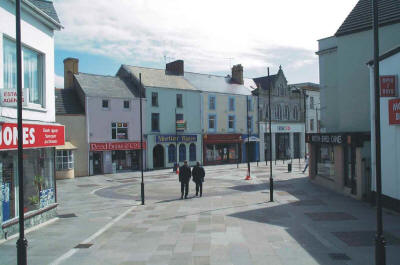
15.8. Llynfi Valley Regeneration Strategy
15.8.1. The strategy is mainly targeted at community education, social
development and employment initiatives.
15.8.2. There are 5 strategic themes set up as an agenda for action:-
-
Development of the educational skills base for the
valley inhabitants;
-
Development of local industrial/commercial sites and
the establishment of partnerships with local industry in line with the
Sustainable Economic Development Strategy;
-
Development of community capacity within local
neighbourhoods;
-
Development of an action plan to address the social
problems of the valley and in particular in respect of disaffected young
people; and
-
Development of justifiable pride in housing and the
environmental landscape both urban and rural.
15.8.3. A number of initiatives are proposed, some of which are currently
underway, to progress the strategic themes. Project finance is based upon the
opportunities available to the area for partnership bidding for Welsh Office and
European funding. As the initiatives of the strategy are mainly of a social
nature, issues arising with landuse implications are addressed in the Social and
Community Services and Facilities chapter.
15.9. Ogmore Valley Regeneration Strategy
15.9.1. On 4 June 1997, the Council approved delegated Strategic Development
Scheme monies to the amount of £10,000 for an Ogmore Valley Regeneration
Strategy Study. The Authority commissioned Groundwork Bridgend to produce a
draft study to include the following issues:-
-
Nature conservation;
-
Landscape conservation and enhancement;
-
Access and recreation;
-
Economy and land management;
-
Traffic transport issues;
-
Village centre regeneration;
-
Social issues;
-
Environmental awareness and education.
15.9.2. A draft structure for the preparation of the study based on community
involvement has now been prepared by Groundwork Bridgend. The structure contains
a programme for public consultation. A stated objective of the strategy is to
direct the actions of the partnership agencies.
15.10. Cynffig Community Economic Regeneration Strategy
15.10.1. The strategy area covers the three neighbourhood communities of Kenfig
Hill, Pyle and Cornelly. The strategy aims to provide a comprehensive response
to the complex problems of high unemployment, deprivation and social problems
which exist in those communities.
15.10.2. The strategy’s primary objectives are to:-
-
Combat social exclusion, particularly amongst
disaffected young people;
-
Improve the skills base of the local population, and
the competitiveness of local SMEs;
-
Create new and sustainable employment opportunities
for local people; and
-
Improve the physical environment of the Village Farm
Industrial Estate.
15.10.3. The strategy provides an integrated response to a defined local need -
training and employment opportunities. It seeks to integrate a wide range of
community initiatives, to provide the foundations for a regeneration strategy
for the area.
15.10.4. It is expected that the strategy will generate economic and employment
benefits by:-
-
Establishing local training infrastructures,
-
Constructing a community enterprise centre,
-
Upgrading the Village Farm Industrial Estate to make
it an attractive location for SMEs.
The strategy brings together key partners and has the support of a wide range of
public, private and voluntary sector organizations.
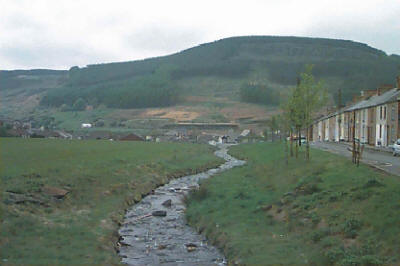
15.11. Maesteg Town Centre Regeneration Strategy
15.11.1. In 2000, Bridgend County Borough Council and the Welsh Development
Agency commissioned a Town Centre Strategy and Action Plan for revitalising
Maesteg town centre. The URBED report contains a strategy for recovery based on
5 development programmes as follows:
-
High accessibility, including reducing congestion, simplifying parking and
assisting walking and cycling in town and making the most of the rail link to
Cardiff and Bridgend
-
Pride of place, including greening of the streets, designation of a
conservation area and environmental enhancements which exploit the town’s
Edwardian character
-
Heart of the town, focusing improvements on key buildings including the town
hall and market
-
Business Development and
-
Community Enterprise
15.11.2. Since the publication of the report efforts to resource the physical
improvements highlighted in the Strategy have been successful, and have led to
the appointment of a dedicated Regeneration Project Officer for Maesteg Town
Centre in 2002. Working in partnership with the Welsh Development Agency, the
Welsh Assembly Government, Cadw and the Heritage Lottery, the County Borough
Council is developing a package of improvement projects which demonstrate an
integrated and holistic approach to the physical regeneration of the town.
15.11.3. In 2003 a Public Realm Strategy and Masterplan were produced which
outline proposals for improvements to streets and spaces throughout the town
centre. Implementation of the first phase of public realm improvements – the
Greening of Commercial Street - is planned to commence in the spring of 2004. A
range of financial incentives are in place to encourage businesses and other
town centre occupiers to invest in their properties. Feasibility studies into
the potential of key sites and building groups with a view to securing their
sustainable future are also underway.
15.12. Implementation
15.12.1. In addition to specific topic related policies, the following are
considered necessary to aid the implementation of proposals, schemes and
projects contained in the various regeneration strategies for the County
Borough:-
15.12.2. REGENERATION SCHEMES
POLICY REG1
DEVELOPMENT WHICH ASSISTS IN THE IMPLEMENTATION OF REGENERATION AND
ENVIRONMENTAL IMPROVEMENT SCHEMES WILL BE PERMITTED PARTICULARLY WHERE IT WILL
RESULT IN:-
1. THE RE-USE AND REHABILITATION OF VACANT, UNDERUSED AND DERELICT ‘BROWNFIELD’
LAND AND BUILDINGS;
2. IMPROVEMENT TO THE QUALITY OF THE URBAN ENVIRONMENT, PARTICULARLY THE
VITALITY, VIABILITY AND ATTRACTIVENESS OF BRIDGEND, PORTHCAWL AND MAESTEG TOWN
CENTRES;
3. IMPROVEMENT TO THE PROVISION OF RESIDENTIAL, COMMERCIAL, LEISURE AND TOURISM
FACILITIES;
4. A MORE EFFECTIVE AND EFFICIENT USE OF THE EXISTING HIGHWAY AND PUBLIC
TRANSPORT NETWORKS.
15.12.3. The implementation of schemes and initiatives as contained in the
regeneration strategies leads to improvements in the urban fabric. This has been
acknowledged as a major contributing factor in attracting visitors and inward
investment. The regeneration of derelict land often requires clearance and
redevelopment which results in landscaping, the creation of pedestrian areas,
including tree planting, paving and seating. The re-use of brownfield sites
provides opportunities for the provision of new and accessible facilities in the
form of mixed use developments incorporating housing, commercial and retail
uses. The outcome of this is to produce a high quality environment in the older
urban areas and on housing estates, thereby increasing the quality of life to be
enjoyed in the County Borough. Whereas Policies
REG1 and
REG3 (below) identify
five 'key' regeneration sites, all of which lie either within, or are contiguous
with, existing urban areas in the County Borough, it is not impossible that
other opportunities for regeneration of land may arise within the more rural
area of the County Borough during the currency of the UDP. The provisions of
Policy REG1 will therefore also be applied in those instances should they arise.
In this respect it should be noted that the most recent Welsh Planning Guidance
contains a clear definition of 'previously developed (or brownfield) land',
which applies to urban and rural locations alike. (Planning Policy Wales 2002
section 2.7 refers). This will be applied in the implementation of
Policy REG1.
15.12.4. DEVELOPMENT OUT OF ACCORD WITH A REGENERATION STRATEGY
POLICY REG2
DEVELOPMENT LIKELY TO HAVE AN UNACCEPTABLE OR DETRIMENTAL IMPACT ON THE
IMPLEMENTATION OF A
REGENERATION STRATEGY PROGRAMME WILL NOT BE PERMITTED.
15.12.5. The regeneration strategies form a comprehensive vision for the future
of the areas concerned. Proposals for development or actions which are contrary
to the objectives and aims of a strategy, or hinder the implementation of a
programme will be resisted. Examples of unacceptable proposals are development
which results in increased traffic congestion, out- of-town proposals which
could undermine town centre vitality and viability, poor quality design of
schemes or buildings. The cumulative impact of small-scale new development and
changes of use will also be monitored to ensure that there are no longer term
detrimental effects. It may be necessary to resist even these developments if
there is a likely risk to a strategy.
15.12.6. KEY REGENERATION AND MIXED USE SITES
POLICY REG3
THE COMPREHENSIVE DEVELOPMENT OF THE FOLLOWING SITES IS PROPOSED AS PART OF THE
REGENERATION OF THEIR RESPECTIVE AREAS OR FOR APPROPRIATE MIXED USE SCHEMES. THE
IMPLEMENTATION OF EACH WILL THEREFORE BE IN ACCORDANCE WITH A DEVELOPMENT BRIEF
AND / OR APPROPRIATE PLANNING/HIGHWAY AGREEMENTS. THESE MUST BE AGREED WITH THE
COUNTY BOROUGH COUNCIL BEFORE DEVELOPMENT COMMENCES:-
1. THE SITE OF THE FORMER MAESTEG WASHERY AND ADJACENT LAND; (Link to Map 32)
2. LAND BETWEEN THE HARBOUR AND TRECCO BAY, PORTHCAWL; (Link to Map 37)
3. LAND WEST OF MAESTEG ROAD, TONDU; (Link to Map 15)
4. PWLL-Y-WAUN, PORTHCAWL; (Link to Map 29)
5. NORTH OF LOCKS LANE, PORTHCAWL. (Link to Map 29 West)
15.12.7. The above key sites offer opportunities for comprehensive schemes which
will enhance the environment and economy of the County Borough by creating jobs,
attracting visitors or providing areas for recreation. Some sites may require
land assembly and the relocation of existing uses, others will require
comprehensive land reclamation. Their potential is best promoted by the
preparation of a development brief or appropriate highway/planning agreement,
which are the most appropriate way of resolving planning issues, such as access,
mix of uses, urban design, biodiversity or the preservation of historic
buildings and areas.
Former Maesteg Washery Site and Adjacent Land
15.12.8. This site is located immediately to the north-east of the Maesteg town
centre. The western and southern boundaries of the site are defined by the
former mineral railway line but the northern and eastern boundaries are not
defined by any physical features as the land in general is open reclaimed land,
including the former Maesteg Washery site. At present only a small part of the
total site area is in active use. A small recreational playing field is located
in the south-western corner of the site which immediately abuts a coal
distribution depot. Much of the site consists of reclaimed tips together with
open moorland.
15.12.9. In order to carry out the satisfactory reclamation of the site, a
number of tips and steep slopes would need to be reprofiled and landscaped. Any
areas of contamination arising from the legacy of the old colliery and washery
would also need to be dealt with in an appropriate manner. Educational, housing,
light industry and recreational end uses are considered appropriate for this
site. In particular, a new comprehensive school with associated playing fields
has been identified as the primary use for the developable part of the site. The
actual amount of housing and light industry may be constrained by the level of
contaminated (if any) land on the site.
Land Between The Harbour and Trecco Bay, Porthcawl
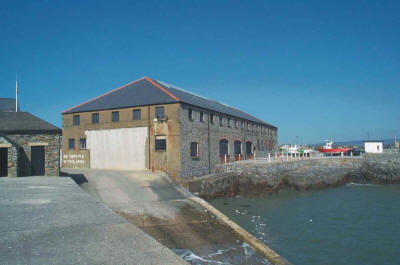
15.12.10. Policy REG3(2) supports the development of appropriately located
tourism/leisure/entertainment/commercial activities and new accommodation
facilities as part of proposals for the comprehensive redevelopment of Hillsboro
Place, Salt Lake, Coney Beach and Sandy Bay area of Porthcawl. It is expected
that a phased approach will be used. Supplementary planning guidance in the form
of a development brief will be prepared, in consultation with existing owners
and occupiers, and the public, which will detail the planning and design
requirements of the site. The tourism/leisure/ entertainment elements of the
development should reflect the wider objectives of
Policy TM7, which will
include tourist accommodation to make the resort of Porthcawl more attractive to
visitors and extend the season. The new commercial activities will include
retail development, in accordance with
Policy R8(5). The general needs
residential allocation will be referenced by
Policy H1(58). The redevelopment of
this important area of Porthcawl will contribute significantly to revitalising
the resort as a major tourist destination in South Wales.
Land West of Maesteg Road, Tondu
15.12.11. The comprehensive development and reclamation of this highly
accessible ‘brownfield’ site will bring forward 45 Ha. of land for a variety of
beneficial economic after-uses, including industrial development within use
classes B1, B2, B8, housing development, a Heritage Park, a waste transfer
station and provision of necessary new road infrastructure which will also
benefit the community as a whole by alleviating a currently constrained section
of Maesteg Road.
15.12.12. From an economic development perspective, the site provides
development opportunities offering good communication links with the M4, a
possible future rail link, together with a high quality environment. In this
respect, the site is capable of attracting a large number of prestige,
large-scale industrial users, with the potential of providing a large number of
much needed jobs.
15.12.13. The central location of the site within the County Borough and its
accessibility in terms of road and a future rail link to carry bulk materials,
also make the utilisation of part of this site the preferred locational option
for a transfer station for municipal waste.
15.12.14. In terms of promoting the area’s industrial heritage, an opportunity
exists for the provision of formal and informal recreation in connection with
the Tondu Iron Works, which is a scheduled ancient monument, and an integral
part of a proposed Heritage Park. In addition, cycle routes within the
development will form part of the National Cycle Route, and will provide further
opportunities for informal recreation.
15.12.15. The regeneration site also includes part of the Derllwyn Road
Conservation Area, and future development including any residential development,
will need to take account of this designation, especially in terms of design and
use of materials.
Pwll-y-Waun, Porthcawl
15.12.16. This 4.5 hectare site comprises Pwll-y-Waun pond to the west of the
site which should be retained and preferably enhanced by any development on the
adjacent land to the east of the site which is currently used as rough pasture
for horses. The several wooded areas within the site will allow the development
of small (0.7 hectares) B1 office-based uses in a parkland setting as well as
limited (approximately 25 dwellings) residential development with appropriate
provision of amenity open space for the setting of the pond, retaining, where
possible, the existing woodland areas. It is intended that development would
only proceed in accordance with an approved development brief.
15.12.17. The above aspects have been reflected in the site-specific uses
allocated for the site by other Policies of the UDP, namely, Policies
RC9(10),
E4(4) and
H1(88). To this end, the opportunity exists on this site to provide a
high quality mixed use scheme incorporating employment and residential
development which both retains and respects the nature conservation interest of
the pond whilst resulting in improved protection and management of the
biodiversity resource of the site.
North of Locks Lane, Porthcawl
15.12.18. The area of land comprises 5.3 hectares of arable land within the
urban area of Porthcawl, which is bounded by residential development to the
north and south with existing playing fields to the east. To the west the land
adjoins Lock`s Common, a visually important area of amenity open space, which
extends to the sea. The site allows for a mixed-use residential and recreational
development, which will assist in implementing a long-standing recreational
proposal, therefore satisfying in part the recreational needs of the Porthcawl
area.
15.12.19. The above aspects have been reflected in the site-specific uses
allocated for the site by other Policies of the UDP, namely Policies
RC6(10) and
H1(59). Housing development will only be provided as part of a mixed-use scheme,
secured by means of an appropriate planning agreement, which will include at
least 2.7 hectares of land to be developed for recreational purposes at the
eastern end of the site.
<<
Previous Chapter |
Next Chapter
>> |