4.1. Justification of Part 1 Policy
4.1.1. In accordance with the approved Land Use Strategy for the UDP,
Policy 4 identifies the requirement of 9950 new dwellings to satisfy the
future housing needs of Bridgend County Borough in the period 1996-2016.
4.1.2. However, opportunity and fairness of choice should lie at the heart of
that provision if all present and future residents of the County Borough are to
be in a position to contribute to, and participate in, the prosperity and
benefits which should accrue from its pursuit.
4.1.3. This means that the housing policies should be designed to improve
access to transport, jobs, shops, leisure and other facilities and vice-versa,
in order to advance those sustainable objectives, whilst taking account of, and
where appropriate optimising, the potential offered by the substantial County
Borough-wide stock of housing sites (many of which already have planning
consents for development) which have been carried forward from the former
development plan.
4.1.4. Redevelopment of appropriate brownfield and under-used sites within
existing urban areas can be particularly beneficial in reducing the loss of
greenfield sites for new housing and to prevent the unnecessary expansion of its
towns and villages.
4.1.5. A five year residential land bank will constantly be maintained across
the County Borough as a whole throughout the plan period.
4.1.6. Improvements to the existing housing stock, its conversion where
suitable, and its replacement by housing of higher density, perhaps in mixed use
developments or incorporating housing above retail premises where appropriate,
can also contribute towards achieving the Plan’s sustainable aims. This will
incorporate a fair choice of location, tenure, and variety of housing (including
affordable housing) for all residents, and those pursuing new employment
prospects in the County Borough.

Part 2
4.2. Introduction
4.2.1. The provision of an adequate choice and supply of satisfactory housing
is a basic human need, and presents major demands on the use of land. It is
therefore a key topic area to be addressed in the Unitary Development Plan.
4.2.2. It is recognised that changes in social trends are creating new
pressures for housing to suit different lifestyles. These changes have been
taken into account in the formulation of the land use strategy for the UDP which
promotes the limited dispersal of housing development to the main urban areas of
the County Borough, wherever possible on redundant or under-utilised urban land,
whilst optimising the use of committed housing sites consistent with the
principles of sustainable development. Whilst such a strategy is unlikely to
generate the same economies of scale which might have accrued from a
concentration of growth on only one or two of the County Borough’s main
settlements, it nevertheless provides for the appropriate reuse of brownfield
sites and under-used sites in those main urban areas and for that growth to be
dispersed in a manner which should help to conserve and enhance the local
environment.
4.2.3. The consideration of environmental sustainability in its widest sense,
is of ‘over-arching importance’ in the UDP for the assessment of all development
proposals or proposed changes of use of land or buildings. Applying this
principle to the release of housing land for development means that land should
be located where it will reduce the need to travel, and where it will facilitate
or encourage the use of alternative modes of transport to the car. The 2002
Housing Needs survey will inform the Local Housing Strategy and should foster
local solutions to social needs rather than create new, or exacerbate existing,
problems in environmental terms.
4.2.4. Another focus of the UDP’s strategy is on urban regeneration. The
re-use of appropriate previously used, under-used, or disused land within the
main urban settlements for housing will assist in limiting the loss of
countryside for greenfield developments. Typical day to day journey lengths will
tend to be shorter from housing sites within the main urban areas, and are more
likely to be possible by public transport, walking and cycling. Community and
other facilities are also usually more accessible in towns and some smaller
settlements, and an increase in the local populations can assist in keeping
those facilities viable. It should be noted however that not all brownfield, or
under-used urban sites may be suitable for future housing, e.g. some may be
required for other planned purposes, whilst others may have become naturally
re-vegetated with consequent and future local importance to biodiversity.
4.3. Housing Needs
4.3.1. Bridgend County Borough’s population has grown almost continuously
over the past forty years, however that level of growth has not been uniform
over the period. In the 1960s, the population increased by 11%, whereas growth
has been more modest since then marginally decreasing between 1991 and 2001.
Nevertheless, the area’s population has continued to grow overall, rising from
108,950 in 1961 to 128,700 in 2001.
4.3.2. According to the 2001 Census 35.5% of the population is accounted for
in the main child bearing age groups of 18 - 44.
4.3.3. In-migration has had a significant influence in the past. Major
improvements to the area’s infrastructure, for example, the construction of the
M4 motorway in the late 1970’s and early 1980’s, and prestigious inward
investment projects by the Ford Motor Co., and Sony, created many high quality,
well-paid employment opportunities which boosted the attractions of Bridgend, as
a near neighbour to Cardiff, to in-migrants. Those inward investments bolstered
the pre-existing local demand for additional housing in the area, and was
satisfied to a substantial degree by the development of new residential areas
e.g. the eastward expansion of Bridgend town at Brackla, and the extension of
existing residential areas in other towns e.g. the progressive expansion of
Porthcawl which also attracted people seeking retirement.
4.3.4. The projection methodology used to calculate the housing requirement,
households and population of the County Borough incorporates a migration element
that would account for ongoing regional and local factors which could influence
future levels of in-migrant growth in the County Borough, e.g. the possible
implications of an implemented Green Belt around Cardiff, and the realisation of
the full potential of Cardiff Bay. The resultant in- migration element of the
population projection is considered to be a realistic scenario for future
overall population and household growth in the County Borough.
4.3.5. As a result of the Council’s projected overall housing requirement and
resultant household change, the County Borough’s population is projected to rise
to 140,355 by 2016.
4.3.6. This growth, coupled with national trends to form smaller households,
produces an increase of 10,143 households, between 1996 and 2016.
4.37. This corresponds with a dwelling requirement of 9,950 between
1996-2016. Completions 1996-2000 have now reduced this requirement to 7,957.
4.4. Housing Sites
4.4.1. LOCATION OF HOUSING DEVELOPMENT
POLICY H1
THE FOLLOWING SITES ARE ALLOCATED FOR RESIDENTIAL DEVELOPMENT IN BRIDGEND COUNTY
BOROUGH IN THE PERIOD UP TO 2016:-
| |
REMAINING COMMITMENTS (2000) |
EST. No.
DWELLINGS |
Link to Map |
|
H1(1) |
Cefn Glas Road (South), Bridgend* |
10 |
27 Central |
|
H1(2) |
Fenwick Drive, Brackla, Bridgend |
5 |
28 West |
|
H1(3) |
The Rowans, Brackla, Bridgend |
41 |
28 West |
|
H1(4) |
Briarfields, Brackla,
Bridgend |
22 |
28 West |
|
H1(5) |
Cymdda, Sarn |
12 |
21 Central |
|
H1(6) |
Maendy Farm (1),
Bryncethin |
60 |
15 East |
|
H1(7) |
Heol-y-Gerddi, Pencoed |
11 |
22 East |
|
H1(8) |
Bryndu East, Kenfig Hill* |
15 |
19 East |
|
H1(9) |
Bryndu Central, Kenfig
Hill |
110 |
19 East |
|
H1(10) |
Waunbant Road, Kenfig
Hill |
11 |
19 East |
|
H1(12) |
Crown Road (West), Kenfig
Hill* |
14 |
19 East |
|
H1(14) |
Maendy Farm (2),
Bryncethin |
200 |
15 Central |
|
H1(15) |
South of Coychurch Road,
Bridgend |
58 |
27 East |
|
H1(16) |
South of Hendre Road,
Pencoed |
300 |
22 East |
|
H1(17) |
Waterhall Road, Kenfig
Hill* |
15 |
19 East |
|
H1(18) |
Nurses Home, Quarella
Road, Bridgend* |
30 |
27 Central |
|
H1(19) |
North of Mackworth
Street, Bridgend* |
20 |
27 Central |
|
H1(20) |
Bridgend General
Hospital, Bridgend* |
71 |
27 Central |
|
H1(23) |
Former Penyfai Hospital,
Penyfai* |
83 |
21 Central |
|
H1(24) |
Broadlands, South West
Bridgend |
1,801 |
27 |
|
H1(25) |
Parc Derwen, North East
Bridgend |
1,500 |
21 East |
|
H1(26) |
Austin Avenue, Porthcawl |
9 |
29 East |
|
H1(27) |
Meadow Lane, Porthcawl* |
12 |
29 Central |
|
H1(28) |
Nicholls Yard, Porthcawl* |
12 |
36 East |
|
H1(29) |
Rowan Drive, Porthcawl* |
7 |
30 West |
|
H1(30) |
Crown Road, Maesteg |
25 |
5 Central |
|
H1(31) |
Llan Road, Pont
Rhyd-y-Cyff, Maesteg |
9 |
10 East |
|
H1(32) |
The Coed, Maesteg* |
46 |
5 Central |
|
H1(33) |
Neuadd Domos, Cwmfelin,
Maesteg |
71 |
10 Central |
|
H1(34) |
Picton Street,
Nantyffyllon, Maesteg* |
14 |
5 West |
|
H1(35) |
James Road, Blaengarw |
5 |
6 Central |
|
H1(36) |
Lower Adare Street,
Pontycymmer* |
16 |
6 |
|
H1(37) |
Wood Street, Pontycymmer* |
10 |
6 East |
|
H1(38) |
Former School, Fairy
Glen, Wyndham* |
18 |
7 West |
|
H1(39) |
Cwm Ogwr Fach, Blackmill |
39 |
16 Central |
|
H1(40) |
North of The Square,
Nantymoel* |
70 |
7 Central |
|
H1(41) |
North of Aber Cottages,
Nantymoel |
9 |
7 Central |
|
H1(42) |
Bettws Road, Llangeinor |
32 |
11 East |
|
H1(43) |
Upper Adare Street,
Pontycymmer |
14 |
6 |
|
H1(44) |
Gelliron, Pontycymmer |
7 |
6 East |
|
H1(45) |
West of Fountain Terrace,
Bettws |
10 |
15 Central |
|
H1(46) |
South of Woodland Street,
Wyndham* |
14 |
7 West |
|
H1(49) |
Derllwyn Road, Tondu* |
26 |
15 |
|
H1(50) |
Gasworks Terrace, Tondu* |
17 |
15 Central |
|
H1(66) |
Haul Bryn, Nantymoel |
18 |
7 Central |
|
H1(68) |
Cefn Glas Road, North,
Bridgend |
70 |
27 Central |
|
H1(69) |
City Farm, Bettws |
25 |
15 Central |
|
H1(70) |
Glan y Nant, Tondu |
12 |
15 |
|
H1(71) |
Land at Southmead, South
Cornelly |
10 |
25 Central |
|
H1(72) |
Land off Heol Dewi Sant,
Bettws |
23 |
15 Central |
|
H1(73) |
Greenacre Drive, Pencoed |
10 |
22 East |
|
Estimated
Remaining Commitments (2000) |
5,049 |
|
| |
NEW HOUSING ALLOCATIONS |
EST. NO
DWELLINGS |
|
|
H1(51) |
West of Maesteg Road,
Tondu* |
210 |
15 West |
|
H1(52) |
Part of Former Coity Road
Sidings, Bridgend* |
20 |
21 Central |
|
H1(53) |
Badgers Mead Extension,
Brackla, Bridgend |
28 |
27 East |
|
H1(54) |
Coychurch Road East,
Brackla, Bridgend |
190 |
28 West |
|
H1(55) |
Bridgend AFC Ground,
Coychurch Rd, Bridgend* |
40 |
35 East |
|
H1(56) |
Marlas Farm/Heol Fach,
North Cornelly |
350 |
19 |
|
H1(58) |
Porthcawl Regeneration
Scheme* |
800 |
37 |
|
H1(59)** |
North of Locks Lane,
Porthcawl |
40 |
29 West |
|
H1(60) |
Former Ffaldau Colliery
Site, Pontycymmer* |
24 |
6 Central |
|
H1(61) |
Former Washery Site,
Maesteg* |
250 |
32 |
|
H1(62) |
Upper Tremains Farm,
Brackla, Bridgend |
110 |
28 West |
|
H1(63) |
Lwr. Comp. Sch. Site,
Bridgend Road, Maesteg* |
70 |
5 Central |
|
H1(64) |
West of Coed-y-Morfa,
Brackla, Bridgend* |
90 |
27 East |
|
H1(65) |
South of Joslin Road,
Bridgend* |
30 |
21 East |
|
H1(67) |
Porthcawl Road, North
Cornelly |
80 |
19 Central |
|
H1(74) |
Land off Heol Tywith,
Nantyffyllon |
12 |
5 |
|
H1(75) |
Former Llynfi Hospital,
Maesteg* |
42 |
5 West |
|
H1(76) |
Social Club, Bridgend
Road, Maesteg* |
10 |
5 Central |
|
H1(77) |
Former BP Garage, South
Cornelly* |
18 |
25 Central |
|
H1(78) |
Land adjacent 51 Heol
Castell Coety, Bridgend |
1 |
21 East |
|
H1(79) |
The Triangle Site,
Pencoed |
106 |
28 East |
|
H1(81) |
Wyndham Close, Brackla* |
48 |
22 West |
|
H1(82) |
Ty Nant, Llangeinor |
10 |
11 East |
|
H1(83) |
Park Street, Bridgend* |
17 |
27 Central |
|
H1(84) |
Rear of Bryn Road, Tondu* |
21 |
15 Central |
|
H1(85) |
Land at Quarella Road,
Bridgend* |
11 |
27 Central |
|
H1(86) |
Former Tennis School,
Waterton* |
22 |
28 |
|
H1(87) |
The Esplanade, Porthcawl* |
42 |
37 West |
|
H1(88)** |
Pwll y Waun, Porthcawl |
25 |
29 |
|
ESTIMATED NEW
ALLOCATIONS |
2,717 |
|
|
OVERALL
PROVISION TOTAL |
7,766 |
|
* Denotes a site which is defined as previously developed land, i.e.
‘brownfield’ or substantially ‘brownfield’ in character
** Development of sites H1(59) & H1(88) will be part of mixed-use schemes
(Policies REG3(5) & REG3(4) refer)
THE DEVELOPMENT OF SITES H1(14, 16, 24, 25, 51, 52, 54-56, 58, 61 – 67, 75, 79,
81 & 84) WILL BE IN ACCORDANCE WITH DEVELOPMENT BRIEFS AND/OR APPROPRIATE
PLANNING/HIGHWAY AGREEMENTS. THESE MUST BE AGREED WITH THE COUNTY BOROUGH
COUNCIL BEFORE DEVELOPMENT COMMENCES.
4.4.2. Policy H1 is in general accord with the Land Use Strategy of the UDP,
which states that there shall be provision for an additional 9,950 dwellings in
the County Borough in the period 1996 - 2016. Allowing for completions
1996-2000, there remains a residual requirement of 7,957 dwellings for 2000 –
2016. Policy H1 makes provision for 97.6% of this requirement providing for the
whole range of dwelling types, whilst maintaining opportunity and fairness of
choice for present and future residents in all parts of the County Borough.
Remaining Commitments (2000)
4.4.3. Development plans and UDPs are intended to provide a firm basis for
rational and consistent decisions on planning applications and appeals). In this
respect, substantial areas of housing land were identified in the Ogwr Borough
Local Plan, many of which have extant planning consents for development. The
Local Plan was adopted in 1995 and provided for the construction of 7,240
dwellings from 1991 - 2006. Many of those sites, remain either partially, or
wholly undeveloped. Foremost among them are the two major sites to the South
West and North East of Bridgend, now known as Broadlands, and Parc Derwen
respectively, whose total capacities for development were previously
acknowledged to extend beyond the Local Plan period.
4.4.4. All of the Local Plan sites have been monitored and re-assessed. This
reveals that whilst most of them should be carried forward to the UDP, a
substantial minority are agreed by the Residential Land Availability Group to
have serious constraints which may have discouraged significant interest being
shown in them by developers. For example, some sites have been found to be
susceptible to ground instability, others are hampered by access difficulties or
possible ground contamination, while a small number are affected by other
infrastructural constraints or are liable to, and/or may exacerbate flood risk.
These sites have been excluded from
Policy H1 except where suitable mitigation
measures, and/or where the Council is confident that those constraints can be
overcome by Planning/Highway Agreements, to enable them to stand a realistic
prospect of being implemented within the UDP plan period.
4.4.5. On this basis, remaining commitments in 2000 will provide for the
ongoing development of 5,049 dwellings in the County Borough, which represents
64% of the target housing provision to be made in
Policy H1. This places a clear
restriction on the ability of the Authority to shift the balance of new
residential development substantially towards ‘brownfield’ sites in this first UDP. Nevertheless, the development of all sites in
Policy H1 will contribute
towards improved access to public transport, jobs, shops, leisure and other
facilities, whilst generally advancing the Council’s sustainable objectives.
New Housing Allocations
4.4.6. The Government advises local planning authorities in Wales to address
the scope and potential for rehabilitation, conversion, clearance and
redevelopment when considering suitable sites for future housing development.
4.4.7. Whereas the Government has specified an overall target in England for
60% of new dwellings to be built on ‘brownfield’ or ‘previously developed land
over the next ten years, there is no similar specified target for Wales; however
it is recognised as an issue which should be addressed, especially in UDP
preparation.
4.4.8. Several opportunities for new residential development have already
arisen in the County Borough since the adoption of the former Local Plan, most
of which present development opportunities within the main urban settlements of
Bridgend, Porthcawl and Maesteg; or have emerged through regeneration
strategies. The new housing sites, it is estimated, should provide for an
additional 2717 dwellings.
4.4.9. Nearly all of these new sites either fall into the definition of
previously developed land (as defined by Planning Policy Wales) or utilise
under-used land within the urban areas of the main settlements. All of the new
sites are in accordance with the search sequence advocated by Planning Policy
Wales and are therefore suitable for inclusion in
Policy H1. The proportion of
new housing that will be built on previously developed land within the new
allocations is estimated at 65%.
4.4.10. Given the substantial number of remaining commitments which have to
be carried forward, the Council considers that it will be establishing a robust
and sustainable framework upon which the housing policies at the First Review of
the Plan can build.
Development Briefs
4.4.11. Four remaining commitments, and a significant proportion of the new
housing sites in Policy H1, will require Development Briefs and/or appropriate
Planning or Highway Agreements to be agreed with the County Borough Council
prior to development. This will provide the opportunity for the Council to
secure with developers/landowners the appropriate level of relevant
infrastructural requirements, improvements to local facilities, and/or
improvements to the local transport network, in accordance with Part 1
Policy
22.
4.5. Residential Land Availability
4.5.1. LAND AVAILABILITY FOR HOUSING
POLICY H2
A FIVE YEAR LAND BANK FOR HOUSING WILL BE MAINTAINED IN BRIDGEND COUNTY BOROUGH
THROUGHOUT THE PLAN PERIOD.
4.5.2. It is Government policy that Local Planning Authorities ensure that
sufficient land is genuinely available, or will become available, to provide a
5-year supply of land for housing judged against the general objectives and the
scale and location of development provided for in the development plan. To be
genuinely available those sites must be free, or readily freed, from planning,
physical and ownership constraints, and be capable of being developed
economically, in areas where people want to live, and they must be suitable to
provide for the full range of housing types.
Policy H2 ensures that this
long-standing policy of successive Governments will continue to be achieved
through the implementation of the UDP.
4.5.3. Residential land availability is monitored on a Unitary Authority
basis annually by the WDA Land Division and agreed with the Local Planning
Authority.
4.6. Additional Housing Sites
4.6.1. WINDFALL AND SMALL-SCALE HOUSING IN MAIN SETTLEMENTS
POLICY H3
IN ADDITION TO THOSE SITES IN POLICY H1, “WINDFALL” SITES, AND SMALL-SCALE
SITES, UP TO, AND WITHIN, THE DESIGNATED BOUNDARIES OF THE MAIN SETTLEMENTS OF:-
ABERKENFIG
BLAENGARW
BRIDGEND
BRYNCETHIN
BRYNMENYN
CAERAU
KENFIG HILL
MAESTEG
NANTYMOEL
NANTYFFYLLON
NORTH CORNELLY
OGMORE VALE
PENCOED
PONTYCYMMER
PORTHCAWL
PRICETOWN
PYLE
SARN
TONDU
WILL BE PERMITTED FOR HOUSING.
4.6.2 SMALL-SCALE HOUSING IN SMALLER SETTLEMENTS
POLICY H4
SMALL SCALE SITES UP TO, AND WITHIN, THE DESIGNATED BOUNDARIES OF THE SMALLER
SETTLEMENTS OF:-
BETTWS
BLACKMILL
CEFN CRIBWR
COITY
COYCHURCH
COYTRAHEN
EVANSTOWN
GLYNOGWR
HEOL-Y-CYW
KENFIG
LALESTON
LEWISTOWN
LLANGEINOR
LLANGYNWYD
MAWDLAM
PANTYRAWEL
PENYFAI
PONTRHYDYCYFF
PONTYRHYL/LLUEST
SOUTH CORNELLY
WILL BE PERMITTED FOR HOUSING.
4.6.3. The settlement strategy adopted in the UDP confirms that already
established and adopted in previous Structure and Local Plans for the County
Borough.
4.6.4. The term ‘main settlement’ derives from the original Mid Glamorgan
County Structure Plan (1979). This was determined according to the extent and
size of the built-up area, which is considered to be a reasonable expression of
the physical and functional unit it represents. ‘Main settlements’ are listed in
Policy H3 and range in population from over 35,000 down to 3,000 people as
enumerated in the 1991 Census.
4.6.5. ‘Smaller settlements’ are those defined in
Policy H4, all of which had
populations in 1991 of less than 3,000 people. As in the case of the ‘main
settlements’ in the County Borough, they are considered to be sufficiently and
reasonably served by existing community facilities, utility services and
employment opportunities. They are therefore capable of supporting further
development and growth in their population proportional to their existing size
in a manner consistent with the Preferred Land Use Strategy of the UDP and the
principles of sustainable development; and which will not result in
environmental harm (including encroachment/sporadic development into the
countryside).
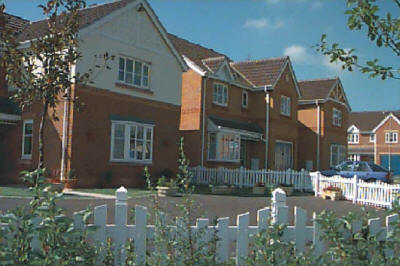
4.6.6. Windfall Sites are defined as unallocated sites of 10 or more
dwellings generally situated within the main settlements as defined by
Policy
H3. They may include sites which rationalise surrounding land uses and do not
result in environmental harm. Windfall sites may also include the restoration /
conversion of existing buildings and / or the re-use of vacant or underutilised
land, the detailed assessment to which will be subject to
Policy H5.
4.6.7. In order to assess the contribution that windfall sites can make to
future housing provision in the County Borough, it has been necessary to monitor
such consents over the lifetime of the adopted Ogwr Borough Local Plan. Such a
monitoring exercise was undertaken between 1995 and 2000 and reveals an average
completion rate of 20 dwellings per annum, which equates to 320 additional
dwellings contributing to future housing provision between 2000 and 2016.
4.6.8. Small scale sites are defined as those accommodating less than 10
dwellings, and may occur in main and smaller settlements. A small scale site
will include an “infill site” which is defined as a site flanked by existing
development within a substantially built up frontage, or a “limited rounding-off
site”, which would constitute a site whose development would extend an existing
built-up area in a manner which rationalises surrounding land use and does not
result in environmental harm. Small scale sites may also include dwelling
increases due to appropriate restoration, conversion of existing buildings
(including the sub division of existing residential property and the re-use of
vacant or underutilised land, the detailed assessment of which may be subject to
Policy H5.
4.6.9. Small-scale sites are closely monitored by the Local Planning
Authority on an annual basis and published by the WDA Land Division. Based on an
annual completion rate on small-scale sites over the past 10 years, the UDP
assumes a further contribution of at least 50 dwellings per annum over the 16
year period 2000-2016, thereby providing an additional 800 dwellings to the
future housing supply.
4.6.10. New build housing development on windfall and small-scale sites
within the specified settlements of the County Borough will be generally
favoured under Polices H3 and
H4, however this will still be subject to detailed
planning considerations being satisfied for specific development proposals.
4.6.11. In addition to those housing allocations identified by
Policy H1,
subject to detailed matters being satisfactorily addressed, the realisation of
windfall and small scale sites will broaden the choice and location of future
housing in the County Borough, and when added to the other opportunities for the
conversion of appropriate rural buildings, and new developments necessary for
the purposes of agriculture, forestry etc. will ensure a satisfactory provision
of housing.
4.6.12. In assessing the County Borough’s overall housing supply, the UDP
assumes an average annual housing demolition programme of approximately 21
dwellings per annum. On this basis the future supply of housing between 2000 and
2016 is as follows: -
|
Allocated Sites (Policy H1 refers) |
7,766 |
|
Unallocated small-scale sites (Policies
H3 and
H4 refer – plus
countryside Exceptions under
EV1) |
800 |
|
Unallocated Windfall Sites |
320 |
|
Demolitions |
-346 |
|
Total Supply (2000-2016) |
8,540 |
|
Total Requirement (2000-2016) |
7,957 |
|
Balance |
+583 |
4.6.13. In accordance with
Environment Policy EV13 proposed new housing
developments which intensify pockets of development or scattered hamlets in the
countryside i.e. settlements which are not listed as either ‘main’ or ‘smaller’
settlements in Policies H3 and
H4, and/or those which extend into, or lie wholly
within, the countryside will not be permitted.
4.7. Residential Conversions and Re-use of Buildings or Land
In Urban Areas
4.7.1. This section of the UDP addresses the scope for conversion, changes of
use, clearance and rebuild, and rehabilitation of the existing (including empty)
dwelling stock of the County Borough.
Policy H5 stipulates criteria for the
detailed assessment of such housing proposals in urban areas.
4.7.2 URBAN RESTORATION/CONVERSION OF BUILDINGS FOR HOUSING
POLICY H5
IN URBAN AREAS, AS DEFINED IN POLICIES
H3 AND
H4, DETAILED PROPOSALS FOR THE
RESTORATION OR CONVERSION OF EXISTING BUILDINGS AND VACANT FLOORSPACE, OR THE
RE-USE OF VACANT OR UNDERUTILISED LAND FOR RESIDENTIAL DEVELOPMENT WILL BE
PERMITTED, ONLY WHERE:-
1. THE FORM, BULK AND DESIGN OF ANY RESTORED OR CONVERTED BUILDINGS ARE IN
KEEPING WITH THEIR SURROUNDINGS;
2. THE CHARACTER, DESIGN AND MATERIALS OF EXISTING OR ADJOINING BUILDINGS ARE
RESPECTED, PARTICULARLY WHERE THEY HAVE ARCHITECTURAL, HISTORIC OR GROUP VALUE;
3. RESIDENTIAL AMENITY IS NOT COMPROMISED;
4. THERE IS SATISFACTORY PROVISION FOR ACCESS, PARKING, UTILITY SERVICES AND
AMENITY SPACE.
4.7.3. It is the aim of the Council that everyone living or needing to live
in the County Borough has a home which is both fit, and affordable. The wider
importance of good housing to determining the ‘quality of life’ and the
contribution it can make to good health, educational opportunities, community
spirit, controlling criminal behaviour, job prospects and personal development
are now well recognised and are highlighted in the Council’s 2003 Housing
Strategy/ and Crime Reduction Strategy 1999/2002. The former strategy
concentrates on how best to meet people’s housing needs and, it recognises that
the housing agenda, particularly in Wales, has shifted from a focus on ‘volume
new build’ to considering how best to maintain and preserve the fabric of
existing communities by promoting community regeneration. This shift in emphasis
is welcomed and is wholly consistent with the need to establish more
‘sustainable communities’ in the County Borough. It is therefore an aim of the UDP to co-ordinate the findings of the Housing Strategy and the 2002 Housing
Needs Survey which will identify specific local and social needs, and thereby
provide for an adequate range of housing, especially through urban regeneration
and renewal.
4.7.4. Policy H5 seeks to optimise the use of the existing housing stock in
urban areas, and to assist its restoration and conversion to more immediately
needed forms of housing. It also supports the use of other suitable land and
buildings to maximise new housing opportunities within the communities in the
County Borough where they are most needed.
4.7.5. The conversion of other buildings to residential use may also be
supported. Many shops or offices in the established commercial areas of the
County Borough have vacant or under-used upper floors, and residential
conversions will not only make more efficient use of the building(s) but also
can assist in maintaining the vitality and viability of the area, and can
contribute towards reduction in local crime. Access and car parking provision in
such areas should accord with the Council’s new standards as set out in its
revised Supplementary Planning Guidance which particularly reflects Welsh
Planning Guidance that car parking requirements in town centre locations will be
sensitively adapted to the particular circumstances of those areas.
4.7.6. The conversion of properties in urban areas is eminently sustainable
as existing property is thereby reused, the development of ‘greenfield sites’ is
reduced, whilst accommodation is provided within the existing community where it
is most needed and most accessible to local facilities, affordable to future
residents - especially the young or displaced, and where extended commuting
patterns for many can be avoided.
4.7.7. Conversions of existing buildings, however, will not be favoured where
they will result in significant detriment to either the character of the
existing building or its locality, or to the services and amenities enjoyed by
existing residents and neighbours. Further guidance on the conversion or
restoration of existing buildings, and/or the re-use or rehabilitation of land
and buildings in urban areas can be obtained from the Council’s published
Supplementary Planning Guidance on this matter.
In the Countryside
4.7.8. In the countryside, the situation with respect to new-build, and the
replacement of existing dwellings, is quite different from that pertaining in
urban areas. Policy EV1 defines the countryside as being .....that area of land
lying beyond designated settlement boundaries, and in view of the constant
pressures for development there, and the value placed on the countryside, a
robust planning framework is necessary to protect it for its own sake.
Policy EV1 therefore restricts any development in the countryside in accordance with
national planning policies. Hence, new housebuilding or other development,
including the replacement of existing dwellings, away from the designated
settlements is strictly controlled in the UDP, and is the subject of the
appropriate Environment Policies
EV1 to
EV8. Functional and financial tests are
advocated to clearly establish any need for new dwellings, whereas, temporary
agricultural or forestry accommodation is advocated to initially prove
viability, and any consequent need for new dwellings. Government guidance in
Wales is clear to point out that such agricultural needs do not include
provision of new dwellings as retirement homes for farmers.
4.7.9. Similarly, all development for the conversion, extension or
rehabilitation of buildings for residential purposes in the countryside will be
strictly controlled in accordance with the detailed requirements of
Policy EV2
and Policy EV6.
4.8. Housing Density and Design
4.8.1. The UDP acknowledges Government guidance as contained in Planning
Policy Wales and Technical Advice Note 12: Design, that good design should be
the aim of all those involved in the development process. Proposals which affect
the built or natural environment (including construction or alteration of
individual buildings and groups of buildings together with their settings), and
larger development proposals, should exemplify what is commonly and/or
professionally regarded to be ‘good design’. Such measures will assist in the
promotion of sustainable development; improve the quality of the existing
environment; attract business and investment; reinforce civic pride and sense of
place; and may secure continued public acceptance for necessary new development.
(See Environment - Section 3.17).
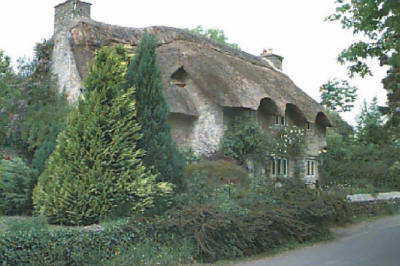
4.8.2. Good design is therefore particularly relevant in the development of
new housing. The appearance of the proposed development, its scale and
relationship to its surroundings are all material planning considerations, but
the UDP should give clear indications of the Council’s design expectations. In
this respect, Policy EV45 does not seek to impose any particular architectural
style or taste on individual development proposals, rather, it seeks to promote
or reinforce local distinctiveness, and to set a framework for the Council’s
Supplementary Planning Guidance for the design of all new development -
including housing.
4.8.3. The Government points out in its Good Practice Guide:
Planning for
Sustainable Development: Towards Better Practice (October 1998) that:-
Maintaining and raising residential.....densities can help towards achieving
more sustainable urban areas.
Planning Policy Wales also encourages higher densities on easily accessible
sites, although development will need to be carefully designed to ensure a high
quality environment.
4.9. Affordable Housing Provision
4.9.1 ‘AFFORDABLE HOUSING’
POLICY H7
WHERE A LOCAL NEED IS DEMONSTRATED, THE COUNCIL WILL EXPECT AN APPROPRIATE
ELEMENT OF ‘AFFORDABLE HOUSING’ TO BE PROVIDED ON SUITABLE SITES CAPABLE OF
ACCOMMODATING 15 OR MORE UNITS OR EXCEEDING 0.5 HECTARES IN SIZE. SUCH
AFFORDABLE HOUSING WILL BE IMPLEMENTED THROUGH THE USE OF APPROPRIATE PLANNING
CONDITIONS AND/OR OBLIGATIONS/AGREEMENTS AND/OR THROUGH CONTRACTUAL ARRANGEMENTS
BETWEEN THE COUNCIL, DEVELOPERS AND REGISTERED SOCIAL LANDLORDS.
4.9.2. In acknowledging that there is a need to provide for a reasonable mix
and balance in size and type of housing in its urban settlements, the Council
also recognises the community’s need for ‘affordable housing’, which should
therefore be addressed in this UDP.
4.9.3. The Council adopts as its definition of ‘affordable housing’, or
‘affordable homes’, that which is set out in detailed Welsh Planning Guidance,
namely:-
..... both low cost market and subsidised housing (irrespective of tenure,
exclusive or shared ownership, or financial arrangements) that will be available
to people who cannot afford to occupy houses generally available on the open
market.....
(PG(W) TAN(W)2 Para.5 refers).
4.9.4. There should therefore be no confusion between the terms ‘social
housing’ and ‘affordable housing’ as referred to in the UDP. ‘Social housing’
refers specifically to ‘subsidised’ housing provided by Registered Social
Landlords (RSLs) but does not include ‘low cost market housing’. The strategic
thrust of the UDP is the dispersal of new housing developments primarily to the
main urban areas, and to regenerate redundant or under-used land and buildings
in those areas, thereby satisfying both the Guiding Principle of sustainable
development and the Housing Objectives set out in para 2.2.2. earlier. It is
important to recall at this point, however, that sustainable development
incorporates .....the need for social progress which recognises the needs of
everyone. In this respect, the Council recognises how fit and ‘affordable
housing’ can be a cornerstone in determining the quality of life of its
residents, and it recognises that a need for ‘social housing’ will remain as
long as there are people who cannot, or choose not to, enter the private housing
sector in the County Borough.
4.9.5. The Council is committed in its Local Housing Strategy to providing
more affordable housing within the County Borough to meet local needs by
pursuing a standardised approach.
4.9.6. In order to demonstrate the need for affordable housing within the
County Borough the Council has undertaken a Local Housing Needs Assessment,
which was prepared in accordance with, the publication ‘Local Housing Needs
Assessment: A Good Practice Guide’ by the Welsh Office (May 1999) and ‘Local
Housing Needs Assessments: A Guide to Good Practice’ by the DTLR in July 2000.
The 2002 survey estimates that for the next 5 years there is a shortfall of 234
affordable homes per year, and that an affordable housing target level of up to
40% on suitable sites could be justified. Of the identified shortfall, the
survey also indicates that the greatest need is for 1 and 2 bedroom units. The
survey provides the Council with a significant amount of evidence to negotiate
with developers for a proportion of affordable housing on suitable sites. The
site thresholds identified in Policy H7 is justified by the significant level of
identified need and reflects the most up-to-date Planning Guidance published by
the ODPM. Data from the survey indicates that on a geographical basis the
greater shortfall of affordable housing is located in the south of the County
Borough within the study’s southern market area.
4.9.7. Policy H7 is therefore framed to reflect the most up-to-date planning
guidance contained in TAN(W)2 ‘Planning and Affordable Housing’ (November 1996)
(paras. 14-19 refer) and the good practice advice referred to above. As advised,
both planning conditions and obligations/agreements may legitimately be used by
the Council, where justified, to achieve the development and use of land that
ensures:-
-
A mixed development that would contribute to the identified need for
affordable housing; and
-
That some of the housing built is occupied, either initially or in perpetuity,
only by people falling within particular categories of need for affordable
housing…(TAN(W)2 (para. 14 refers).
4.9.8. Contractual arrangements which are legally binding will also be used
by the Council with the aim of securing an appropriate long term local provision
of ‘affordable housing’ in the communities in greatest need in the County
Borough. Further guidance on this matter is contained in TAN(W)2 which will
assist the Council in achieving this aim.
4.9.9. On the basis of past demands, and the findings of the Housing Needs
Assessment the Council anticipates that the greater provision of future
‘affordable housing’ will continue to be made in the ‘main urban areas’ as
defined in Policy H3 of the Plan as there has been very little locally expressed
concern or identified short fall relating to the provision of affordable rural
housing in the County Borough. This is hardly surprising, as much of the County
Borough is relatively urbanised in character, and consequently no part of its
countryside lies more than 4 to 5 miles from a ‘main’ urban settlement. The
Council considers that there is already sufficient scope for the provision of
affordable housing to meet the urban and/or rural needs of local people
throughout the County Borough principally within the main urban areas as defined
in Policy H3, and in limited circumstances, where justified by the Housing Needs
Assessment within the smaller settlements defined by
Policy H4. Affordable
housing will not be permitted in the countryside outside settlement boundaries
unless necessary for the purposes of agriculture. In such rare instances,
suitable agricultural occupancy conditions will be applied in addition to those
conditions/ contractual arrangements to secure the dwelling’s continued
‘affordability’ in the longer term.
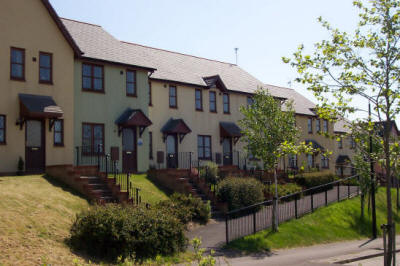
4.9.10. Policy H7 will ensure that ‘affordable housing’ development meets the
same high standards which will apply generally to new housing developments as
provided for in Policies EV45. In this respect, the Council acknowledges that
higher densities should be encouraged on easily accessible sites, whilst a
quality environment should be secured through careful design of development.
4.10. Residential Caravans and Gypsy Sites
4.10.1. Unitary Authorities no longer have a statutory duty to provide and
manage gypsy sites. However, they should still indicate what regard they have
had to meeting gypsies’ accommodation needs by making adequate provision for
sites in their UDPs and by including a criteria-based policy which will enable
gypsy site proposals, which may come forward, to be considered in the
appropriate manner.
4.10.2 GYPSY SITES
POLICY H8
ANY NEW SITE TO ACCOMMODATE GYPSIES RESIDING IN, OR RESORTING TO, THE COUNTY
BOROUGH WILL BE PERMITTED ONLY WHERE IT:-
1. HAS REASONABLE ACCESS TO SHOPS AND ESSENTIAL SERVICES;
2. AVOIDS CLOSE PROXIMITY TO RESIDENTIAL DEVELOPMENT;
3. IS COMPATIBLE WITH NEIGHBOURING LAND USES;
4. IS CAPABLE OF BEING ACCESSED SAFELY FROM THE HIGHWAY NETWORK AND BE
CONVENIENTLY SITUATED FOR PUBLIC TRANSPORT;
5. IS ACCEPTABLE IN TERMS OF THE CONSERVATION OF THE ENVIRONMENT, AND THE
PROVISION OF UTILITY SERVICES; AND
6. IS CAPABLE OF BEING SCREENED AND SUITABLY LANDSCAPED TO A STANDARD COMPATIBLE
WITH EITHER ITS URBAN OR RURAL SURROUNDINGS.
4.10.3. Neither Bridgend County Borough nor the former Ogwr Borough have been
an area in which any sizeable numbers of gypsies have resided, or resorted to,
in recent years. However, Policy H8 is intended to provide broad guidance for
development of gypsies sites in the future. The policy is based on similar
policies which have been found to be acceptable in previous Structure Plans in
Wales, and includes a number of criteria to guide site evaluation.
4.10.4. In accordance with
Policy H8, a site should therefore have a
reasonable chance of being used, (i.e. be sited usually in an area traditionally
used by gypsies). This will inevitably mean that it should not be remote from
the strategic highway network. In addition, it should be conveniently located
for retail and community services (including schools) and be regularly served by
public transport. The site should also satisfy other transportation requirements
e.g. it should not give rise to traffic hazards and have safe access to the
highway; whilst close proximity to residential development should be avoided
where possible. The site should not be located in such a way as to give rise to
conditions unsuitable for residential development, particularly with regard to
the effects of neighbouring land uses. The site must also be capable of being
supplied with utility services at a reasonable cost. In some circumstances a
countryside location may be acceptable where an urban option is both unavailable
and unacceptable. In all cases, a site must be acceptable in terms of
environmental conservation and landscape protection, and it must be capable of
being properly screened.
<<
Previous Chapter |
Next Chapter
>> |