8.1. Justification of Part 1 Policies
8.1.1. Policy 10 recognises that tourism is one of the most successful
sectors of the UK economy. Some areas of the country are heavily dependent
economically on tourism, which has the potential to grow rapidly.
8.1.2. The tourism potential of Bridgend County Borough is very important and
significant to providing continued economic and environmental benefits. It is
important to continue to encourage and increase the number of long stay
visitors. To assist in this, proposals for new tourism related development will
be supported by the Council. This should lead to the widening of the range of
attractions and facilities available, thereby attracting more visitors and
increasing income generation and employment opportunities.
8.1.3. A well managed tourism industry can bring many benefits which include:
underpinning economic activity; supporting public sector transport and service
infrastructure; providing financial support for rural areas; support for
agriculture, manufacturing, and service industries; underpinning conservation of
heritage sites and the countryside; fostering an exchange of cultural
experiences; improving the viability of town centres; and assisting the
regeneration of depressed urban and rural areas.
8.1.4. The objective of encouraging tourism will, however, place pressure on the
County Borough’s environment. This will need to be managed in such a way as to
achieve a balance between favouring developments and attractions which are
environmentally sustainable, do not cause damage to the County Borough’s
landscape and heritage, but conserve the tourism industry’s vital fabric for
both residents and visitors of tomorrow.
8.1.5. Policy 11 emphasizes that leisure uses can benefit town and
district centres. In considering such proposals, or in deciding whether to
identify sites for leisure developments, however, PPW (2002) advises that, in
the first instance, local planning authorities should consider whether there is
a need for additional provision. Such a need may be quantitative to address a
provable unmet demand and / or qualitative – such as where it can be
demonstrated that new provision will contribute to meeting the policies set out
elsewhere in the UDP. In order that further damage to town and district centres
may be avoided, major leisure uses such as multi-screen cinemas, bingo halls,
bowling alleys and theatres should be located where sites or suitable buildings
can be found in town and district centres or otherwise on edge of town centre
sites. Where this is not possible such development may be located on other sites
which are well served by public transport.

Part 2
8.2. Introduction
8.2.1. Tourism plays an important role in the national economy and in the
prosperity of many cities, towns and rural areas. As well as the annual family
holiday tourism also includes a wide range of shorter visits, day trips and
short or weekend breaks. It includes travel for business as well as for
recreation.
8.2.2. A number of recent government publications providing guidance on tourism,
particularly sustainable tourism, emphasize the need for a properly managed
tourism industry. The consultation paper on Tourism Towards Sustainability
was prepared as part of a wider government consultation initiative -
Opportunities For Change - A Review of the UK Sustainable Development Strategy.
This was recently followed by a new strategy document published by the
Department of Culture, Media and Sport entitled Tomorrow’s tourism: a growth
industry for the new Millennium. For Wales, the Wales Tourist Board have
produced a draft successor strategy to Tourism 2000 entitled A New Tourism
Strategy For Wales to provide the framework to guide the development of the
industry. The strategy confirms that tourism has made excellent progress in
achieving ambitious growth targets. Both documents identify the environment and
sustainability as the fastest growing themes in tourism. The documents also
recognize that environmental goods such as clean water, fresh air and beautiful
scenery are fundamental to a range of opportunities that both tourists and the
tourist industry have a strong interest in preserving. South East Wales
Authorities are also involved in the preparation of a Regional Tourism Strategy,
which will provide a framework for tourism development and marketing
initiatives.
8.2.3. For the purpose of planning and development plans the guidance on how
tourism should be handled is provided in Planning Policy Wales (PPW) (2002)
and the associated Technical Advice Note (TAN) 13 - Tourism. DETR Planning
Policy Guidance Note 21: Tourism is also of relevance.
8.2.4. The opportunities for recreation and leisure (of which tourism is a core
part) are central components for the functioning of a healthy society. Tourism
developments enhance the image of the County Borough, making it attractive to
potential industrial developers or those seeking relocation from other areas.
Investment in tourism development as well as drawing increased numbers of
visitors also provides better recreation and leisure facilities for the
residents of the County Borough. Tourism will provide opportunities for people
who are less affluent and those with particular needs e.g. families with young
children, the disabled and the elderly. The greater the number of visitors to
the County Borough the more important the need for careful management. This must
ensure that the benefits are not outweighed by damage to the physical
environment of the County Borough on which they are based.
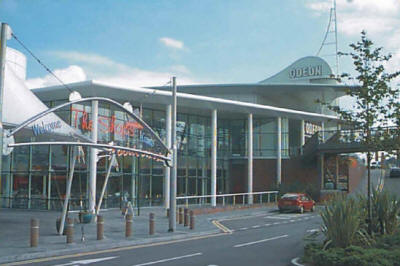
8.3. The Value of Tourism and Leisure to Bridgend
8.3.1. The value and volume of tourism and leisure is not totally understood
which limits a full analysis of its potential for demand and consequent
development. There are a number of reasons for this:-
-
The tourism industry does not have a discrete form and no
single concept of the industry has been developed and accepted by all
industry participants;
-
Within the tourism industry’s key activities
transportation, accommodation and entertainment, each has developed its own
definition, classification and methodologies for data collection. The result
is that there is little commonly understood or useable communication for
tourism.
8.3.2. Most attempts at defining tourism have revolved around the definition
“what is a tourist”. Each industry describes the user differently e.g. as a
guest, customer, passenger, visitor, client etc.
8.3.3. Because of these problems associated with data collection it is difficult
to estimate precisely the value and volume of tourism in Bridgend. However,
Bridgend County Borough Council has adopted the STEAM (Scarborough Tourism
Economic Activity Monitor) methodology. It is a computer based analysis
package which aims to quantify the value and volume of tourism in the County
Borough. The assessment for Bridgend for 2003 indicates:-
-
Approximately 2,880 full time equivalent jobs are
directly provided in tourism with another 1,172 indirectly provided;
-
Approximately 3,536,000 visitors to the County Borough of
which there were 3,002,000 day visitors; 144,000 visitors stayed in serviced
accommodation, 191,000 visitors stayed in non-serviced accommodation and
199,000 persons stayed with friends and relatives;
-
The overall expenditure by visitors to Bridgend County
Borough was about £200 million, of which £13.5 million went on
accommodation, £27.6 million on food and drink, £8.6 million on recreation,
almost £50 million on shopping and £15.6 million on transport. £64.7 million
was spent indirectly and £20.2 million on VAT;
-
The largest amount of revenue to the area comes from day
visitors (£128.1 million), then those persons staying in the non-serviced
accommodation sector (£33.8 million) followed by serviced accommodation
(£24.6 million) and finally persons staying with friends and family £13.7
million).
8.3.4. In Porthcawl, which is the main holiday destination in the County Borough
the following figures have been provided by STEAM for 2002:-
-
1,105 full time equivalent jobs are provided in Porthcawl
directly and indirectly by tourism;
-
There were 912,000 visitors to Porthcawl, 696,000 of
which were day visitors; 129,000 stayed in non-serviced accommodation,
62,000 in serviced accommodation and 25,000 stayed with family or friends;
-
The overall expenditure by visitors to Porthcawl was
£59.2 million of which £12.2 million went on accommodation;
-
The largest amount of revenue to Porthcawl comes from
those persons staying in non-serviced accommodation (£32.2 million) followed
by day visitors (£16.3 million).
8.4. The Tourism and Leisure Product
8.4.1. The County Borough’s tourism potential is high. It has a very attractive
coastline and offers a good range of informal outdoor recreation opportunities
provided by the Glamorgan Heritage Coast, the Kenfig National Nature Reserve and
the Bryngarw Country Park.
8.4.2. The historical and industrial heritage product is strong providing fine
examples of Norman castles, former mediaeval farm houses, and Victorian manor
houses on the one hand and former ironworks, tram roads and related industrial
archaeology on the other. Other activities available in the County Borough
include golfing, walking, cycling, angling, surfing and other water sports.
8.4.3. The recently completed Designer Outlet Village at junction 36 of the M4
has increased the number of visitors to Bridgend. This success can be built on
and developed further. For example, major visitor attractions could include the
proposed heritage steam railway between Tondu and Pontycymmer, which will be
associated with activities at the various halts such as cycle routes, circular
walkways and visitor centres, and proposed leisure, entertainment and
accommodation developments in Porthcawl.
8.5. Tourism and Leisure Policies
8.5.1. The following policies will contribute to the key objectives of
enhancing, improving and developing the tourist potential of the County Borough
whilst protecting and conserving the environment.
8.6. General Policy
8.6.1. DEVELOPMENT FOR TOURISM AND LEISURE
POLICY TM1
NEW OR EXTENDED TOURIST AND LEISURE FACILITIES AND ATTRACTIONS WILL BE PERMITTED
IN URBAN AREAS WHERE ALL OF THE FOLLOWING CRITERIA ARE SATISFIED:-
1. IT WILL CONTRIBUTE TO THE REGENERATION OF TOWN CENTRES BY IMPROVING THEIR
VITALITY, VIABILITY AND ATTRACTIVENESS TO VISITORS, AND ENHANCE THEIR LEISURE
ROLE IN THE EVENING ECONOMY AND AT WEEKENDS;
2. THE DEVELOPMENT WILL BE COMPATIBLE WITH, AND
SYMPATHETIC TO ITS SURROUNDINGS IN TERMS OF SITING, SCALE, DESIGN, EXTERNAL
APPEARANCE, MATERIALS AND LANDSCAPING;
3. THE DEVELOPMENT IS WELL LOCATED TO PUBLIC TRANSPORT, THE NEEDS OF THE NON CAR
TRAVELLER, AND THE MAIN ROAD NETWORK, AND WOULD HAVE SATISFACTORY CAR PARKING;
4. THE HIGHWAY NETWORK IS CAPABLE OF ACCOMMODATING THE TRAFFIC GENERATED BY THE
DEVELOPMENT WITHOUT AN UNACCEPTABLE EFFECT ON TRAFFIC FLOWS AND PATTERNS,
SAFETY, ENERGY USE OR OTHER EMISSIONS.
5. THE SITE IS NOT WITHIN AN AREA OF FLOOD RISK.
NEW OR EXTENDED TOURIST AND LEISURE FACILITIES AND ATTRACTIONS IN THE
COUNTRYSIDE WILL ONLY BE PERMITTED IF THE ACTIVITY BY ITS NATURE REQUIRES A
COUNTRYSIDE LOCATION, AND/OR THE PROPOSED DEVELOPMENT IS PART OF A RURAL
DIVERSIFICATION SCHEME. DEVELOPMENT PROPOSALS SHOULD SATISFY ALL THE FOLLOWING
CRITERIA:-
1. THE DEVELOPMENT WILL NOT HARM OR ADVERSELY AFFECT THE FOLLOWING AREAS AND
THEIR SETTINGS:-
A) THE GLAMORGAN
HERITAGE COAST;
B) THE KENFIG
cSAC;
C) THE STRATEGIC
COALFIELD PLATEAU AND ASSOCIATED VALLEY SIDES;
D) SSSI’s AND
OTHER ENVIRONMENTALLY SENSITIVE AREAS;
2. THE DEVELOPMENT WILL BE COMPATIBLE WITH, AND
SYMPATHETIC TO ITS SURROUNDINGS IN TERMS OF SITING, SCALE, DESIGN, EXTERNAL
APPEARANCE, MATERIALS AND LANDSCAPING;
3. THE HIGHWAY NETWORK IS CAPABLE OF ACCOMMODATING THE TRAFFIC GENERATED BY
THE DEVELOPMENT WITHOUT AN UNACCEPTABLE EFFECT ON TRAFFIC FLOWS AND
PATTERNS, SAFETY, ENERGY USE OR OTHER EMISSIONS.
4. THE DEVELOPMENT IS ACCESSIBLE BY A CHOICE OF TRANSPORT MODES AND WELL
RELATED TO THE NEEDS OF THE NON-MOTORISED TRAVELLER.
5. THE SITE IS NOT WITHIN AN AREA OF FLOOD RISK.
8.6.2. Opportunities exist for further improving and co-ordinating the range of
activities and attractions. The purpose of
Policy TM1 is to encourage tourism
development which increases the range of activities available to visitors,
including support for major crowd drawing attractions in appropriate locations.
Tourism development projects are an integral part of town centre management and
regeneration, and especially in the case of major new tourism developments can
make a very significant contribution to urban regeneration. In the case of Porthcawl there is a recognized need for a critical mass of attractions in order
for it to retain and expand its share of the tourist industry. Proposals for a
heritage steam railway line between Tondu and Pontycymmer centred on promoting
tourist attractions at various locations along the route is expected to draw a
large number of visitors. Such attractions will be expected, wherever possible
to be located within, or adjacent to urban areas.
Policy TM1 ensures that those
proposals for tourist attractions, which seek appropriate countryside locations
will be related to and in keeping with the surrounding countryside. The kind of
attractions which may be acceptable in the countryside relates to those
activities which by their very nature require a countryside location such as
golf, walking, cycling, fishing, appropriate equestrian activities, and whose
environmental impact is usually minimal. In certain cases, tourist proposals
relating to farm diversification schemes may be acceptable. Proposals for farm
diversification schemes will also be assessed under
Policy EV1 and
Policy E11,
and justifying paragraphs 3.5.4.,
5.8.8. – 5.8.11. of the UDP refer.
8.6.3. With respect to criterion 4 of
Policy TM1 relating to facilities located
in the countryside, it is recognised that they may not be accessible by
public transport.
8.6.4. As well as the development of specific attractions,
Policy TM1 should
also relate to the implementation of environmental improvement schemes such as
clearance, landscaping, paving, seating, tree planting and building
refurbishment particularly in urban areas. This is considered an essential
element in further enhancing the attractiveness of the County Borough to
visitors. In this respect the Council is particularly keen to increase the
number of visitors to Bridgend town centre and to improve the tourism and
leisure provision in and around Bridgend. Tourism/leisure and retailing
development at the Designer Outlet Village at Sarn with its shop units,
multiplex cinema, themed restaurant and food court has already resulted in
increased visitors to the County Borough. This should now be matched by
improvements in the leisure facilities in Bridgend town centre, particularly
with the increasing importance of shopping as a leisure and tourism activity.
The implementation of pedestrianisation, in particular, should see a major
improvement in the town centre’s environment, as was the case with the
pedestrianisation of John Street and other environmental improvements in
Porthcawl.
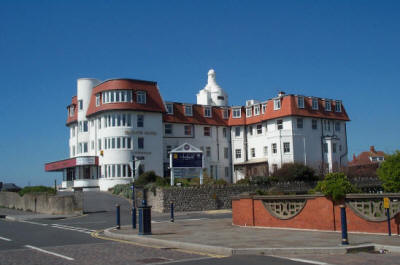
8.7. Tourism and Leisure Accommodation
8.7.1. ACCOMMODATION FOR VISITORS IN URBAN AREAS
POLICY TM2
THE ESTABLISHMENT OF NEW SERVICED AND SELF-CATERING ACCOMMODATION, AS WELL AS
THE EXTENSION, UPGRADING OR CHANGE OF USE OF BUILDINGS TO PROVIDE SUCH
ACCOMMODATION, WITHIN EXISTING SETTLEMENTS WILL BE PERMITTED PROVIDED THAT ALL
OF THE FOLLOWING CRITERIA ARE COMPLIED WITH:-
1. THE DEVELOPMENT IS COMPATIBLE WITH ITS SURROUNDINGS IN TERMS OF SITING,
SCALE, DESIGN, EXTERNAL APPEARANCE AND LANDSCAPING;
2. BUILDINGS OR AREAS OF HISTORIC OR ARCHITECTURAL INTEREST ARE NOT HARMED;
3. IT WILL HAVE SATISFACTORY CAR PARKING;
4. THE DEVELOPMENT IS WELL LOCATED TO PUBLIC TRANSPORT, THE NEEDS OF THE NON CAR
TRAVELLER AND THE MAIN ROAD NETWORK;
5. THE HIGHWAY NETWORK IS CAPABLE OF ACCOMMODATING THE TRAFFIC GENERATED BY THE
DEVELOPMENT WITHOUT AN UNACCEPTABLE EFFECT ON TRAFFIC FLOWS AND PATTERNS,
SAFETY, ENERGY USE OR OTHER EMISSIONS.
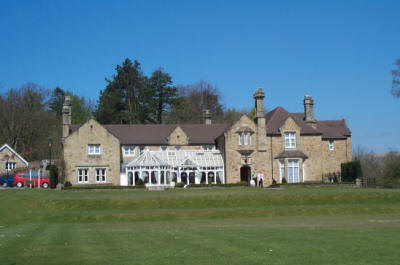
8.7.2. ACCOMMODATION FOR VISITORS OUTSIDE URBAN AREAS
POLICY TM3
THE PROVISION OF PERMANENT SERVICED OR SELF-CATERING ACCOMMODATION FOR VISITORS
OUTSIDE THE DESIGNATED BOUNDARIES OF EXISTING SETTLEMENTS WILL BE PERMITTED
WHERE IT INVOLVES THE RE-USE AND/OR CONVERSION OF DISUSED AND REDUNDANT RURAL
BUILDINGS OR IS PART OF A FARM DIVERSIFICATION SCHEME. THE DEVELOPMENT MUST ALSO
SATISFY ALL OF THE FOLLOWING CRITERIA:-
1. THE DEVELOPMENT WILL NOT HARM OR ADVERSELY AFFECT THE FOLLOWING AREAS AND
THEIR SETTINGS:-
A. THE GLAMORGAN
HERITAGE COAST;
B. THE KENFIG
cSAC;
C. SSSI’s ;
2. THE PROPOSED DESIGN, SCALE AND EXTERNAL APPEARANCE OF THE DEVELOPMENT IS
IN KEEPING WITH ITS SURROUNDINGS, AND IS SYMPATHETIC TO THE RURAL SETTING;
3. IN THE CASE OF EXTENSIONS, THE PROPOSAL IS WELL DESIGNED AND RESPECTS THE
CHARACTER, ARCHITECTURAL AND HISTORIC VALUE OF THE EXISTING BUILDING;
4. THE DEVELOPMENT IS ACCESSIBLE BY A CHOICE OF TRANSPORT MODES AND WELL RELATED
TO THE NEEDS OF THE NON-MOTORISED TRAVELLER;
5. THE HIGHWAY NETWORK IS CAPABLE OF ACCOMMODATING THE TRAFFIC GENERATED BY THE
DEVELOPMENT WITHOUT AN UNACCEPTABLE EFFECT ON TRAFFIC FLOWS AND PATTERNS,
SAFETY, ENERGY USE OR OTHER EMISSIONS; AND
6. EXISTING RESIDENTIAL AMENITIES ARE NOT COMPROMISED.
7. THE SITE IS NOT WITHIN AN AREA OF FLOOD RISK.
8.7.3. Whilst there is a small number of hotels and guest houses located
throughout the County Borough, Porthcawl with its large Trecco Bay Caravan site
provides for most of the existing tourism accommodation. In order to increase
the attractiveness of the County Borough to both tourists and the business
market, an increase in the amount of good quality places to stay is considered
vital.
8.7.4. Over recent years great emphasis has been placed on improvements to the
range and quality of the self catering and serviced accommodation available,
including new hotels and chalet developments. A grants scheme is available from
the WTB to encourage hoteliers to raise the standard of their establishments,
and to prevent the loss of serviced accommodation to other uses. In Porthcawl
many properties have already benefited from the grant aid scheme which is
complemented by the WDA and the County Borough’s Town Improvement Grant scheme
and by WTB and County Borough’s Sense of Place bilingual signage scheme.
8.7.5. The family market accommodation is centred in the Porthcawl area where it
is well catered for. There is, however, a deficiency of quality hotels with
conference facilities for the business market in the Bridgend area. The
relatively large number of firms located in the area form a valuable market for
conference and business meetings. It is important, therefore, that appropriate
facilities in terms of meeting rooms, leisure facilities and accommodation of
appropriate quality is available. New accommodation projects and improvements in
standards/facilities of existing providers specifically catering for the
business market will therefore be favourably considered. Car parking provision
should be consistent with reducing reliance on car-borne travel, whilst avoiding
harm to highway safety from parked cars. In this regard it must also satisfy the
Council’s parking guidelines.
8.7.6. Policies TM2 and
TM3 are designed to support and encourage the
development of appropriately located tourist accommodation (hotels, guest houses
and farm houses), particularly in the Bridgend area. Proposals for accommodation
in the countryside and designated areas such as the Glamorgan Heritage Coast,
the Kenfig National Nature Reserve and other environmentally sensitive areas
will be strictly controlled. Proposals for tourist accommodation are therefore
best located within existing settlements. However, in accordance with the
guidance in TAN 13, the conversion of redundant and disused farm buildings in
the countryside can be beneficial. The re-use of old farm buildings, in
particular can contribute to, and be in keeping with the character of the
countryside. The re-use of such buildings can often be compatible with the
protection of the countryside, but only if the design respects the original
features of the building. In accordance with Policies
EV1 and
EV2, whilst
initial consideration is given to farm buildings, the provision of sensitively
designed new accommodation may be considered where this forms part of a farm
diversification scheme on a working farm within existing farm complexes.
8.7.7. With respect to criterion 4 of
Policy TM3 relating to accommodation in
the countryside, it is recognised that they may not be accessible by public
transport.
8.8. Caravans, Chalets and Camping Sites
8.8.1. STATIC CARAVANS & CHALETS
POLICY TM4
NEW FREE-STANDING STATIC CARAVAN, CHALET OR CABIN DEVELOPMENTS, OR THE EXTENSION
OF AN EXISTING SITE FOR SUCH
PURPOSES, WILL NOT BE PERMITTED.
8.8.2. CAMPING & TOURING CARAVAN SITES
POLICY TM5
PROPOSALS FOR CAMPING, AND TOURING CARAVAN SITES WILL BE PERMITTED ONLY WHERE
ALL OF THE FOLLOWING CRITERIA ARE SATISFIED:-
1. THE DEVELOPMENT WILL NOT HARM OR ADVERSELY AFFECT THE FOLLOWING AREAS AND
THEIR SETTINGS:-
A) THE GLAMORGAN
HERITAGE COAST;
B) THE KENFIG
cSAC;
C) SSSI’s;
2. THE DEVELOPMENT CAN BE SYMPATHETICALLY ASSIMILATED
INTO ITS SURROUNDINGS IN TERMS OF ITS SITING, SCALE, DESIGN, AND
LANDSCAPING;
3. THE DEVELOPMENT IS ACCESSIBLE BY A CHOICE OF TRANSPORT MODES AND WELL
RELATED TO THE NEEDS OF THE NON-MOTORISED TRAVELLER;
4. THE HIGHWAY NETWORK IS CAPABLE OF ACCOMMODATING THE TRAFFIC GENERATED BY
THE DEVELOPMENT WITHOUT AN UNACCEPTABLE EFFECT ON TRAFFIC FLOWS AND
PATTERNS, SAFETY, ENERGY USE OR OTHER EMISSIONS; AND
5. THE DEVELOPMENT CAN BE ADEQUATELY SERVICED WITH WATER AND SEWAGE DISPOSAL
FACILITIES;
6. THE SITE IS NOT WITHIN AN AREA OF FLOOD RISK.
8.8.3. TAN 13 makes it clear that the development plan needs to ensure that
there are sufficient facilities and choice of sites for the touring and static
caravaner. New sites should be well screened and will not be permitted in the
coastal zone as defined in Policy EV15.
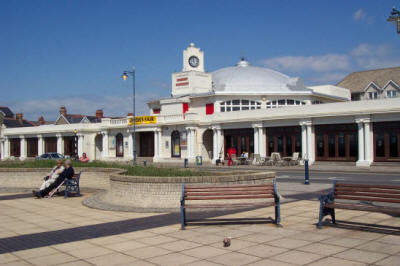
8.8.4. Ample provision of caravans exists in Porthcawl and the Coastal Zone
which is considered as being a sufficient supply. Therefore, because of the
highly intrusive nature of caravan sites, the criteria of
Policy TM5 will be
strictly applied.
8.8.5. It is, however, considered that there is room for the provision of
further camping and touring caravan sites. These will, however, need to be
carefully located and screened so as not to adversely affect the surroundings in
which they are situated.
8.8.6. With respect to criterion 3 of
Policy TM5 and the issue of accessibility,
it is recognised that facilities in the countryside may not be accessible to
public transport.
8.9. Tourism and Leisure Attractions
8.9.1. VISITOR ATTRACTIONS
POLICY TM6
DEVELOPMENT FOR EDUCATIONAL, ARTS, CULTURAL AND ENTERTAINMENT FACILITIES,
INCLUDING RESTAURANTS, PUBLIC HOUSES AND CAFES WILL BE PERMITTED WHERE EITHER:-
A) IT WILL CONTRIBUTE TO THE REGENERATION OF TOWN CENTRES BY IMPROVING THEIR
VITALITY, VIABILITY AND
ATTRACTIVENESS TO VISITORS, AND ENHANCE THEIR LEISURE ROLE IN THE EVENING
ECONOMY AND AT WEEKENDS; OR
B) IT WILL INVOLVE THE RE-USE OR ADAPTATION OF REDUNDANT AND DISUSED BUILDINGS
IN URBAN OR RURAL AREAS.
IN ADDITION, PROPOSED DEVELOPMENT SHOULD MEET THE FOLLOWING CRITERIA:-
1. IT WOULD NOT ADVERSELY AFFECT THE AMENITIES OF PEOPLE LIVING IN THE AREA BY
MEANS OF NOISE AND SMELLS, OR GENERAL USAGE DURING UNSOCIABLE HOURS;
2. IT WOULD BE ACCESSIBLE BY A CHOICE OF MEANS OF TRANSPORT AND BE WELL RELATED
TO THE NEEDS OF THE NON-MOTORISED TRAVELLER.
3. THE HIGHWAY NETWORK WOULD BE CAPABLE OF ACCOMMODATING THE TRAFFIC GENERATED
BY THE DEVELOPMENT WITHOUT AN UNACCEPTABLE EFFECT ON TRAFFIC FLOWS AND PATTERNS,
SAFETY, ENERGY USE, OR OTHER EMISSIONS.
4. IT WOULD HAVE SATISFACTORY CAR PARKING.
5. THE SITE IS NOT WITHIN AN AREA OF FLOOD RISK.
6. THE PROPOSAL CAN BE SYMPATHETICALLY ASSIMILATED INTO ITS SURROUNDINGS IN
TERMS OF ITS SITING, SCALE, DESIGN AND LANDSCAPING.
8.9.2. There is a recognized deficiency in the provision of arts, cultural and
entertainment and leisure facilities in the County Borough, but more
specifically within its main towns. This form of development is vital to
attracting visitors, as it is linked to improvements in town centre environments
and facilities. Tourism development projects are an integral part of town centre
management and regeneration. Policy TM6 provides the impetus for projects, which
may include the installation of CCTV, decorative lighting, street entertainment
and improved signage. In addition, there may be suitable redundant and disused
buildings in rural areas of the County Borough where such a development could
benefit the rural economy of the County Borough.
Policy TM6 provides the
criteria against which any proposal of this nature will be specifically
assessed. The policy recognises that a choice of modes of transport, including
on foot, by cycle and public transport is important in reducing the reliance on
car based travel. Development must also satisfy the basic parking requirements
as set out in Council’s approved parking guidelines. However, as in the case of
any proposed development, all relevant policies of the UDP should be considered
in the determination of individual proposals. In the case of urban proposals,
through the implementation of existing strategies the County Borough Council can
capitalize on the many opportunities for attracting new visitors and promoting
the County Borough as an attractive destination. All tourism development should
be based on the principle of equal opportunities.
8.10. Porthcawl
8.10.1. Porthcawl and the Coastal Zone represent the County Borough’s main
holiday attraction. Porthcawl should therefore be developed as a major tourist
resort by enhancing its tourist potential which will be beneficial to the County
Borough as a whole. A regeneration strategy exists for the resort and much has
been done to implement its proposals, which has already resulted in major
improvements to the physical fabric and infrastructure of the town.
8.10.2. TOURISM & LEISURE ATTRACTIONS IN PORTHCAWL
POLICY TM7
INITIATIVES AND SCHEMES WHICH SUPPORT THE FURTHER ENHANCEMENT AND DEVELOPMENT OF
PORTHCAWL AS THE
COUNTY BOROUGH’S MAJOR TOURIST RESORT WILL BE FAVOURED.
8.10.3. Proposals and projects under
Policy TM7 for tourism development in Porthcawl will be supported where they contribute to fulfilling the objectives
of the regeneration strategy for the resort which are:-
-
To make the resort of Porthcawl more attractive to
visitors and extend the season;
-
To raise business confidence and encourage private sector
investment;
-
To maximize visitor spend and job creation;
-
To market the resort effectively to its core family
market, whilst developing new markets with growth potential;
-
To improve the linkages between the key elements of the
resort;
-
To strengthen the appeal of the shopping centre and to
improve its competitiveness;
-
To improve access to the resort.
8.10.4. Key proposals completed to date include the pedestrianization of John
Street, the refurbishment of the Grand Pavilion, the refurbishment of the sea
front and Esplanade, the construction of a new lifeboat station and the
refurbishment of Jennings warehouse. Also the land between the Harbour and
Trecco Bay has been allocated under
Policy REG3(2) as a key regeneration site.
Its redevelopment for leisure/entertainment/commercial/ accommodation purposes
will play a crucial role in strengthening the resort’s position as a leading
tourism attraction.
8.11. Serviced Accommodation Area
8.11.1. PROTECTION OF EXISTING SERVICED ACCOMMODATION
POLICY TM8
THE LOSS OF SERVICED ACCOMMODATION WITHIN CLASS C1 OF THE TOWN AND COUNTRY
PLANNING (USE CLASSES) ORDER 1987 TO NON-TOURISM USES WILL BE PERMITTED IN THE
DESIGNATED SERVICED ACCOMMODATION AREA OF PORTHCAWL (Link to Map 37), ONLY IF:-
1. ANY CONVERSION WOULD NOT ADVERSELY AFFECT THE RANGE AND QUALITY OF SERVICED
ACCOMMODATION AVAILABLE;
2. IT CAN BE DEMONSTRATED THAT THERE IS NO LONG TERM DEMAND FOR THE PROPERTY FOR
SERVICED ACCOMMODATION;
3. IT CAN BE DEMONSTRATED THAT THE BUILDING IS NO LONGER SUITABLE OR VIABLE FOR
THE RUNNING OF A QUALITY SERVICED ACCOMMODATION BUSINESS; AND
4. THE PROPOSALS MEET THE COUNCIL’S APPROVED PARKING GUIDANCE.
8.11.2. The purpose of Policy TM8 is to resist the loss of hotel stock to other
uses which can seriously weaken a resort’s ability to maintain its status as a
tourist destination. This is supported by advice contained in TAN13 on tourism.
The availability of a wide range of serviced accommodation benefits the economy
in general and gives choice to intending visitors.
8.11.3. TAN13, however, advises that the planning system should not be used to
perpetuate outdated accommodation for which there is no demand. The County
Borough Council therefore accepts that instances may arise where conversion may
be justified for one of the reasons stated under
Policy TM8. In assessing
applications for conversion to alternative uses, the Authority will take into
account the length of time a property has been vacant for on the market, trends
in occupancy rates and customer preferences, the suitability of the building in
terms of size and floor layout for the provision of modern serviced
accommodation.
8.11.4. The area to which Policy TM8 applies in Porthcawl is indicated on the
Proposals Map. It is based on the core area of the resort where hotel and
guest/boarding house uses are concentrated along the sea front and Esplanade.
The area is also covered by the established Town Improvement Grant and Tourism
Accommodation Grant schemes, which seek to improve the condition and appearance
of the commercial buildings and guest houses in the area.
<<
Previous Chapter |
Next Chapter
>> |