Part 1
11.1. Justification of Part 1 Policies
11.1.1. The County Borough has a long tradition of mineral working and
provides a significant part of the region’s production of energy and
aggregate minerals together with substantial quantities of non-aggregate
materials for use in industrial processes. It is considered that adequate
provision for such mineral extraction should be made to ensure that the
County Borough will be able to maintain its current contribution to regional
demand.
11.1.2. The policies in Part 2 will provide guidance on the conditions
that will be imposed on future mineral proposals to ensure that they are
environmentally acceptable during active operations and that restoration is
undertaken at the earliest opportunity to facilitate a beneficial after-use.
11.1.3. As regards provision for aggregates, the County Borough’s share
of regional production will be calculated on the basis of the average of the
last three years production figures as production can fluctuate
significantly from one year to another. This calculation will indicate
whether existing permitted or allocated reserves are adequate or whether
additional resources will need to be allocated in the light of regional
forecasts of future demand produced by Government or the South Wales
Regional Aggregates Working Party guidelines. The provision for
non-aggregate and energy minerals is more difficult to determine and depends
on a number of factors, such as the demand for the products for which the
industrial limestone is required and the future national energy policy.
11.1.4. A sustainable minerals strategy should ensure that mineral
resources are used efficiently and that reserves likely to be suitable for
future working will not be sterilised by other permanent development.
Policy 15 will help to ensure that resources will be conserved by
consideration of the use of other materials such as marine dredged
aggregates, secondary and recycled materials, provided that the implications
of using such resources are fully investigated and considered to be
environmentally acceptable.
11.1.5. Mineral resources are plentiful in the County Borough although
the extraction of certain resources are unacceptable, such as, the
extraction of sand and gravel deposits in the coastal area.
Policy 16
will help to ensure that limestone resources likely to be required for
aggregates or industrial purposes will be safeguarded for future working by
resisting permanent development on or near those resources. Opencast coal
resources will not be safeguarded because of the lack of available
information about the economic viability of working different parts of the
South Wales Coalfield and the uncertainty of the industry about future
working areas. There has been only limited interest in extracting sandstone
from within the County Borough and it would be unreasonable to safeguard the
sandstone resources where there is little likelihood of mineral working in
the foreseeable future. These resources will be protected in effect by other
policies in the Unitary Development Plan which resist major new development
in the countryside. Proposals for the working of minerals, which are not
safeguarded for future working in the Plan, will be considered in relation
to criteria set out in Part 2 policies to guide the determination of future
development proposals.

Part 2
11.2. Introduction
11.2.1. Minerals are important natural resources and their exploitation
makes a significant contribution to the nation’s prosperity and quality of
life. It is essential to the national, regional and local economy that there
is an adequate and steady supply of minerals.
11.2.2. Energy minerals such as coal, gas and oil are needed to generate
power and home production of these minerals reduces the requirement to
import the materials. Aggregates are bulk materials including crushed rock,
sand and gravel which are needed for construction and are the pre-requisite
for the building and infrastructure that society needs. Many industries need
minerals to provide basic raw materials, for example, limestone is used in
cement manufacture and in steel making processes. Minerals extraction
generates ancillary industries, such as, brick and block manufacture and
ready-mix concrete plant.
11.2.3. Planning for minerals has to recognise certain special
characteristics: extraction sites are limited by the availability of
materials depending on the geology of the area; mineral working often takes
place over a long period of time but is not a permanent land use; working
often has an adverse environmental impact on the surrounding community, and
at the completion of operations restoration and after-care are needed to
prevent dereliction.
11.2.4. A strategy for minerals planning is guided by central government
policy and advice contained in Minerals Planning Guidance Notes (MPGs).
Recent revisions of policy guidance to reflect sustainable issues and the
increasing public concern about the impact of mineral development on the
environment have been issued for England only. As an exception, a draft
revised MPG 3: Coal Mining and Colliery Spoil Disposal was published for
consultation purposes in December 1998. This, however, has now been
superseded by the issue of Mineral Planning Policy-Wales.
11.3. Minerals in the County Borough
11.3.1. Within the County Borough, limestone outcrops in the southern
half of the area and sandstone in the coal measures to the north of
Aberkenfig with sand and gravel deposits in the coastal zone.
11.3.2. Active limestone quarries at Cornelly, Gaens and Grove near South
Cornelly form the largest concentration of active quarrying in South Wales
producing about 1.75 million tonnes per year of aggregates and high quality
limestone for steel manufacture. There is a sandstone quarry at Cefn Cribbwr
which operates intermittently and a dormant quarry at Stormy Down. Coal is
extracted at Park Slip West by opencast operations. All of the small mines
in the area have ceased working. Since 1998, there has been a growing
interest in the exploitation of coalbed methane, although no exploration
operations have been implemented as yet.
11.3.3. The recycling of materials as a substitute for primary aggregates
is undertaken within Cornelly Quarry and a site for recycling demolition
materials has been approved adjacent to Gaens/Pantmawr Quarries but is not
yet operational.
11.4. Non-Energy Minerals - Aggregates
11.4.1. Limestone: Limestone resources provide the majority of
aggregates supply in the County Borough. Surveys of production and reserves
of aggregates sites are undertaken each year by the South Wales Regional
Aggregates Working Party, and this data is used to determine the landbank by
relating the current reserves to the average of the latest three years
production. The most recent information is for 2002 but confidentiality
prevents its release.
TABLE MIN.1
CRUSHED ROCK PRODUCTION AND RESERVES (1997-1999 (million tonnes)
|
AGGREGATE SALES |
RESERVES |
LANDBANK |
|
1997 |
1998 |
1999 |
AT 31/12/1999 |
AT 31/12/1999 |
|
0.900 |
1.093 |
0.902 |
28.02 |
29.00 years |
Source: SWRAWP ANNUAL SURVEYS 1995-97
11.4.2. Table MIN 1 indicates that there appears to be sufficient
reserves to satisfy recent levels of production of aggregates for the plan
period and for many years beyond. Part of these reserves, however, are
required for non-aggregate purposes. If half of the reserves are assumed to
be non-aggregate reserves, the landbank of aggregates is reduced to
approximately 15 years. Furthermore, part of the reserves are located in
areas where it is considered that no more extraction should take place, and
therefore, it is necessary to allocate land for extensions to active
quarries to replace these reserves. It is not considered to be necessary for
new quarries to be permitted in order to maintain aggregate supplies.
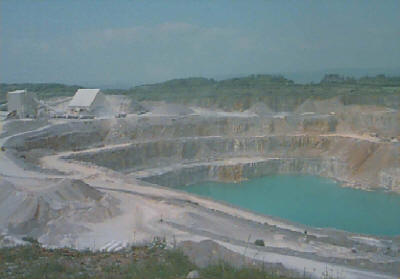
11.4.3. Sandstone: The Pennant Sandstone of the Upper Coal
Measures in the northern part of the County Borough has been assessed as
having significant development potential for use as High Specification
Aggregates (HSA) because of its natural durability and suitability as road
surfacing materials with high levels of skidding resistance. The current
policy for a more sustainable transport policy has resulted in reduced road
construction with a consequent decrease in demand for HSA materials. There
have been no proposals to extract sandstone in the County Borough for this
purpose in recent years. At the present time, it is considered that there is
no evidence of any demand for HSA material in the County Borough, and
therefore, no sites are allocated in the plan. If demand should change in
the future, there are sufficient resources in the County Borough to review
the need to safeguard land for future extraction and these areas are
unlikely to be sterilised permanently because of other policies which
protect against development in rural areas. Temporary permission was granted
to commence extraction of blockstone from stockpiles at Darren-y- Bannau
Quarry, near Caerau, for use in the Caerau Colliery reclamation scheme but
this has now expired. Cefn Cribbwr Quarry operates intermittently to produce
sandstone for crushing for silica sand but does not produce HSA material.
11.4.4. Sand and Gravel: There is very little land-won sand and
gravel extraction in South East Wales. Nearly 85% of regional demand for
sand and gravel for construction is met from marine dredged operations in
the Bristol Channel, significantly from Nash Bank, off the Porthcawl coast.
Recent research and policy reports advise that reliance on this source
should be reduced in the next 5-10 years to avoid any significant adverse
impact on the Bridgend coastline. The resources of sand and gravel within
the County Borough are located in the coastal area which is protected by
environmental designations where any applications for extraction would be
the subject of rigorous examination. Licences for extraction are issued by
the Crown Estate, provided the National Assembly for Wales has given a
favourable ‘Government View’. Concern has been expressed about a possible
link between dredging for aggregates and coastal changes which are monitored
as part of the conditions of the dredging licences. These issues are
considered in policies relating to the coastal zone and are addressed in
Policy EV15.
11.4.5. Secondary/Recycled Materials: The potential sources of
secondary materials in the County Borough are limited to mineral waste
including colliery spoil, town ash, power station ash from the former Llynfi
Power Station, road plannings and waste from construction and demolition
sites. Government policy encourages the increased use of these materials in
order to reduce demand for primary materials and minimise the landfill of
waste. This policy is fully supported but at the present time it is
acknowledged that the overall impact of alternative materials on demand for
aggregates is limited but further research is being carried out to fully
investigate this issue. Most colliery tips have been restored in the County
Borough and it may be unacceptable to extract material unless significant
environmental improvements would be achieved. Secondary materials have been
imported from outside the County Borough for construction projects including
the highway improvements at Heol-y-Splott, South Cornelly, which used slag
from Port Talbot Steelworks as a surfacing material. Policies are included
to identify sources of material which may be suitable for recycling and for
the provision of sites for aggregates recycling which would assist the use
of construction and demolition wastes.
11.5. Non-Energy Minerals - Non Aggregates
11.5.1. Approximately half of the crushed rock produced in the County
Borough is processed to provide fluxing stone for steel manufacture at the
British Steel Works at Port Talbot, mainly from Cornelly Quarry. It is of
national importance to maintain supplies of high purity limestone of the
required quality for the industrial market.
11.6. Energy Minerals - Coal
11.6.1. Half of the County Borough, north of the line between Cefn
Cribbwr, Sarn and Pencoed, lies within the South Wales Coalfield.
Considerable areas of the County Borough have been worked historically by
opencast and deep coal mining operations. Deep mining has now ceased,
including all small mines, although one is awaiting final restoration.
Opencast mining is being undertaken currently at Park Slip West where
operations are moving westward into Neath Port Talbot County Borough. Major
investment is proposed in the new Margam Drift Mine which will be
constructed in the vicinity of the extension of opencast working within
Neath Port Talbot County Borough. Part of the underground take and part of
the surface area containing the overburden mounds will remain in Bridgend
County Borough during the life of the Mine.
11.6.2. Mineral Planning Guidance (MPG 3) (1998) [applicable in England
only] states that areas where coal extraction is likely to be acceptable
should be indicated in the Unitary Development Plan. The Welsh Mineral
Planning Guidance also endorses such an approach. The coal industry has been
unable, however, to provide a forward programme of sites to assist mineral
planning authorities with their development plans. The recent research
project, “Mineral Resource Information for Development Plans South Wales”
undertaken by the British Geological Survey for the Department of the
Environment, Transport and the Regions, defined two resource zones within
which coals of potential economic interest may occur. The primary zone forms
the main target for opencast extraction relating to a closely spaced
succession of thick coals while the secondary zone represents coals which
are generally thinner and less concentrated in vertical or area distribution
but are nevertheless an important resource. Within the primary zone in the
County Borough, nearly all the area has been already worked or is sterilised
by major development. The Fernbank site, to the north of Pencoed, is the
only remaining area in the primary zone and is also the subject of a Coal
Authority licence. This land has recently been sold off by the mineral
operator/landowner and any future opencast mining is considered remote.
Planning permission has not been granted for working and there is likely to
be strong environmental objections to any proposal for opencast coal
extraction in this area. Within the secondary zone, again much of the land
has been previously worked or is developed except for certain areas in the
Llynfi and Ogmore and Garw Valleys. There are no known proposals or existing
licences in these areas except for land at St Johns Colliery, Maesteg, where
no suitable vehicular access is currently available. No coal extraction is
anticipated in this area within the plan period.
11.7. Energy Minerals - Oil and Gas
11.7.1. Government policy encourages exploration for and production of
oil and gas reserves to achieve the maximum economic exploitation of the
resources consistent with good practice and the protection of the
environment. Until the last two years, it appeared unlikely that the
development of on-shore oil or gas reserves would have any impact on the
County Borough. A number of applications have been approved recently for
exploratory boreholes for coalbed methane in the Brynmenyn, Bryncethin and
Wern Tarw areas but no exploration has been undertaken to date.
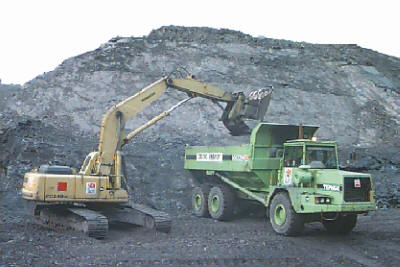
11.8. Mineral Exploration
11.8.1. MINERAL EXPLORATION
POLICY M1
PROPOSALS TO CARRY OUT MINERAL EXPLORATION WILL BE PERMITTED UNLESS THERE
WOULD BE UNACCEPTABLE ADVERSE IMPACTS ON THE ENVIRONMENT, RESIDENTIAL
AMENITY OR OTHER SENSITIVE LAND USES.
11.8.2. Planning legislation enables certain small scale and temporary
mineral exploration to be undertaken as permitted development provided that
trees are not damaged and that sites are restored as far as practicable to
their former state. Longer periods are allowed but only if prior
notification is given to the Council. When proposals for mineral exploration
are being considered, the Council will seek to ensure that there will be no
adverse effects on residential amenity or other sensitive land uses such as
schools, hostels and hospitals.
11.8.3. Any permissions granted to carry out mineral exploration does not
carry any presumption in favour of permitting any subsequent development to
exploit the reserves found as a result of that exploration.
11.9. Future Development - General
11.9.1. MINERAL EXTRACTION CRITERIA
POLICY M2
PROPOSALS FOR MINERAL EXTRACTION AND ASSOCIATED DEVELOPMENT, INCLUDING
MINERAL WASTE TIPPING, WILL BE PERMITTED ONLY WHERE ALL OF THE FOLLOWING
CRITERIA ARE SATISFIED:-
1. MEASURES CAN BE TAKEN TO REDUCE DAMAGE OR DISTURBANCE TO THE
ENVIRONMENT TO ACCEPTABLE LEVELS WITH SPECIFIC REFERENCE TO:-
a) POLLUTION OR DISTURBANCE
TO GROUND OR SURFACE WATER SUPPLY OR DRAINAGE;
b) THE IMPACT ON THE
LANDSCAPE OF THE AREA;
c) THE EFFECT ON NATURE
CONSERVATION AND WILDLIFE INTERESTS OF THE SITE AND ADJOINING LAND
WITH PARTICULAR REGARD TO SITES DESIGNATED FOR PROTECTION;
d) THE EFFECT ON AGRICULTURAL
INTERESTS PARTICULARLY ON HIGH QUALITY AGRICULTURAL LAND;
e) THE EFFECT ON SITES OF
ARCHAEOLOGICAL IMPORTANCE; AND
f) THE IMPACT ON THE
STABILITY OF ADJOINING LAND.
2. MEASURES CAN BE TAKEN TO REDUCE DAMAGE OR DISTURBANCE TO
NEIGHBOURING LAND USES TO ACCEPTABLE LEVELS INCLUDING:-
a) THE EFFECTS OF EXCESSIVE
NOISE, DUST, VIBRATION ARISING FROM THE METHODS OF WORKING; AND
b) THE IMPACT OF TRAFFIC
GENERATED TO AND FROM THE SITE.
3. PROPOSALS FOR THE DURATION AND PHASING OF OPERATIONS,
RESTORATION, BENEFICIAL AFTER-USE AND AFTERCARE ARE ACCEPTABLE.
11.9.2. Minerals extraction can have an adverse impact on the environment
and other land uses. Although the individual characteristics of mineral
workings may vary, there are many common factors which need to be considered
in assessing proposals for mineral operations.
Policy M2 will be used to
assess proposals for new development and applications to review existing
planning consents, both initial and for periodic reviews.
11.10. Landbanks
11.10.1. MAINTENANCE OF APPROPRIATE LANDBANKS
POLICY M3
A LANDBANK OF PERMITTED RESERVES OF CRUSHED ROCK FOR AGGREGATES WILL BE
MAINTAINED DURING THE LIFE OF THE PLAN AND FOR 10 YEARS BEYOND 2016 TO
PROVIDE FOR THE CONTINUATION OF THE COUNTY BOROUGH’S SHARE OF REGIONAL
AGGREGATES PRODUCTION.
11.10.2. The County Borough currently produces about 7% of the South
Wales region’s total crushed rock sales for the aggregates market. As
explained in 11.4.1. there are sufficient reserves with permission to
continue the current level of production for the next 40 years but part of
these reserves will be needed for non-aggregate production and other areas
may not be suitable for further development.
11.10.3. It should be noted that individual authorities need to
contribute to the regional landbank for SE Wales where they have appropriate
resources and there is a proven need.
11.11. Future Development - Safeguarded Areas
11.11.1. CONSERVING LIMESTONE FOR FUTURE USE
POLICY M4
LAND SHOWN ON THE PROPOSALS MAP, WILL BE SAFEGUARDED FROM ALL PERMANENT
BUILDING DEVELOPMENT FOR FUTURE LIMESTONE EXTRACTION AS FOLLOWS:-
M4(1) EAST OF CORNELLY QUARRY AT STORMY AIRFIELD; (Link to Map 26 West)
M4(2) NORTH EAST OF CORNELLY QUARRY INTO THE CAR DISMANTLERS YARD; AND
(Link to Map 25 East)
M4(3) EAST OF GAENS QUARRY. (Link to Map 25)
11.11.2. Extensions to Cornelly Quarry are needed to ensure that long
term reserves of high purity limestone will be available for steel
manufacture. All reserves of stone at Cornelly have potential use as
aggregates but only certain areas have stone suitable for use as fluxing
stone. The extent of reserves to be released at any time will depend on the
output prevailing at the time or proven future output levels, together with
an assessment of reserves already permitted. There are reserves already
permitted at Gaens and Cornelly where it would be undesirable for further
working to take place because of the proximity of dwellings and where
extraction of deeper reserves may adversely affect groundwater systems and
water supplies. Additional reserves may be released to replace permitted
areas where no further working should be undertaken. An extension of
Cornelly Quarry into the former Airfield will require the diversion of Mount
Pleasant Road around the future working area.
11.12. Future Development - Areas of Search
11.12.1. FUTURE MINERAL EXTRACTION
POLICY M5
AREAS OF SEARCH AS SHOWN ON THE PROPOSALS MAP WILL BE SAFEGUARDED FROM ALL
PERMANENT BUILDING DEVELOPMENT
SO THAT RESOURCES MAY BE PRESERVED FOR THE FUTURE SHOULD A DEMONSTRABLE NEED
BE PROVEN AT:-
M5(1) LAND TO THE NORTH OF CORNELLY QUARRY AND TO THE EAST OF GAENS
QUARRY; AND (Link to Map 25 East)
M5(2) LAND AT THE FORMER STORMY DOWN QUARRY. (Link to Map 25 East)
11.12.2. It should be stressed that there is no presumption in favour of
release of any land within the areas of search for mineral extraction at the
present time. It is not yet known whether there will be a need to release
any of the land within the areas of search for future limestone extraction
or whether all of the land shown will prove to be acceptable for mineral
working. The land to the north of Cornelly Quarry is confined by woodland
which is protected by Tree Preservation Orders and it will be necessary to
maintain an open area of land between future quarrying and the woodland to
prevent any adverse effects caused by mineral extraction. It is considered
necessary, however, to safeguard these areas to prevent sterilisation by
permanent development if the need for additional land should arise in the
future.
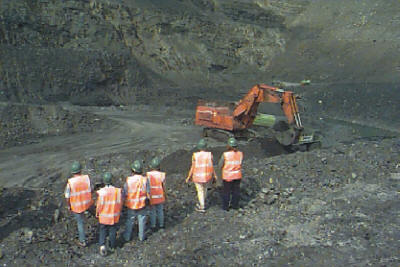
11.13. Sand and Gravel
11.13.1. EXTRACTION OF LAND-WON SAND & GRAVEL
POLICY M6
PROPOSALS FOR LAND-WON SAND AND GRAVEL WILL BE EXAMINED AGAINST CRITERIA IN
POLICY M2. EXTRACTION IN STATUTORY DESIGNATED AREAS WILL ONLY BE PERMITTED
IN EXCEPTIONAL CIRCUMSTANCES, FOLLOWING THE MOST RIGOROUS EXAMINATION OF THE
CONTRIBUTION TO THE PUBLIC INTEREST, ENVIRONMENTAL IMPACT AND SCOPE FOR
MITIGATION.
11.13.2. The demand for fine aggregates is likely to be met by continued
marine dredging from the Bristol Channel. In view of increasing concern
about the implications for continued dredging because of a possible link
with coastal changes, there may be a need to consider land-won extraction of
sand and gravel to maintain supplies for construction purposes. There would
be objections to the working of known resources near the coast of the County
Borough where those resources that have not been sterilised by development
are the subject of statutory designated areas i.e. Kenfig NNR and Merthyr
Mawr SSSI.
11.14. Borrow Pits
11.14.1. TEMPORARY MINERAL EXTRACTION
POLICY M7
PROPOSALS FOR BORROW PITS WILL BE CONSIDERED AGAINST THE CRITERIA IN
POLICY
M2 AND ALSO IN RELATION TO THE NEEDS OF PARTICULAR CONSTRUCTION PROJECTS,
THE LIFE OF THE EXCAVATION AND PROPOSALS FOR RESTORATION.
11.14.2. A ‘Borrow Pit’ is a temporary quarry or similar site opened to
supply aggregate minerals to a particular construction project, usually
highway contracts over a limited period. These sites are usually located
within or adjacent to the project, and the mineral is supplied direct
without using public roads. The mineral can be supplied, therefore, at low
cost and with minimum disturbance to road users. The impact of the borrow
pit can be similar to more permanent quarries and have a significant impact
on neighbouring land uses although over a shorter period.
11.15. Mineral Working Deposits
11.15.1. EXTRACTION OF MATERIAL FROM MINERAL
WORKING DEPOSITS
POLICY M8
PROPOSALS FOR THE EXTRACTION OF MATERIAL FROM MINERAL WORKING DEPOSITS WILL
BE PERMITTED ONLY WHERE THEY ARE ACCEPTABLE IN RELATION TO CRITERIA IN
POLICY M2 AND WHERE THE PROPOSAL MAINTAINS OR IMPROVES TIP SAFETY.
11.15.2. Spoil tips from old mineral workings sometimes contain
economically workable deposits of material. There may be quantities of small
coal which can be recovered by screening/washing the tip material whereas
other tips can provide large quantities of secondary aggregates which could
substitute for primary materials and conserve resources. The extraction of
some mineral working deposits may be deemed permitted development subject to
the provisions of Part 23 of the Town and Country Planning (General
Permitted Development) Order 1995.
11.16. Alternative Materials
11.16.1. ENCOURAGING THE RE-USE OF MINERALS
POLICY M9
PROPOSALS FOR FACILITIES TO RECYCLE MATERIALS WHICH WOULD SUBSTITUTE FOR
PRIMARY AGGREGATES WILL BE PERMITTED WHERE THEY ARE CONSIDERED TO BE
ACCEPTABLE HAVING ASSESSED THE DEVELOPMENT AGAINST CRITERIA IN
POLICY M2.
11.16.2. Construction and demolition materials are often recycled as part
of a new construction project and re-used on site. Considerable quantities
of such material are, however, disposed of to landfill sites because there
are inadequate local facilities to process the waste products. It is
important that suitable facilities are established to encourage further
re-use of this material in order to achieve the minimisation of waste.
11.17. Environmental Protection and Improvement
11.17.1. CONDITIONS TO PROTECT & IMPROVE THE
ENVIRONMENT
POLICY M10
WHEN GRANTING OR REVIEWING PLANNING PERMISSION FOR MINERAL DEVELOPMENT,
WHERE NECESSARY AND APPROPRIATE TO THE DEVELOPMENT, THE MINERAL PLANNING
AUTHORITY WILL IMPOSE CONDITIONS AND/OR AGREE SECTION 106 OBLIGATIONS TO:-
1. VARY THE DURATION OF THE PERMISSION;
2. REGULATE THE HOURS OF WORKING OF THE OPERATION;
3. IDENTIFY MEASURES TO IMPROVE ACCESS AND CONTROL TRAFFIC MOVEMENTS;
4. REQUIRE OPERATIONS TO BE DESIGNED TO MITIGATE NOISE LEVELS TO SPECIFIED
LIMITS;
5. REQUIRE THE MONITORING OF BLASTING OPERATIONS, TO CONTROL BLASTING
OPERATIONS TO SPECIFIED TIMES OF THE WORKING DAY AND TO LIMIT THE EFFECTS OF
VIBRATION IN RELATION TO SENSITIVE DEVELOPMENT;
6. MINIMISE THE IMPACT OF DUST;
7. REQUIRE THE MONITORING OF THE IMPACT OF WORKINGS ON GROUNDWATER RESOURCES
AND MAKE PROVISION FOR THE PROTECTION OF THE QUALITY AND QUANTITY OF
GROUNDWATER AND SURFACE WATER FEATURES;
8. REQUIRE AN ARCHAEOLOGICAL ASSESSMENT OF THE SITE AND ENSURE THAT FEATURES
OF ARCHAEOLOGICAL OR HISTORIC INTEREST ARE RECORDED AND, IF NECESSARY,
PROTECTED AND PRESERVED IN SITU;
9. REQUIRE LANDSCAPE WORKS OR OTHER SCREENING OPERATIONS TO REDUCE THE
VISUAL IMPACT OF THE OPERATIONS TO AN ACCEPTABLE LEVEL; AND
10. PROVIDE APPROPRIATE RESTORATION, LAND USE AND AFTERCARE TO SECURE LONG
TERM BENEFIT PARTICULARLY FOR NATURE CONSERVATION INTERESTS.
11. REQUIRE A DETAILED EVALUATION OF THE NATURE CONSERVATION VALUE OF THE
SITE. WHERE NECESSARY, MEASURES WILL BE REQUIRED FOR THE PROTECTION OF ANY
HABITATS, SPECIES OR FEATURES OF INTEREST, OR MITIGATION MEASURES, AS
APPROPRIATE.
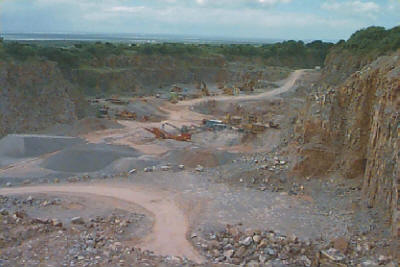
11.17.2. There are a number of issues which need to be addressed in
determining applications for mineral development in order to ensure that the
development will not have an adverse impact on surrounding areas,
particularly if there are residential properties in close proximity to the
site. Planning legislation contains a provision that all mineral review
sites which enjoy the benefit of a planning permission which is not time
limited, will automatically expire in 2042 but there may be instances where
a shorter time period is essential to enable an otherwise unacceptable
proposal to proceed. It is important to control issues, such as, visual
impact, hours of working, noise, dust and vibration from mineral working in
order to protect the amenity of the surrounding area. Traffic generation
from mineral workings can have a significant impact on other land uses both
in the immediate vicinity and over a wide distance from the site as some
minerals are transported considerable distances from their source. The
carboniferous limestone in the County Borough is a most important aquifer
and mineral extraction can have a significant effect on it, particularly if
deeper workings below the groundwater table are exploited. The advice of the
Environment Agency will be considered in order to assess the future impact
of deeper and lateral extensions of mineral operations and proposed water
treatment facilities. The possible effect of future mineral development on
known sites of archaeological and historic interest should be taken into
account so that the need to record or, where necessary, preserve sites can
be decided when the proposal is determined. Lastly, it is important to
maximise the opportunity that mineral working creates to achieve long term
beneficial after-use and aftercare. Mineral sites are often very large and
the nature of operations can provide important habitat creation consistent
with the Local Biodiversity Action Plan for Bridgend.
11.18. Mineral Protection Zones
11.18.1. PROTECTION OF LOCAL AMENITY
POLICY M11
MINERAL PROTECTION ZONES ARE IDENTIFIED AROUND EXISTING QUARRIES TOGETHER
WITH CONSENTED RESERVES AND LAND ALLOCATED FOR FUTURE WORKING AS SHOWN ON
THE PROPOSALS MAP. WITHIN THESE ZONES, NEW DEVELOPMENT INCLUDING MINERAL
DEVELOPMENT WILL BE RESTRICTED IN ORDER TO ENSURE THAT CURRENT AND FUTURE
MINERAL DEVELOPMENT WILL NOT BE INHIBITED BY ITS IMPACT ON NEW DEVELOPMENT.
PROPOSALS FOR DEVELOPMENT OTHER THAN MINERALS WITHIN THE ZONE WILL TAKE
ACCOUNT OF THE POTENTIAL IMPACT OF QUARRYING ON THE DEVELOPMENT PROPOSED AND
A MINIMUM BUFFER OF AT LEAST 200 METRES WILL BE SECURED BETWEEN QUARRYING
OPERATIONS AND SENSITIVE LAND USES, UNLESS SITE CHARACTERISTICS LEAD THE
COUNCIL TO DETERMINE OTHERWISE.
11.18.2. Mineral working can have an adverse impact on the amenity of
sensitive land uses, such as, residential development, hospitals, hostels
and schools. Mineral Protection Zones have been identified around existing
quarries and their future working areas to prevent conflict between mineral
working and other land uses by providing a buffer around active and future
quarrying areas. In some instances, there is existing residential
development already located within the Mineral Protection Zones. It would be
unreasonable and difficult to resist infilling development within built up
areas even though there may be some effect from quarrying operations. The
Council will, however, judge each case on its merits. In all other cases,
the Council will seek to secure a buffer of at least 200 metres between new
development and mineral operations.
11.19. Retention of Land
11.19.1. RETENTION & CONTROL OF LAND
POLICY M12
THE COUNCIL WILL SEEK TO SECURE THE RETENTION OF IDENTIFIED EXISTING
TOPOGRAPHICAL FEATURES AS SHOWN ON THE PROPOSALS MAP THAT SCREEN MINERAL
OPERATIONS. IT IS, HOWEVER, RECOGNISED THAT THE IDENTIFIED AREAS ENJOY
PLANNING PERMISSION FOR QUARRYING, AND ANY RELINQUISHMENT OF THE RIGHT TO
WORK THE RESPECTIVE AREAS WOULD NEED TO BE WITH THE AGREEMENT OF THE
OPERATORS. THE IDENTIFIED AREAS ARE:-
M12(1) LAND ALONG HEOL-Y-SPLOTT; (Link to Map 25)
M12(2) LAND ADJACENT TO MOUNT PLEASANT ROAD; (Link to Map 25)
M12(3) LAND TO THE SOUTH WEST OF GROVE QUARRY; (Link to Map 25)
M12(4) LAND TO THE NORTH OF MOUNT PLEASANT ROAD ADJACENT TO GROVE
QUARRY; (Link to Map 25)
M12(5) LAND FORMING THE SOUTHERN AND EASTERN RIM OF GAENS QUARRY; AND (Link to Map 25)
M12(6) LAND FORMING THE EASTERN PART OF STORMY DOWN QUARRY. (Link to Map 26 West)
11.19.2. Some of the land permitted for quarrying many years ago is
considered to be unsuitable for further working because they are located
close to residential properties or provide a screen to existing working
areas. Some of the land the subject of historical permissions are currently
being updated with new planning conditions, as part of a review of old
mineral permissions required by the Environment Act 1995. That exercise will
impose modern up-to-date planning conditions which will control future
quarrying operations. In addition, the Mineral Planning Authority may seek
additional agreements as part of planning applications for additional
mineral extraction on currently unpermitted land (reference UDP policies
M4/5) which would seek the agreement of operators to relinquish the right to
work defined areas, and consider the replacement of reserves in more
suitable locations, as identified in policies
M4/5.
11.19.3. It is acknowledged that the strip of land to the west of Mount
Pleasant road between Cornelly Quarry and the former Stormy Down Airfield
could only be retained if proposals to extend the quarry into the former
airfield do not proceed. In addition, it is recognised that the strip of
land along Heol-y-Splott between Cornelly Quarry and Pant Mawr Quarry could
only be retained if Cornelly Quarry does not extend laterally into Pant Mawr.
In the event of such an expansion, the need for screening from Heol-y-Splott
would be unnecessary, as the existing potential viewpoints would be removed.
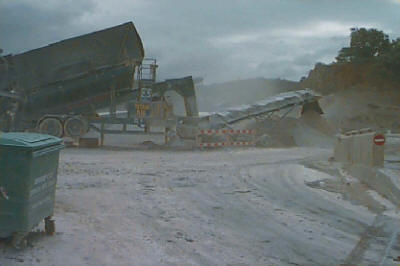
11.20. Restoration and Aftercare
11.20.1. SECURING HIGH QUALITY & PROMPT
RESTORATION & AFTERCARE
POLICY M13
WHEN GRANTING OR REVIEWING PERMISSION FOR MINERAL WORKING, THE MINERAL
PLANNING AUTHORITY WILL REQUIRE A SCHEME TO BE SUBMITTED TO SECURE HIGH
QUALITY, PROMPT AND WHEREVER POSSIBLE, PHASED RESTORATION AND AFTERCARE AND
TO PROVIDE FOR A BENEFICIAL AFTER-USE OF THE SITE CONSISTENT WITH THE LOCAL
BIODIVERSITY ACTION PLAN. WHERE DEEMED APPROPRIATE BY THE COUNCIL, AFTER
CONSULTATION WITH RELEVANT CONSULTEES, AN EXTENDED AFTERCARE PERIOD BEYOND
THE STATUTORY 5 YEARS WILL BE REQUIRED PARTICULARLY FOR SUCH AFTER-USE AS
NATURE CONSERVATION.
11.20.2. Mineral working is a temporary operation even though sites may
be active for long periods. One of the most important aims of minerals
control is to ensure that the land used for mineral working will be restored
once operations have ceased and that the reclaimed land is capable of
beneficial use. The location and size of the final excavation will often
dictate the end use to which the site may be put. In view of the long life
of some sites, it is not always easy to determine the future after-use at
the outset of working and schemes of working may need to be revised as the
operation proceeds. A statement of broad objectives for enduse or a
restoration strategy does not give sufficient detail on which to base
decisions on progressive restoration including the cost to the operator.
Experience has shown that operators frequently underestimate the full cost
of restoration and aftercare and consequently it is important that as much
detail as possible should be incorporated in proposals at the outset. In the
event that site circumstances change significantly, a formal variation can
always be sought.
11.20.3. Careful stripping and storage of soils will always assist
restoration and such operations needs to be strictly controlled including
the retention of features, such as, existing trees and hedgerows. It is
essential that developers are able to demonstrate that they have adequate
control of the land which is the subject of an application. Without such
control, there is no guarantee that long term benefits from restoration can
be realised.
11.20.4. Where deemed appropriate by the Council, financial guarantees
may be sought from operators to cover the cost of restoration and aftercare
in the event of default by the operator. Such guarantees will normally be
required for coal related development only, unless particular circumstances
dictate otherwise.
11.21. Future development
11.21.1. Conserving land-won sand and gravel
POLICY M14
SAFEGUARDING AREAS ARE IDENTIFIED ON THE PROPOSALS MAP AS POTENTIAL
RESOURCES OF SAND AND GRAVEL. PROPOSALS FOR PERMANENT DEVELOPMENT WITHIN ANY
PART OF THESE AREAS WILL BE STRONGLY RESISTED. THE RESOURCES ARE LOCATED AS
FOLLOWS:-
M14(1) SOUTH OF SOUTH CORNELLY (Link to Map 25)
M14(2) MERTHYR MAWR (Link to Map 31 Central)
M14(3) ISLAND FARM, BRIDGEND (Link to Map 27 Central)
M14(5) EAST OF PENCOED (Link to Map 23 West)
11.21.2. The purpose of the Policy is to protect the areas from permanent
development that would sterilise or hinder the extraction of the potential
mineral resources if the need for the resources should be proven. It does
not indicate an acceptance of the working of any of the sites identified.
This Policy should be read in association with
Policy M6.
<<
Previous Chapter |
Next Chapter
>> |