7.1. Justification of Part 1 Policies
7.1.1. Town centres are considered to be of particular importance because
they fulfil a wider role than that simply of retail centres, and there is a
recognition in Policy 8 of their importance to the community in
accommodating a mixture of often interdependent land uses, of which retailing is
only a part.
7.1.2. In order for town centres to succeed, they need to retain and develop
a wide range of attractions and amenities as well as providing an attractive and
safe environment.
7.1.3. Vitality is reflected in how busy a centre is at different times and
in different parts, attractiveness in the facilities and character which draw
trade, whilst viability refers to the ability of a centre to attract investment
to maintain the fabric.
7.1.4. Existing town centres tend to be more accessible to people who do not
have ready access to cars and the protection and enhancement of existing town
centres is important on grounds of social equity.
7.1.5. Conversely, many town centres in the County Borough are
topographically or physically restricted in some way which limits their
potential for future growth especially as many retailers require large
unencumbered sites. This helps to explain the trend towards out-of-centre
development. Policy 9 seeks to establish criteria by which retail
proposals for sites away from existing centres (out-of-centre sites) will be
evaluated.
7.1.6. In considering such proposals, government advice indicates that
development plans should first establish a need (which can be quantitative or
qualitative) for such developments and if this is demonstrated, adopt a
sequential approach to site selection. This means that the first preference
should be for town centre sites, where suitable sites or buildings for
conversion are available, followed by edge of centre sites, district centre
sites, then existing out-of-centre sites and allocations. Finally, new
out-of-centre sites may be considered in locations that are accessible by a
choice of means of transport. Developers will also be expected to have
considered mixed-use schemes when considering sites in town centres.
7.1.7. This approach should apply to all key town centre uses, not only
retail, which attract a lot of people, including commercial and public offices,
entertainment and leisure uses. Proposals for development on the sites allocated
for retail developments must be for the specified uses, otherwise proposals will
have to demonstrate that they meet a need and the sequential preference test.
This approach is reflected in other policies relating to these town centre uses
elsewhere in the Unitary Development Plan.
7.1.8. The only circumstances in which the policy will apply to existing
developments on allocated sites will be where proposals are for extensions of
floorspace and variation of goods types. In all circumstances, in order to
comply with the criteria of
Policy 9, it will usually be necessary to undertake
some form of retail impact assessment if the proposed development is of a type
that could be accommodated in a town centre.

Part 2
7.2. Introduction
7.2.1. Shopping is an important leisure and economic pursuit and the
resulting patterns of retail activity are major forces shaping the future
prospects of town centres. The national trend towards out-of-centre retailing
over the past two decades is now seen to have jeopardised the economic vitality
of many older traditional town centres, and current government policy advice
seeks to address these concerns. Town centres are now the main focus for new
retail activity. At the same time, the thrust toward sustainable development,
stresses the need to reduce the reliance on the motor car as the principal mode
of transport for shopping trips. This mitigates against further out-of-centre
development as the vast majority of shopping trips to these locations are made
by private motor cars; whereas town centres tend to be better served in terms of
public transport.
7.2.2. Within the local context, retailing is a significant source of jobs in
the County Borough. Some 4200 jobs are provided in the retail sector which
represents 9.5% of total employment in the County Borough. Employment levels in
this sector are in line with the Welsh average, and retailing provides
proportionately more female jobs than male jobs.
7.2.3. Despite recent significant developments such as the construction of
the Designer Outlet - Wales at junction 36 of the M4 motorway, it has been
established that a significant proportion of expenditure on comparison goods
i.e. non-food, flows out of the County Borough to other centres, principally
Cardiff and Swansea.
7.3. The Retail Hierarchy
7.3.1. The distribution of shopping facilities in the County Borough fits
into a regional hierarchy, with the highest order centres at Cardiff and Swansea
being located outside the County Borough. Within Bridgend County Borough there
is a traditional and evident hierarchy of town and district shopping centres,
each fulfilling its own niche in the overall provision of retail facilities.
7.3.2. Bridgend occupies the position at the top of the County Borough retail
hierarchy and is defined as a sub-regional town centre. It contains the largest
number and widest range of shops of any commercial centre in the County Borough.
Detailed analysis of Bridgend’s catchment area shows that it is the principal
shopping centre for much of the County Borough and for some communities outside.
Currently Bridgend town centre provides 655,500 square feet of retail
floorspace, the majority of which is given over to comparison shopping (see
Figure 1 RET1).
FIGURE RET1
BREAKDOWN OF USES IN BRIDGEND TOWN CENTRE
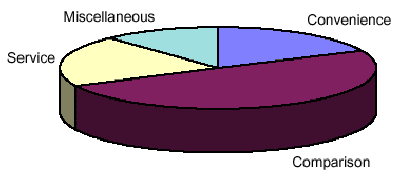
7.3.3. Bridgend town centre’s role extends beyond that of a shopping centre
as it provides a wide range of service and leisure facilities and its diversity
of uses also shown in Figure 1 RET1 makes it an important destination for the
whole of its catchment area. However, like many other similar sized towns in
South Wales, Bridgend town centre has suffered from a relative under investment
in new facilities together with increased competition from neighbouring centres
and new out-of-centre retail developments. As a consequence there is a perceived
need to address the problems of the town centre and the County Borough Council
is implementing a number of important initiatives aimed at regenerating the town
centre under the auspices of the Bridgend Town Centre Regeneration Strategy.
7.3.4. Bridgend is supported by the smaller town centres of Maesteg and
Porthcawl, both of which offer a wide range of shops and facilities including
medium sized convenience stores to meet the needs of their immediate catchment
areas. New retail developments in Maesteg have strengthened its position in the
retail hierarchy, whilst Porthcawl also serves a large number of tourists, both
long stay and day trippers, who visit the resort and surrounding area in the
summer months. A regeneration strategy has been commissioned for Maesteg to help
ensure that it retains its vitality and attractiveness, whilst in Porthcawl a
regeneration strategy has been running for a number of years, addressing most
aspects of the town’s economic well being. At a level below in the hierarchy,
there are a number of district centres distributed throughout the County Borough
which usually contain a small supermarket and offer a range of convenience and
comparison goods as well as personal services such as subbranches of banks,
newsagents, sub-post offices etc. Their immediate catchment areas tend to be
more limited with a restricted range of convenience and comparison goods. Their
role is primarily that of ‘top-up’ or ‘walk-in’ centres often providing
essential goods on a daily basis as a supplement to those provided in centres
further up the hierarchy.
7.3.5. Over the last two decades the growth of out-of-centre supermarkets,
retail warehousing and retail parks has added a new dimension to shopping
patterns in the County Borough which has placed the traditional retail hierarchy
under pressure. Out-of-centre retail developments have generally been confined
to the Bridgend area with the development and extension of the Bridgend Retail
Park and Waterton Retail Park. Both of these developments house a variety of
retail warehouse units generally selling bulky goods such as DIY goods, carpets,
furniture and electrical goods. In addition, there is a large out-of-centre
Tesco supermarket and a smaller Lidl supermarket on the Bridgend Retail Park
whilst Sainsburys have located out-of-centre at the Pines. More recently the
development of land at junction 36 of the M4 for the Designer Outlet - Wales has
added a new dimension to out-of-centre retailing in the County Borough. Despite
competition from out-of-centre retail developments, the established retail
hierarchy has continued to evolve over many years and the existing commercial
centres fulfil an important role in meeting not only the shopping needs but the
cultural and leisure requirements of the residents of the area. This plan
therefore seeks to protect the established retail hierarchy of the area.
7.3.6. Policy R1 defines in more detail the nature of the hierarchy.
7.3.7. PROTECTION OF THE RETAIL HIERARCHY
POLICY R1
NEW RETAIL DEVELOPMENT SHOULD BE CONCENTRATED IN ESTABLISHED COMMERCIAL
CENTRES NAMELY:-
| |
|
Link to Map |
| 1. THE SUB-REGIONAL TOWN CENTRE OF:- |
BRIDGEND |
34 |
| |
|
|
| 2. THE TOWN CENTRES OF:- |
MAESTEG |
33 |
| |
PORTHCAWL |
37 |
| |
|
|
| 3. THE DISTRICT CENTRES OF:- |
ABERKENFIG |
21 |
| |
BLAENGARW |
6 Central |
| |
BRACKLA |
27 East |
| |
CAERAU |
1 Central |
| |
NANTYFFYLLON |
5 |
| |
NANTYMOEL |
7 |
| |
OGMORE VALE |
7 |
| |
PENCOED |
23 West |
| |
PONTYCYMMER |
6 |
| |
PYLE/KENFIG HILL |
19 |
RETAIL DEVELOPMENT OUTSIDE THESE CENTRES WILL ONLY BE PERMITTED
WHERE:-
1. IN THE CASE OF LOCAL CONVENIENCE GOODS, IT IS INTENDED TO SPECIFICALLY
SERVE AREAS OF NEW HOUSING
DEVELOPMENT OR WHERE THERE IS A DEMONSTRATED DEFICIENCY IN SHOPPING
FACILITIES IN EXISTING HOUSING AREAS; OR,
2. IN ACCORDANCE WITH POLICIES
R9,
R10 AND
R11.
7.3.8. Policy R1 seeks to define as far as is practicable the
acceptable limits of the commercial centres which constitute the retail
hierarchy. It seeks to limit the spread of further new out-of-centre retail
development and it also seeks to make existing commercial centres the primary
focus for new retail development. Not all new retail uses are necessarily
compatible with existing town centres due to factors such as scale, design and
traffic considerations and there is a need to ensure that any new development is
appropriate to its location, consequently:-
7.3.9 NATURE OF RETAIL DEVELOPMENT IN COMMERCIAL CENTRES
POLICY R2
NEW RETAIL DEVELOPMENT WITHIN ESTABLISHED COMMERCIAL CENTRES, AS DEFINED IN
POLICY R1, WILL BE PERMITTED IF IT WOULD:-
1. SUSTAIN OR ENHANCE THE RANGE AND QUALITY OF SHOPPING PROVISION AND THE
VITALITY, VIABILITY AND ATTRACTIVENESS OF THESE CENTRES; AND,
2. BE IN KEEPING WITH THE SCALE AND CHARACTER OF THE CENTRE.
7.3.10. This policy seeks to ensure that as far as possible new retail
development will be to the long-term benefit of existing commercial centres.
Whilst recognising that the position of centres in the hierarchy may change over
time, new development should be broadly in keeping with the character of the
existing centre. Developers and retailers are expected to be flexible and
innovative about the format, design and scale of proposed development including
the amount of car parking, in order to achieve new development in harmony with
existing centres.
7.4. Non-Retailing Uses
7.4.1. Town centres need to maintain their diversity if they are to retain
their vitality and viability, but the range and variety of shops and services
has changed over time and will continue to evolve. However, there is also a need
to ensure that commercial centres do not lose their ‘critical mass’ of retail
units to the extent that they can no longer function as viable shopping centres.
There is a danger that retail uses could be outbid by other uses to the possible
detriment of the commercial centre. Accordingly, there is a need to strike a
balance between retailing and non-retailing uses in commercial centres to ensure
the optimum mix, and thus enhance the vitality and viability of those centres.
7.4.2. NON RETAIL USES IN PRIMARY SHOPPING AREAS
POLICY R3
PROPOSALS FOR THE DEVELOPMENT, REDEVELOPMENT OR CHANGE OF USE FOR NON-RETAIL*
USES WILL BE PERMITTED AT GROUND FLOOR LEVEL IN PRIMARY SHOPPING AREAS, ONLY
WHERE ALL OF THE FOLLOWING CRITERIA ARE SATISFIED:-
1. THE DEVELOPMENT WOULD NOT, BY VIRTUE OF ITS NATURE, DESIGN AND SCALE,
MATERIALLY DILUTE THE CONTINUITY OF THE PRIMARY SHOPPING FRONTAGE;
2. THE DEVELOPMENT WOULD NOT EXACERBATE AN EXISTING, NOR CREATE A NEW, UNDUE
CONCENTRATION OF NON-RETAIL* USES, EITHER IN THE IMMEDIATE LOCALITY OR IN THE
GENERAL STREET SCENE;
3. THE DEVELOPMENT WOULD NOT CREATE A DEAD WINDOW FRONTAGE, BUT RATHER BE OF A
NATURE WHICH STIMULATES PASSING TRADE AND MAINTAINS THE GENERAL INTEREST OF THE
SHOPPING PUBLIC;
4. THE DEVELOPMENT WOULD NOT GIVE RISE TO NEW, NOR MATERIALLY EXACERBATE
EXISTING, LOCAL PROBLEMS DUE TO TRAFFIC GENERATION, CONGESTION, HIGHWAY SAFETY,
NOISE, SMELL OR OTHER AMENITY CONSIDERATIONS;
FOR THE PURPOSES OF THIS POLICY, THE PRIMARY SHOPPING AREAS ARE DEFINED AS
FOLLOWS:-
BRIDGEND
ADARE STREET, (Link to Map 34)
CAROLINE STREET, (Link to Map 34)
THE RHIW CENTRE, (Link to Map 35)
WYNDHAM STREET, (Link to Map 34)
NOLTON STREET [NOS 4-24 EVEN Nos. ONLY AND NOLTON HOUSE] (Link to Map 35)
THE BRACKLA STREET CENTRE [Nos. 3-15 AND SUPERSTORE] (Link to Map 35)
MAESTEG
TALBOT STREET
COMMERCIAL STREET [Nos. 1-21, 128-145 INCL.] (Link to Map 33)
PORTHCAWL
JOHN STREET [Nos. 20-88, 1a-83 INCL.] (Link to Map 36)
WELL STREET [Nos. 1-16 INCL.] (Link to Map 37)
(Non-Retail Uses are defined as any use other than those falling under Class A1
of the Town & Country Planning (Use Classes) Order 1987)
7.4.3. Policy R3 recognises that the primary shopping areas of the
town centres in the County Borough are in need of particular protection from
competing uses and enforces strict criteria to protect their viability and
vitality, however outside of the primary shopping areas a more relaxed approach
is adopted.
7.4.4. NON RETAIL USES OUTSIDE PRIMARY SHOPPING AREAS IN
COMMERCIAL CENTRES
POLICY R4
PROPOSALS FOR THE DEVELOPMENT, REDEVELOPMENT OR CHANGE OF USE FOR NON-RETAIL*
USES ON GROUND FLOORS OUTSIDE OF THE PRIMARY SHOPPING AREAS IN ESTABLISHED
COMMERCIAL CENTRES, AS DEFINED IN POLICIES
R1 AND
R3, WILL BE PERMITTED
PROVIDED:-
1. THE PROPOSAL HAS NO UNACCEPTABLE EFFECTS ON THE ENVIRONMENT AND AMENITY OF
THE LOCALITY;
2. THE DEVELOPMENT WOULD NOT GIVE RISE TO NEW, NOR
MATERIALLY EXACERBATE EXISTING, LOCAL PROBLEMS DUE TO TRAFFIC GENERATION,
CONGESTION, HIGHWAY SAFETY, NOISE, SMELL OR OTHER AMENITY CONSIDERATIONS.
(* Non-Retail Uses are defined as any use other than those falling under Class
A1 of the Town & Country Planning (Use Classes) Order 1987).
7.4.5. As expressed above, the Council aims to maintain the vitality and
viability of the commercial centres in the County Borough. However, it is
recognised that in some older centres the prospects of attracting new retail
development are rather limited, this is particularly so in some of the valley
settlements. Under these circumstances, there is a need to adopt a more flexible
and pragmatic approach. In most of the valley settlements, the commercial
centres are interspersed with residential development, and indeed, many of the
shops were once private dwellinghouses that have been converted. The Council
would be concerned if, under these circumstances, shops remained vacant for a
considerable length of time, leading to a deterioration of their condition and
to an environmental blight. It is therefore considered appropriate to develop
criteria by which shop units outside of the primary shopping areas can be
converted to residential use.
7.4.6. RESIDENTIAL USES IN COMMERCIAL CENTRES
POLICY R5
PROPOSALS FOR THE REDEVELOPMENT OR CHANGE OF USE FOR RESIDENTIAL USES ON GROUND
FLOORS OUTSIDE OF THE PRIMARY SHOPPING AREAS IN ESTABLISHED COMMERCIAL CENTRES,
AS DEFINED IN POLICIES R1 AND
R3, WILL BE PERMITTED PROVIDED:-
1. THE PROPERTY HAS BEEN VACANT FOR AT LEAST TWO YEARS AND HAS BEEN ACTIVELY
MARKETED OVER THAT TIME;
2. THE PROPERTY DOES NOT FORM PART OF A CONTINUOUS FRONTAGE OF THREE OR MORE
SHOPS;
3. THE PROPOSAL HAS NO UNACCEPTABLE EFFECTS ON THE ENVIRONMENT AND AMENITY OF
THE LOCALITY;
4. THE PROPOSAL HAS NO UNACCEPTABLE EFFECTS IN TERMS OF TRAFFIC GENERATION,
CONGESTION AND HIGHWAY SAFETY.
7.4.7. The conversion of shop units often leads to the fragmentation of
commercial frontages but this is considered preferable to long term vacancies
and voids. The Council is committed however to underpinning the commercial
viability of all commercial centres in the County Borough and offers grants to
commercial properties in designated Commercial Improvement Areas for
environmental improvements. Town centres can successfully accommodate other
forms of employment generating activities apart from retailing, and these
activities can lead to a diversification of the centre giving it added
attraction and hence vitality. Nonetheless, these have to be kept in balance so
that the primary shopping core of the commercial centres is not diluted unduly.
Although activities falling within Class B1 of the Town and Country Planning
(Use Classes) Order 1987 are by definition acceptable in residential areas in
terms of their environmental standards, the Council will not permit such uses at
ground floor level in the primary shopping areas nor where a proposal would
result in the loss of existing retail floorspace elsewhere. Such uses may be
successfully accommodated above ground floor level in primary shopping areas and
in non-retail premises elsewhere in established commercial centres.
7.4.8. B1 USES IN COMMERCIAL CENTRES
POLICY R6
USES FALLING WITHIN CLASS B1 OF THE TOWN AND COUNTRY PLANNING [USE CLASSES]
ORDER 1987, WILL NOT BE PERMITTED AT GROUND FLOOR LEVEL IN THE PRIMARY SHOPPING
AREAS, AS DEFINED IN POLICY R3. ELSEWHERE, IN ESTABLISHED COMMERCIAL CENTRES, AS
DEFINED IN POLICY R1, SUCH USES MAY BE PERMITTED AT GROUND FLOOR LEVEL PROVIDED
THEY DO NOT RESULT IN THE LOSS OF EXISTING RETAIL FLOORSPACE.
7.4.9. General industrial uses are not considered appropriate anywhere in the
commercial centres of the County Borough. The environmental consequences of such
uses are usually deleterious to other uses and would prejudice the environmental
amenity of the commercial centres.
7.4.10. GENERAL INDUSTRIAL USES IN COMMERCIAL CENTRES
POLICY R7
GENERAL INDUSTRIAL USES* WILL NOT BE PERMITTED ANYWHERE IN THE ESTABLISHED
COMMERCIAL CENTRES AS DEFINED IN POLICY R1.
(*Use Classes B2 and B8)
7.5. Key Retail Re-development Sites
7.5.1. The long term success of the commercial centres in the County Borough
is dependent upon investment by private enterprise. Failure to invest will lead
to an inevitable decline. It is essential therefore that the Unitary Development
Plan identifies opportunities for such investment which will contribute to the
regeneration of the established commercial centres:-
7.5.2. KEY RETAIL RE-DEVELOPMENT SITES
POLICY R8
THE REGENERATION OF ESTABLISHED COMMERCIAL CENTRES THROUGH THE REFURBISHMENT OR
REDEVELOPMENT OF KEY SITES AND BUILDINGS FOR RETAIL, OTHER COMMERCIAL AND
COMPLEMENTARY LEISURE USES WILL BE FAVOURED, PROVIDED THAT THE DEVELOPMENT IS IN
KEEPING WITH THE SCALE AND CHARACTER OF THE CENTRE. THE FOLLOWING ARE IDENTIFIED
AS KEY SITES:-
R8(1) THE SURFACE CAR PARK AND ADJOINING LAND NORTH OF BRACKLA
STREET, BRIDGEND; (Link to Map 34)
R8(2) ELDER YARD, BRIDGEND; (Link to Map 34)
R8(3) THE RHIW CAR PARK AND ADJACENT GARAGE, BRIDGEND; (Link to Map 35)
R8(4) DOCK STREET, PORTHCAWL; (Link to Map 37)
R8(5) HILLSBORO PLACE CAR PARK AND ADJOINING LAND, PORTHCAWL; (Link to Map 37)
R8(6) LAND NORTH OF MARKET STREET, BRIDGEND; (Link to Map 34)
R8(7) LAND ADJACENT TO MAESTEG RFC GROUND, LLYNFI ROAD, MAESTEG;
(Link to Map 33)
R8(8) THE EMBASSY CINEMA SITE AND ADJACENT LAND AT BREWERY LANE AND
TONDU ROAD, BRIDGEND. (Link to Map 34)
R8(9) THE ALLOTMENT AND COUNCIL DEPOT AREA SOUTH OF BRACKLA STREET,
BRIDGEND (Link to Map 35)
7.5.3. All of these are either town centre or edge-of-centre sites and thus
accord with government advice in terms of the sequential test. The successful
redevelopment of these sites will lead to an improved shopping environment and
an extended retail offer. These sites are served by public transport and should
therefore be accessible to all groups within the community.
7.5.4. A detailed analysis of food shopping patterns in the County Borough by
Colliers CRE in 2002 reveals that despite the current provision of in-town and
out-of-centre food stores, there is additional potential for the development of
further convenience floorspace. Deficiencies in food shopping provision have
been specifically identified in Bridgend, Porthcawl and Maesteg. Indeed, many
residents of Porthcawl and Maesteg travel to Bridgend for their grocery shopping
and in so doing generate a large number of additional car journeys. The
inclusion of the Hillsboro Place Car Park and land adjacent to Maesteg RFC
Ground, Llynfi Road sites for new large scale convenience retailing, together
with a smaller element of comparison goods will help to redress this imbalance.
7.5.5. Similarly, there is a gap in the existing food retail provision in
Bridgend Town which is highlighted by the flow of expenditure to competing
stores outside the County Borough. Whilst Bridgend has both a reasonable
quantity and quality of food stores, as indicated by their trading success, the
variety and range of operators is fairly limited. Additional research conducted
on behalf of the County Borough Council by Colliers CRE in December 2002
(updated in June 2004) indicates that there is need in both quantitative and
qualitative terms for more convenience goods floorspace in Bridgend Town. The
detailed need assessment indicates that Bridgend Town is capable of
accommodating one additional large-scale foodstore up to 2016.
7.5.6. Given the recent planning permissions for the Asda Store at Cheapside,
Bridgend and the scope for new convenience goods stores at Broadlands and Parc
Derwen, the LPA consider that there is no further requirement for out-of-centre
convenience goods store developments up to 2016. The other retail policies in
the Plan are considered to be sufficiently robust to accommodate any changes in
circumstances which may arise during the Plan period.
7.5.7. The same retail need assessment concluded that, in the Bridgend
Catchment Area there was a need for 13,816 sq m gross of non-bulky and 42, 649
sq m gross of bulky comparison goods, in Bridgend Town, up to 2016. The LPA
consider that this need can be accommodated in the town and district centres of
Bridgend, including the Key Retail Redevelopment Sites as allocated by
Policy R8
above, the Broadlands and Parc Derwen Centres, and the remaining land on
existing established out-of-centre retail destinations (see
Policy R10); no new
out-of-centre allocations have been made. Developers will be required to
demonstrate flexibility and innovation with regard to the format, design and
scale of developments in order to achieve this, before this opinion is set
aside, and only then when the criteria of Policy R9 are fulfilled.
7.6. New Out-of-Centre Retailing
7.6.1. As previously expressed, this Unitary Development Plan echoes
government advice in seeking to make town centres the primary focus for new
retail development. Proposals for further new large scale out-of-centre
development, which includes extensions to existing units and proposals to vary
the kinds of goods sold from a store, will be resisted unless it satisfies all
of the criteria contained in Policy R9.
7.6.2. CRITERIA FOR ASSESSING FURTHER OUT-OF-CENTRE
RETAIL DEVELOPMENT
POLICY R9
PROPOSALS FOR FURTHER LARGE SCALE OUT-OF-CENTRE RETAIL DEVELOPMENTS WILL BE
PERMITTED ONLY IF ALL OF THE FOLLOWING CRITERIA ARE MET:-
1. THERE IS A NEED FOR THE DEVELOPMENT;
2. IN SEQUENTIAL ORDER OF PREFERENCE: THERE ARE NO SUITABLE SITES AVAILABLE FOR
THE PROPOSAL WITHIN THE TOWN CENTRES, IN AN EDGE-OF-CENTRE LOCATION; IN A
DISTRICT CENTRE, OR WITHIN AN EXISTING RETAIL SITE OR ALLOCATION
3. THE PROPOSAL, EITHER BY ITSELF OR CUMULATIVELY WITH OTHER OUTSTANDING
PLANNING PERMISSIONS OR DEVELOPMENT PLAN COMMITMENTS, WILL NOT HARM THE VITALITY
OR VIABILITY OF ESTABLISHED COMMERCIAL CENTRES;
4. THE PROPOSAL IS OF ACCEPTABLE SCALE, MATERIALS AND DESIGN AND DOES NOT HARM
THE ENVIRONMENT OR RESIDENTIAL AMENITY;
5. THE TRAFFIC GENERATED BY THE PROPOSAL CAN BE
ACCOMMODATED SAFELY ON THE LOCAL HIGHWAY NETWORK AND APPROPRIATE CAR PARKING AND
SERVICING WILL BE PROVIDED ON THE SITE;
6. THE PROPOSAL IS SITED SO AS TO REDUCE THE NUMBER AND LENGTH OF CAR JOURNEYS
AND CAN SERVE NOT ONLY CAR-BORNE SHOPPERS BUT IS ALSO ACCESSIBLE BY A VARIETY OF
MEANS OF TRANSPORT INCLUDING PUBLIC TRANSPORT;
7. THE PROPOSAL IS NOT LOCATED ON LAND USED OR ALLOCATED FOR INDUSTRY OR
BUSINESS AND REQUIRED TO MEET THE EMPLOYMENT OBJECTIVES OF THE PLAN;
8. THE PROPOSAL DOES NOT UNDERMINE AN ONGOING REGENERATION STRATEGY.
7.6.3. This policy requires developers to prove to the Council that any
proposal for out-of-centre retail development is needed. Need is not an easily
defined issue, but the Council would have to be satisfied that any proposal
fills a gap in the pattern of retail provision and that there is adequate
spending power to justify the development. Need should also address qualitative
issues and developers should demonstrate that any proposed out-of-centre
development is catering for a market currently not adequately provided for.
Qualitative need is defined primarily as offering the consumer greater choice,
accessibility and the environmental benefits associated with minimising reliance
on the private car, but retailer needs and economic needs may also be material
considerations.
7.6.4. Having established a need for any development, to the satisfaction of
the Local Planning Authority, developers are also required to demonstrate that
they have followed the sequential approach to site selection. Potential
developers are reminded of government advice on the need to be flexible about
proposals for new development and they should demonstrate why they could not
develop elements of the larger scheme on smaller sites in more central locations
with less car parking.
7.6.5. Crucially, the Local Planning Authority will need to be convinced that
proposals for new development will not have an unacceptable impact on
established commercial centres in terms of trade diversion, not only in the
County Borough but in neighbouring areas as well, such that they would
jeopardise the vitality and viability of those centres. The Council will need to
be assured that any proposal is of a sympathetic design, and that it does not
generate unacceptable traffic flows.
7.6.6. Furthermore, any proposals should be accessible by a variety of modes
of transport, in keeping with the principles of sustainable development. Land
allocated for employment uses will be protected from alternative uses such as
retailing, and this issue is considered at more length in the employment chapter
of this plan. Finally, the Council will have to be convinced that any proposed
development would not prejudice the outcome or proposed course of action
contained in any of its approved regeneration strategies.
7.7. Established Retail Developments Outside of
Established Commercial Centres
7.7.1. Within the County Borough the established retail developments outside
of the commercial centres are listed in
Policy R10. Stores in the two retail
parks tend to sell bulky durable goods such as DIY goods, electrical goods and
furniture; there is some, albeit limited, scope for further development on
Bridgend Retail Park. At Waterton Retail Park there is also some
sport/leisure/fitness development. In addition, there are two established
supermarkets situated outside of the commercial areas, but within the urban
fabric of Bridgend.
7.7.2. ESTABLISHED RETAIL SITES OUTSIDE OF ESTABLISHED
COMMERCIAL CENTRES
POLICY R10
THE FOLLOWING SITES ARE ALLOCATED FOR RETAIL ACTIVITY OUTSIDE THE
ESTABLISHED COMMERCIAL CENTRES:-
| STORE |
ADDRESS |
LOCATION |
Link to Map |
| R10(1) VARIOUS |
BRIDGEND RETAIL PARK |
OUT-OF-CENTRE |
27 East |
| R10(2) VARIOUS |
WATERTON RETAIL PARK |
OUT-OF-CENTRE |
28 Central |
| R10(3) SAINSBURY'S |
CEFN HIRGOED, |
OUT-OF-CENTRE |
21 |
| R10(4) TESCO |
BREWERY LANE, |
EDGE-OF-CENTRE |
34 |
7.7.3. Policy R10 acknowledges the presence of these existing
developments and commitments and seeks to restrict their extent in future, in
accordance with policy to sustain and promote established town and district
centres.
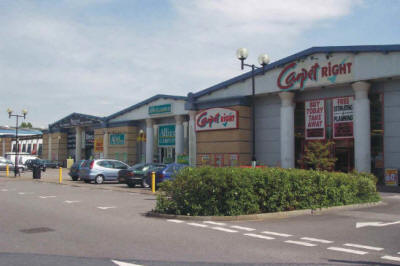
7.8 Size Restrictions on Out-Of-Centre Retail Units
7.8.1 Because the traditional retail warehouse parks at Waterton and at the
Bridgend Retail Park are generally comprised of large warehouses selling bulky
durable goods all of the units on these parks are large buildings when compared
to shops in the established town centres. The nature of the retail warehouses
suits the type of retailing they contain in terms of ample storage facilities
and extensive sales space capable of displaying a wide range of bulky products.
The Local Planning Authority would resist any proposals which sought to
subdivide existing retail warehouse units into smaller units. In so doing there
is a risk that the nature of these units and the type of goods sold would be
altered and that they would be transformed into units more akin to those found
in town centres, thus competing directly with town centre uses. In new
developments this will be achieved by the use of conditions attached to a
planning permission.
7.9. Designer Outlet Village – Wales
7.9.1. The development of the Designer Outlet - Wales at junction 36 of the
M4 has added a new dimension to out-of-centre retailing in the County Borough.
Since its completion in 1998 this development has attracted over 2 million
visitors per annum. The nature of the retailing permitted is controlled by a
Section 106 agreement which makes it a very particular form of out-of- town
retail centre. The Designer Outlet - Wales allows an opportunity for
manufacturers to sell previous season’s stock, seconds, run-offs, over runs,
slow selling goods and samples of brand name goods, including fashion,
sportswear, household, general apparel and accessories at discounted prices. The
unique retail offer of Designer Outlet - Wales attracts visitors and shoppers
from a wide area, and empirical evidence obtained through surveys indicate that
25% of trade is derived from consumers living more than 30 minutes drive-time
away; indeed 12% of trade is derived from consumers living more than 1 hours
drive away. The Designer Outlet - Wales can be considered as a form of shopping
activity that is separate from the normal retail hierarchy. The potential exists
to promote the existing town centres to visitors to the County Borough through
linked shopping trips to reinforce the vitality and viability of those town
centres. However the Council is also aware that unrestricted out-of-centre
retail development at this location could also undermine the role of existing
town centres. The Council will need to be convinced that any further development
at this location shall not undermine the vitality and viability of existing town
centres, both within the County Borough and beyond.
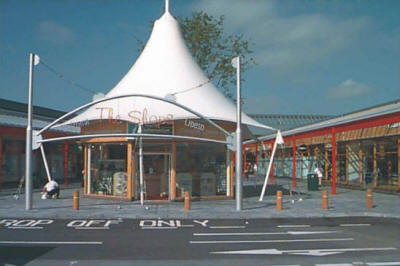
7.9.2. DESIGNER OUTLET VILLAGE – WALES
POLICY R11 (Link to Map 21)
LAND AT JUNCTION 36 OF THE M4 IS ALLOCATED FOR THE DESIGNER OUTLET - WALES.
PROPOSALS FOR FURTHER DEVELOPMENT ON THIS SITE WILL ONLY BE PERMITTED PROVIDED:-
1. THAT THE PROPOSED DEVELOPMENT IS IN ACCORDANCE WITH THE SECTION 106 AGREEMENT
COVERING THE SITE;
2. THAT THERE ARE NO ADVERSE IMPACTS ON THE VITALITY AND VIABILITY OF EXISTING
TOWN CENTRES;
3. THE PROPOSAL HAS NO UNACCEPTABLE EFFECTS IN TERMS OF TRAFFIC GENERATION,
CONGESTION AND HIGHWAY SAFETY.
<<
Previous Chapter |
Next Chapter
>> |