|
||||||||||||||||||||||||||||||||||||||||||||||||||||||||||||||||||||||||||||||||||||||||||||||||||||||||||||||||||||||||||||||||||||||||||||||||||||||||||||||||||||||||||||||||||||||||||||||||||||||||||||||||||||||||||||||||||||||||||||
THE DEVELOPMENT OF SITE E2(3) WILL BE IN ACCORDANCE WITH A DEVELOPMENT BRIEF AND/OR APPROPRIATE PLANNING/HIGHWAY AGREEMENT. THIS MUST BE AGREED WITH THE COUNTY BOROUGH COUNCIL BEFORE DEVELOPMENT COMMENCES. |
||||||||||||||||||||||||||||||||||||||||||||||||||||||||||||||||||||||||||||||||||||||||||||||||||||||||||||||||||||||||||||||||||||||||||||||||||||||||||||||||||||||||||||||||||||||||||||||||||||||||||||||||||||||||||||||||||||||||||||





|
SPECIFIED |
Link to Map | ||
| E3(1) | ABERGARW INDUSTRIAL ESTATE* | B1, B2, B8 | 15 East |
| E3(2) | BRYNCETHIN DEPOT* | B1 | 15 East |
| E3(3) | BRYNMENYN INDUSTRIAL ESTATE | B1, B2, B8 | 15 |
| E3(4) | COEGNANT, MAESTEG* | B1, B2, B8 | 1 Central |
| E3(5) | CORONATION WORKS, EVANS TOWN | B1, B2, B8 | 13 Central |
| E3(6) | EWENNY INDUSTRIAL ESTATE | B1, B2, B8 | 28 West |
| E3(7) | EWENNY ROAD INDUSTRIAL ESTATE | B1, B2, B8 | 5 Central |
| E3(8) | FORGE INDUSTRIAL ESTATE | B1, B2, B8 | 32 West |
| E3(9) | GEORGIA PACIFIC, LLANGYNWYD | B1, B2, B8 | 10 East |
| E3(10) | GREEN MEADOW, LLANGEINOR | B1, B2, B8 | 11 East |
| E3(11) | HEOL TY GWYN INDUSTRIAL ESTATE* | B1, B2, B8 | 5 West |
| E3(12) | ISFRYN INDUSTRIAL ESTATE* | B1 | 16 Central |
| E3(13) | LAND AT HEOL Y SPLOTT* | B1, B2, B8 | 25 Central |
| E3(14) | LAND AT TONDU* | B1, B2, B8 | 21 West |
| E3(15) | LITCHARD INDUSTRIAL ESTATE | B1, B2, B8 | 21 East |
| E3(16) | LLYNFI POWER STATION SITE* | B1, B2 | 15 West |
| E3(17) | MID GLAMORGAN DEPOT, WATERTON* | B1, B2, B8 | 28 West |
| E3(18) | PENLLWYNGWENT INDUSTRIAL ESTATE* | B1, B2 | 7 |
| E3(19) | SOUTH CORNELLY INDUSTRIAL ESTATE | B1, B2, B8 | 25 Central |
| E3(20) | VILLAGE FARM INDUSTRIAL ESTATE | B1, B2, B8 | 19 East |
| E3(21) | WERN TARW | B1, B2, B8 | 16 East |
| E3(22) | FORMER BAIRDWEAR FACTORY, PYLE | B1, B2 | 19 East |
(* Denotes a ‘Brownfield’ site)
THE DEVELOPMENT OF SITES E3(14) AND E3(21) WILL BE IN ACCORDANCE WITH
DEVELOPMENT BRIEFS AND/OR APPROPRIATE PLANNING/HIGHWAY AGREEMENTS. THESE
MUST BE AGREED WITH THE COUNTY BOROUGH COUNCIL BEFORE DEVELOPMENT COMMENCES.
5.5.3. Bridgend has had an excellent record of attracting large-scale investment projects, largely due to the County Borough’s excellent communications – having 3 junctions off the M4 Motorway, a mainline railway link and close proximity to Cardiff Wales Airport. In addition the area has been able to offer a large pool of labour with competitive wage costs. A feature of the 1990s has been an increase in competition for attracting new investment, and a decrease in the number and size of projects. A major factor in achieving success is the availability of highly accessible sites, close to the strategic highway network.
5.5.4. Bridgend is still able to offer the necessary requirements to attract major investment projects, and this Authority is still committed to this goal. It is therefore vitally important that the UDP identifies and safeguards the high calibre ‘Key’ employment sites, suitable for such investment opportunities from alternative development during the lifetime of the Plan.
5.5.5. The ‘Key’ employment sites identified by Policy E2 are characterised and distinguished from other employment sites by their direct access to the strategic road network and are in excess of 50 hectares. They have the capacity to accommodate large-scale single users for the full range of B1, B2 and B8 employment activities, and are generally well located to centres of population. These sites represent a major asset to the County Borough in terms of existing job capacity and their potential to attract further major investment projects, generating significant numbers of additional jobs.
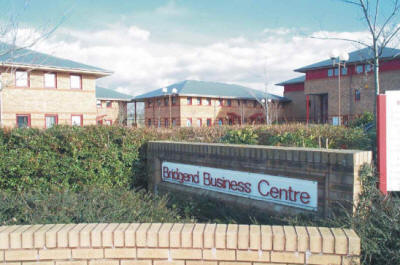
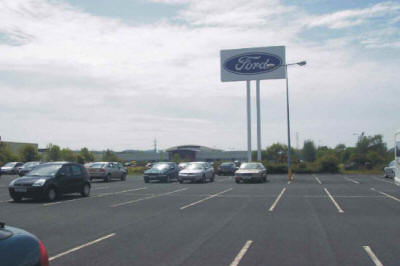
5.5.6. In the case of Waterton, Bridgend and Brackla Industrial Estates, these have previously been the main focus of large-scale inward investment projects within the County Borough, and already accommodate a number of internationally recognised companies. As ‘Key’ employment sites under Policy E2, it is anticipated that they will continue to perform this function in terms of the development of remaining vacant land and any major redevelopment proposals. The Brocastle site is an almost entirely undeveloped site, carried forward from the Ogwr Borough Local Plan, where it was only partly allocated for employment purposes. Brocastle is considered to represent the County Borough Council’s greatest asset in terms of attracting large-scale investment, providing in excess of 52 hectares of land. Brocastle will be developed in accordance with an approved development brief.
5.5.7. If Bridgend is to retain its competitive industrial base it is imperative that the area is able to offer a broad portfolio of sites. In addition to those ‘flagship’ sites identified and safeguarded under Policy E2, Policy E3 also identifies a variety of employment sites suitable for all types of employment uses of varying size and type.
5.5.8. Most of the undeveloped sites included in Policy E3 are “brownfield” and are identified as such by an asterix *. With the exception of Land at Heol y Splott, Bryncethin Depot, and the former Bairdwear Factory, all of the above sites have previously been allocated for employment purposes in the Ogwr Borough Local Plan, and/or have the benefit of planning permission. Larger undeveloped sites, such as Land at Tondu and Llynfi Power Station, will require comprehensive redevelopment, and their full development potential will be realised only if major infrastructure investment can be secured. Such investment will largely be dependent upon the funding priorities of outside agencies such as the Welsh Development Agency and on successful partnership bids for European finance. Land at Tondu is identified and discussed further within the Regeneration and Transportation chapters - Policies REG 3(3) and T14(8) refers.

5.5.9. SMALL BUSINESS ALLOCATIONS
THE FOLLOWING SITES ARE ALLOCATED AND ARE CONSIDERED AS BEING SUITABLE FOR SMALL BUSINESSES IN THE COUNTY BOROUGH:-
|
SPECIFIED |
Link to Map | ||
| E4(1) | COYCHURCH YARD, BRIDGEND | B1, B2, B8 | 27 East |
| E4(2) | CROSBY YARD INDUSTRIAL ESTATE | B1, B2, B8 | 27 |
| E4(3) | COITY ROAD SIDINGS, BRIDGEND* | B1, B2, B8 | 27 |
| E4(4) | PWLL Y WAUN, PORTHCAWL | B1 | 29 |
| E4(5) | ENTERPRISE CENTRE, TONDU | B1, B2, B8 | 15 |
| E4(6) | FFALDAU INDUSTRIAL ESTATE | B1, B2, B8 | 6 Central |
| E4(7) | GLAN ROAD, PORTHCAWL | B1, B2, B8 | 29 Central |
| E4(8) | MAESTEG WASHERY SITE | B1 | 32 East |
| E4(9) | PENYBONT INDUSTRIAL ESTATE | B1, B2, B8 | 27 |
| E4(10) | SPELTER INDUSTRIAL ESTATE | B1, B2, B8 | 1 |
| E4(11) | TREWS FIELD, INDUSTRIAL ESTATE | B1, B2, B8 | 27 Central |
(* Denotes a site subject to an approved Planning Brief)
5.5.10. One of the weaknesses of the South Wales economy is the lack of an entrepreneurial culture. Traditionally those areas with a strong indigenous business sector are more able to withstand the boom/bust cycles that characterise market economies; as such, the future health and stability of the local economy will be more secure if the rate of new business starts is accelerated.
5.5.11. The above policy aims to assist in this process by specifically identifying sites within or adjacent to the urban area for small businesses. In terms of their accessibility in relation to public transportation networks and proximity to residential communities, these sites contribute to the Plan’s overall objective of promoting sustainable development and accords with advice given in Planning Policy Wales to pay particular regard to the needs of small businesses. Many initiatives supporting small-scale business activity are not land-use based, but concentrate on advice, training and administrative support mechanisms. However in recognising that sites within or close to the urban area is the preferred location for small work-shop type developments, Policy E4 aims to actively support this vulnerable sector of the local economy in land-use policy terms.
5.5.12. IMPROVEMENTS AND REDEVELOPMENTS OF IDENTIFIED EMPLOYMENT SITES
POLICY E5
IMPROVEMENTS, REDEVELOPMENTS, EXTENSIONS, CONVERSIONS AND INFILL DEVELOPMENT
WITHIN SPECIFIED USES AND WHICH MAINTAIN OR ENHANCE THE ENVIRONMENT WILL BE
PERMITTED ON SITES IDENTIFIED BY POLICIES
E2,
E3 AND
E4.
5.5.13. Policy E5 makes provision for existing and proposed industrial estates to continue to adapt to changing economic conditions. In addition it is recognised that over the years, the environment of some industrial estates has deteriorated, making the areas unattractive and discouraging investment. To overcome this cycle of decline the County Borough Council has the power to declare ‘Industrial Improvement Areas’ where the Authority has special powers and resources to provide environmental improvements and financial aid to private businesses. An Industrial Improvement Area and an Industrial Estate Improvement Programme are currently focused at Village Farm and Brackla and Litchard Industrial Estates respectively. An integrated package of employment and community initiatives have been focused on the Village Farm Industrial Estate as part of the Cynffig Community Economic Regeneration Strategy, and these have dramatically enhanced both the environment and employment opportunities within the estate and the community as a whole. At Brackla and Litchard Industrial Estates an Improvement Programme is currently being implemented by the Council in partnership with the WDA and Groundwork Bridgend, and led by the Business Environmental Co-ordinator employed by the Council. The above policy is therefore intended to complement and support such initiatives.
5.6. Special Employment Sites
5.6.1. PROTECTION OF SPECIAL EMPLOYMENT ALLOCATIONS
LAND IS ALLOCATED AND SAFEGUARDED FOR THE ESTABLISHMENT OF HIGH QUALITY ‘SPECIAL EMPLOYMENT SITES’. SUCH SITES MUST BE DEVELOPED TO THE HIGHEST DESIGN AND ENVIRONMENTAL STANDARDS AND ARE RESERVED SPECIFICALLY FOR HIGH TECHNOLOGY BUSINESS AND MANUFACTURING, RESEARCH AND DEVELOPMENT AND RELATED OFFICE DEVELOPMENT, AND FOR NO OTHER PURPOSE. IN THIS RESPECT THE FOLLOWING SITES ARE ALLOCATED AT:-
| Link to Map | ||
| E6(1) | BRIDGEND SCIENCE PARK/ISLAND FARM; | 27 Central |
| E6(2) | LAND SOUTH WEST OF SONY, PENCOED; | 23 |
| E6(3) | THE TRIANGLE SITE, PENCOED; | 28 East |
| E6(4) | PENCOED TECHNOLOGY PARK; AND | 23 |
| E6(5) | TY DRAW FARM, NORTH CORNELLY | 19 Central |
5.6.2. All of the above sites are identified, protected and distinguished from other employment sites on the basis of their physical and locational characteristics, particularly their peripheral yet prominent locations adjacent to areas of countryside, and their proximity to the strategic road network.
5.6.3. Given the sensitive locations of these sites, the requirement for consistently high design and environmental standards within an overall concept framework would be a pre-requisite for development.
5.6.4. Land South West of Sony, The Triangle Site at Junction 35 and Ty Draw Farm at Junction 37 of the M4 Motorway, are located in visible and prominent locations. Land at Pencoed Technology Park forms part of a larger tract of land, some 31.51Ha. in extent, most of which is located within the administrative boundary of Rhondda Cynon Taff County Borough, and is also identified for special employment purposes in the Taff Ely Local Plan. Land at Island Farm is an undeveloped extension of Bridgend Science Park, which has been successfully developed as a prestige science business park, and is currently occupied by a number of high technology businesses. The existing part of the site benefits from extensive landscaping, and buildings are of a high architectural design. It is anticipated that Land at Island Farm will be developed in a similar manner.
5.7. Alternative Use of Industrial Land
5.7.1. PROTECTION OF IDENTIFIED EMPLOYMENT SITES
POLICY E7
PROPOSALS WHICH RESULT IN THE LOSS OF EXISTING OR PROPOSED INDUSTRIAL LAND OR
BUILDINGS ON SITES IDENTIFIED IN POLICIES
E2,
E3 AND
E4 WILL NOT BE PERMITTED.
EXCEPTIONS WILL NEED TO BE JUSTIFIED ON ONE OF THE FOLLOWING GROUNDS:-
1. IN APPROPRIATE LOCATIONS, A LIMITED NUMBER OF THOSE USES REGARDED AS
COMPLEMENTARY AND/OR ANCILLARY TO THE MAIN USE OF THE LAND FOR INDUSTRIAL
PURPOSES; OR
2. IN APPROPRIATE LOCATIONS, THOSE SUI GENERIS EMPLOYMENT USES WHICH ARE
REGARDED AS BEING SUITABLY LOCATED ON INDUSTRIAL LAND.
5.7.2. This policy aims to protect existing jobs and ensure the continued availability of a wide range of employment opportunities throughout the County Borough, by strongly resisting the redevelopment of allocated industrial land and buildings for alternative purposes. This is especially relevant when designated sites are located close to the strategic road network and have been vacant for a number of years. In such circumstances there is often intense pressure from alternative development proposals, notably from housing and retail developments, the needs of which are adequately catered for elsewhere within this Plan.
5.7.3. Policy E7 also recognises that industrial areas operate more efficiently if they can provide an element of service provision to their employees and their clients. In this context non industrial uses that are considered complementary and ancillary to the main industrial use, may be considered acceptable, although their cumulative impact is a factor which will need to be taken into account when deciding upon individual proposals. In addition, many sui generis employment uses do not fit neatly within town centres or within close proximity to residential areas; but by their very nature are far better located on an industrial estate.
5.7.4. It must be noted that some existing industrial sites and buildings have not been specifically identified on the Proposals Map. In some cases some developments may represent inappropriate or unneighbourly uses, and would benefit from relocation or replacement by a more suitable use. Policy E7 does not preclude such eventualities, as it only relates to identified sites.
5.8. Industrial and Commercial Development on Unallocated Sites
5.8.1. BROWNFIELD SITES IN URBAN AREAS
POLICY E9
THE REDEVELOPMENT OF DERELICT, UNDER-UTILISED, OBSOLETE OR VACANT LAND AND
BUILDINGS IN URBAN AREAS FOR EMPLOYMENT PURPOSES WILL BE PERMITTED, PROVIDED
THAT:-
1. THE PROPOSED USE IS COMPATIBLE WITH ADJOINING LAND USES;
2. THE DEVELOPMENT DOES NOT INVOLVE THE LOSS OF A PRIMARY SHOPPING STREET
FRONTAGE OR AN EXISTING RETAIL PREMISES AT GROUND FLOOR LEVEL WITHIN AN
ESTABLISHED COMMERCIAL AREA;
3. THE PROPOSED DEVELOPMENT ENHANCES LOCAL ENVIRONMENTAL AMENITY;
4. THE HIGHWAY NETWORK IS CAPABLE OF ACCOMMODATING THE TRAFFIC GENERATED BY THE
PROPOSAL WITHOUT AN UNACCEPTABLE EFFECT ON TRAFFIC FLOWS AND PATTERNS, SAFETY,
ENERGY USE OR OTHER EMISSIONS.
5.8.2. The above policy promotes this plan’s underlying principle of a more sustainable pattern of development and embodies the Government’s most up to date thinking on the concept of the ‘urban village’. Such an approach involves the fostering of more integrated communities by actively promoting mixed use developments.
5.8.3. In terms of visual amenity, this policy also has the added advantage of bringing back into beneficial use those unsightly buildings, which have a negative impact on an area and act as a deterrent to future investment; thereby complementing regeneration initiatives throughout the County Borough.
5.8.4. It is appropriate to note that employment uses can exist within the heart of settlements without unacceptable disturbance. Indeed by definition, Class B1 uses of the Use Classes Order 1987 are considered to be those that can be carried out in a residential area. Similarly, other employment proposals which are restricted to light traffic generation and would not affect the amenity of an area may also be acceptable.
5.8.5. OFFICE DEVELOPMENT
POLICY E10
EXISTING TOWN CENTRES WILL BE THE MAIN FOCUS OF OFFICE
DEVELOPMENT. ELSEWHERE, OFFICE DEVELOPMENT WILL BE PERMITTED ONLY IF:-
1. IN SEQUENTIAL ORDER OF PREFERENCE, ALL TOWN CENTRE, EDGE OF CENTRE AND OUT OF
CENTRE SITES HAVE BEEN THOROUGHLY ASSESSED AND NONE ARE FOUND TO BE SUITABLE.
2. THE PROPOSED DEVELOPMENT IS WELL SERVED IN TERMS OF PUBLIC TRANSPORT.
IN THE CONTEXT OF THE ABOVE, THE FOLLOWING SITES ARE ALLOCATED:-
| Link to Map | ||
|
E10(1) |
FORMER SWALEC DEPOT, TREMAINS ROAD; |
34 |
|
E10(2) |
LAND SOUTH OF MACKWORTH STREET, BRIDGEND; |
34 |
|
E10(3) |
LAND AT COITY ROAD, BRIDGEND; AND |
34 |
|
E10(4) |
FORMER COURAGE DEPOT SITE, TONDU ROAD, BRIDGEND. |
34 |
5.8.6. The Government’s objective of sustaining and enhancing the vitality, attractiveness and viability of town centres is complemented by advice to encourage the diversification of uses within the town centre as a whole. This is recognition of the fact that as well as ensuring a wide variety and range of shops, the vitality of shopping centres is also dependent on its ability to draw investment from other sectors of the economy. Where vacant premises or space above shops are unlikely to be reused for retail purposes, or vacant and under-utilised land exists on the periphery of the commercial area, it may be appropriate to encourage a range of employment generating uses. Because town centres are usually well served by a choice of public transport, locating employment generating uses within town centres will contribute to the overall objective of sustainability, by maximising the opportunities for employees as well as shoppers, to use means of transport other than the car. Office developments also add to the diversity of uses in town centres and they can attract large numbers of the general public into those centres. In addition, they can help to diversify the employment profile in an area and help create jobs.
5.8.7. COMMERCIAL DEVELOPMENT IN THE COUNTRYSIDE
POLICY E11
PROPOSALS INVOLVING DEVELOPMENT AND/OR REFURBISHMENT OF EXISTING BUILDINGS IN
THE COUNTRYSIDE WILL BE PERMITTED IF THEY REPRESENT APPROPRIATE DIVERSIFICATION
OF THE RURAL ECONOMY, AND ARE IN ACCORDANCE WITH POLICIES
EV1,
EV6 AND
EV7.
5.8.8. In general terms, industrial and commercial development in the countryside is likely to visually detract from the landscape, be physically remote from communities and is unlikely to be well served by public transport. In this context, employment development will not generally be permitted in the countryside, when it would be more appropriately located within established and allocated industrial sites in the urban area.
5.8.9. Some employment uses are however appropriately located in rural areas, notably for agricultural or forestry related enterprises, recreational or tourist related developments which require a rural location, or for an appropriate form of rural diversification, possibly related to craft workshops.
5.8.10. In particular, farm diversification projects are likely to become increasingly important to the farming community, at a time when traditional farming methods and livestock husbandry are under threat, and farming incomes are in decline. In accordance with Policy EV1 while initial consideration should be given to adapting existing farm buildings, the provision of sensitively designed new building associated with a farm diversification scheme on a working farm within an existing farm complex may be appropriate where a conversion opportunity does not exist.
5.8.11. It is envisaged that those commercial activities which are considered appropriate, and which do not conflict with environmental policies elsewhere in the Plan, will be of a relatively small-scale nature. Subsequent intensification of a use which has been given permission could make it unacceptably intrusive, and to this end it may be appropriate to limit future development by condition or planning agreement to safeguard the rural character of the countryside.
5.8.12 HOME WORKING
POLICY E12
PROPOSALS TO OPERATE A SMALL BUSINESS FROM THE HOME WILL BE PERMITTED PROVIDED
THAT:-
1. THERE WOULD BE NO ADVERSE IMPACT ON THE CHARACTER AND
APPEARANCE OF THE DWELLING;
2. ANY ADDITIONAL TRAFFIC GENERATED BY THE PROPOSAL WILL NOT CAUSE ADVERSE
AMENITY PROBLEMS IN TERMS OF NOISE AND ON STREET PARKING AND CAN BE SAFELY
ACCOMMODATED ON THE EXISTING HIGHWAY NETWORK;
3. THERE IS NO LOSS OF RESIDENTIAL AMENITY TO SURROUNDING
PROPERTIES BY VIRTUE OF NOISE, SMELL, DUST, LIGHT OR UNSIGHTLY STORAGE.
5.8.13. The development of more and more sophisticated computer technology, use of the Internet, and availability of digital communications means that more of the population will start working from home. Teleworking requires little or no alteration to the fabric of residential properties and in many cases where the operation involves no additional employees other than the occupants of the home or callers, then it will not require planning permission. Policy E12 relates to those more intensive proposals where planning permission is required, although in many cases they can be, subject to satisfying the above criteria carried out without any adverse effect upon the surrounding neighbourhood. Developments of this nature will have a significant impact on working patterns, reducing the need to commute to work everyday, thereby contributing to the Plan’s overall objective of achieving a sustainable pattern of development.
5.8.14. In addition there are also instances where small-scale enterprises can effectively operate from a garage or outbuildings associated with the home. Controlling the intensity and scale of such operations and their effect upon surrounding properties is a vital consideration in determining such proposals, and in this respect, criteria relating to Policy E12 is aimed at helping to achieve an appropriate balance.
5.9. Polluting Industries and Developments involving Hazardous Substances
5.9.1. POLLUTING INDUSTRIES
POLICY E13
INDUSTRIAL DEVELOPMENTS WHICH MIGHT CAUSE POLLUTION OR POSE A RISK TO HEALTH AND
SAFETY WILL ONLY BE PERMITTED IF IT CAN BE DEMONSTRATED THAT INDUSTRIAL
OPERATIONS, AND ANY EMISSIONS, CAN BE MONITORED AND CONTROLLED TO MEET
ENVIRONMENTAL QUALITY STANDARDS AND OBJECTIVES.
5.9.2. In many instances the potential polluting effects of certain industrial uses can be overcome by the use of planning conditions. Each proposal however will be considered on its merit. Particular attention will be put on the ability of the Local Authority and other regulatory bodies to monitor and control any discharge of polluting materials and the ability of the regulatory bodies to prosecute should the agreed and acceptable levels of emissions be exceeded. Environmental Impact Assessment will be requested by the Local Planning Authority to assist in the decision making process where development is considered to have likely significant environment effects because of factors such as its nature, size or location in accordance with advice in WO Circular 11/99.
5.9.3. Other considerations will be the need to locate such developments away from residential and commercial areas. In addition, many existing firms require a quality environment, including clean air for their operation.
5.9.4. HAZARDOUS INDUSTRIES
POLICY E14
PROPOSALS FOR INDUSTRIAL DEVELOPMENT TO IMPORT, STORE, MANUFACTURE, INCINERATE,
DISPOSE OF OR DISTRIBUTE HAZARDOUS SUBSTANCES WILL BE CLOSELY SCRUTINISED. THOSE
WHICH POSE A THREAT TO PEOPLE, PROPERTY OR THE ENVIRONMENT WILL NOT BE PERMITTED
UNLESS MITIGATION MEASURES TO REMOVE OR OVERCOME THE THREATS CAN BE PUT IN PLACE
AND THEREAFTER MAINTAINED.
5.9.5. The above policy relates to those industries which import, store, manufacture, incinerate, dispose of, or distribute defined dangerous substances in such large quantities that they would be subject to The Planning (Control of Major Accident Hazards) (COMAH) Regulations 1999 S1 No. 981. It is considered that because of the urbanised nature of much of the County Borough, the establishment of such industries should be strongly resisted.
5.9.6. The County Borough does not have any industries that are subject to The Planning (COMAH) Regulations 1999 SI No. 981. However, the area does contain a number of installations and processes designated as notifiable to the Health and Safety Executive by virtue of the quantities of hazardous substances stored or conveyed. Whilst they are subject to stringent controls under health and safety legislation, it is considered prudent to control development in their vicinity, a process which is rigorously undertaken as part of the development control process. The following policy therefore applies.
5.9.7. NOTIFIABLE INSTALLATIONS
POLICY E15
DEVELOPMENT IN THE VICINITY OF EXISTING NOTIFIABLE INSTALLATIONS WILL BE
PERMITTED ONLY AFTER THE PLANNING AUTHORITY HAS SOUGHT ADVICE FROM THE HEALTH
AND SAFETY EXECUTIVE.
<< Previous Chapter | Next Chapter >>

 . . . . .
. . . |
Disclaimer | Copyright © 2003 Bridgend County Borough Council |