14.1. Justification of Part 1 Policies
14.1.1. The Land Use Strategy for the UDP seeks to ensure that the area’s
requirements for energy and utility services are fully satisfied, while the
potential from local renewable sources is optimised, each consistent with
the need to conserve the environment of the County Borough.
14.1.2. Telecommunication and utility service developments (including energy
generation by renewable means) are the subject of specific national planning
guidance. Basically the Government wishes people to have a greater choice
and range of telecommunications services, whilst society’s need for energy
should also be satisfied. Each aspiration should, however, be consistent
with the aims of sustainable development. This means that economic
considerations, logistical interests, and matters related to the technology
of the service and/or the location of the energy resource, should not be
allowed to outweigh the need to conserve the environment as a whole.
Individual and/or cumulative impacts of developments should also be taken
into account in the national, regional and local interest.
14.1.3. Policy 19 provides a strategic planning perspective for
development associated with telecommunications and utility services
including renewable energy development. It not only takes into account the
favourable economic location of the County Borough astride the M4 corridor
in South East Wales, but also the physical and environmental capacity of the
area to accommodate development, the intervisibility of development
(especially proposals for the exploitation of renewable energy) in the
sub-region, the need to avoid flood risks, and the hierarchical importance
of the location of proposals in planning and environmental terms.
14.1.4. Improved energy efficiency should be a key component of all new
developments and redevelopment schemes in the County Borough.
Policy 20
provides the strategic planning context for Part 2 policies which address
the layout, design, materials and construction of new, and the refurbishment
or redevelopment of existing, buildings or sites. It will assist the County
Borough Council to fulfil its statutory duties under the Home Energy
Conservation Act 1995, and “A Better Quality of Life” - the National
Sustainable Development Strategy (May 1999).

Part 2
14.2. Introduction
14.2.1. The concept of sustainable development emphasises that protection
of the environment, and the conservation of the natural resources of our
planet, must be balanced against the need for development.
14.2.2. The Brundtland Report, World Commission on Environment and
Development, Our Common Future (1987) focused on the threat to the
security of life and the erosion of the quality of life by human actions. In
particular, it highlighted the fact that energy and resources were being
misused, ecosystems altered, and pollutants and wastes released, which have
undermined the future ability of our planet to support life. To counter
this, by adopting the principle of sustainable development we must accept
that to protect the environment, limitations must be placed on certain
aspects of human behaviour.
14.2.3. For development to be sustainable it must therefore respect the
need to reduce the use of energy and resources (such as water, gas, oil and
other raw materials), reduce the production of wastes (and thereby cut the
potential for pollution), and to protect the diversity of life. Economic
growth need not necessarily be in conflict with environmental aims, but,
rather the aim should be one of coexistence, thereby improving environmental
efficiency and developing more ‘environmentally-friendly’ industrial and
social attitudes to the use of resources.
14.2.4. At the national level, the provision of utility services in the
UK changed considerably during the 1980’s. All of the main service agencies
- providing water, electricity, gas, and telecommunications - were formerly
administered by public authorities (or ‘statutory undertakers’), which were
largely independent of normal planning control. Since the end of that
decade, each of those services is now either the responsibility of, or has
been largely contracted out to, private companies.
14.2.5. There are publicly appointed Regulators for each service industry
who must take any reasonable measures to ensure satisfactory service
delivery in the public interest, e.g. the Office of Electricity Regulation
(OFFER) oversees the electricity industry from its generators, through its
distributors and providers, to the consumer. All of the Regulators have
regional control over their respective services.
14.2.6. In addition, following the Environment Act 1995, the
Environment Agency - Wales (EAW) was established which brought together
the responsibilities of the former National Rivers Authority (NRA), Her
Majesty’s Inspectorate of Pollution (HMIP), Waste Regulation Authorities,
and some technical units of the former Welsh Office. It is the function of
the EAW to monitor the activities of all service providers and developers;
to take a proactive approach towards its involvement in the planning
process; and to see that this as an integral part of its work to protect and
enhance the environment in Wales.
14.3. The Sustainable Use of Resources
14.3.1. The publication of the Government White Paper This Common
Inheritance (Cm. 1200) in 1990 was a landmark with respect to the future
exploitation of the nation’s resources, including energy generation, in that
it was the first survey of national policies which took an holistic view,
incorporating an overview of environmental issues. A wider assessment of
that White Paper and the subsequent development of the published UK
Strategies for Sustainable Development, Climate Change, Biodiversity, and
Sustainable Forestry following on from the ‘Rio Earth Summit’ in 1992,
have already been considered in the Environment Chapter of the UDP. This
Chapter acknowledges, and extends, the principle of good stewardship of our
environment to the exploitation of the County Borough’s sources of energy
and provision of utility services.
14.3.2. The White Paper introduced two principles which have particular
importance for the formulation of planning policies dealing with Energy and
Utilities, notably the ‘precautionary principle’, and the ‘polluter pays’
principle. Welsh Planning Guidance reiterates those principles, advising
that they should be applied when planning for energy, telecommunications,
and utilities in development plans.
14.3.3. In preparing its UDP, the Council acknowledges that its actions
can influence investment and development activity not only through proposed
land-use change, but also by the provision of infrastructure for energy and
utilities. Similarly, the Plan must be influenced significantly by Central
Government’s environmental policies and its international commitments
towards promoting sustainable development. On the 31 July 1996, the County
Borough Council resolved:-
That the concept of Sustainable Development be embraced by the Council
and that support be given for the integration of its aims into the Council’s
Policies and activities.
14.3.4. The Council had previously resolved:-
That approval be granted for the setting up of a Local Agenda 21
Working Party and supporting working groups to formulate corporate
environmental aims, to produce an Environmental Policy, and to set targets
for improved environmental performance based on the principles of the
Eco-Management and Audit Scheme (EMAS).
14.3.5. The latter Scheme formally came into operation on 12 April 1995 (WO
Circular 9/95 refers) and the County Borough Council endorsed its
objectives in January 1996. This has significant implications for the
sustainable development of energy resources, and provision of the relevant
infrastructure for utilities in the County Borough.
14.4. Energy Provision
14.4.1. The Energy White Paper - Energy Sources for Power Generation
(October 1998) sets out the Government’s key aims for energy which are
to ensure secure, diverse and sustainable supplies of energy at competitive
prices, but within a strong policy context which is also flexible enough to
respond to changing national needs and international obligations for a
cost-effective climate change programme. In this respect, the Department of
Trade & Industry (DTI) has primary responsibility for energy policy,
licensing of new generating capacity, and control of supplies within the UK,
under the provisions of the Energy Act 1976.
14.4.2. In view of their nature, fossil fuels will inevitably run out.
Consequently, the exploitation of new and renewable energies will become
increasingly important as energy sources for the new millennium. National
energy policy is therefore..... to stimulate the exploitation and
development of renewable energy sources wherever they have a prospect of
being economically attractive and environmentally acceptable. Renewable
energy sources are defined as:-
.....those which are continuously and sustainably available in our
environment.
Renewable Energy sources therefore include: the wind, waste combustion
(including anaerobic digestion and landfill gas production), active solar
systems, energy crops and wood fuel (or biomass), and water (including
hydro-power, wave, and tidal generation).
14.4.3. The Government has set a key priority for renewable energy
sources to provide 10% of UK electricity supplies as soon as possible or by
2010 (which entails providing for 5% of national electricity needs by 2003
compared with the current figure of 2% in 1999). However the aim does not
stop there, rather it is seen as an initial step towards the longer term
objective which envisages renewables generating power to heat and transport
homes, industry and commerce for centuries to come.
14.4.4. The Government’s Consultation Paper - New & Renewable Energy:
Prospects for the 21st Century (March 1999) confirms that renewables are
not only important in generating jobs and developing future industries, but
will also play a crucial role in enabling the UK to meet its environmental
targets of reducing greenhouse gases by 12.5% by 2008-2012, and reducing its
emissions of Carbon Dioxide by 20% by 2010. In addition, reforms are
continuing with a view to improving the operation of energy markets and to
enable renewables to compete more effectively in the market-place, e.g. by
the development of ‘green electricity’ options for customers, and the
promotion of ‘environmental credit vouchers’ to consumers of energy.
14.4.5. These national policies have been taken on board by the South
East Wales Strategic Planning Group in preparing Strategic Planning
Guidance for the preparation of UDPs in South East Wales. The Guidance
investigated the current problems evident in the supply and demand for
energy in the subregion and has identified five key issues to be addressed
by its constituent authorities:-
- To reduce the need for energy by
encouraging improved efficiencies in its local use;
- To achieve self-sufficiency in
supply of energy in the short term by supporting the development of new
generating capacity, while resisting the
loss of existing generating capacity which can be sustainably and
economically up-graded;
- To support the NAW in its future
efforts to set realistic ‘target needs’ for energy in Wales (in
general), and SE Wales (in particular) and those urgent changes needed
to current planning guidance;
- To support growth in the local
exploitation of renewables, as a component of a future sustainable
energy strategy for South Wales; and
- To assist the sub-region in
becoming a net exporter of energy in the longer term by encouraging the
development of its renewable energy potential subject to the appropriate
environmental safeguards being applied to future locations.
14.4.6. The above national policies and key strategic issues have been
taken into account by the Council in the preparation of the following
Policies of the UDP. It therefore recognises the need for renewable energy
to be locally exploited where environmentally acceptable, and acknowledges
the contribution such development can make to meeting the future demand for
energy at local, regional and national levels.
14.5. Energy Conservation
14.5.1. THE EFFICIENT USE OF ENERGY
POLICY U1
DEVELOPMENT WHICH ENCOURAGES THE MORE EFFICIENT USE OF ENERGY AND/OR WHICH
CONSERVES ITS SUPPLY WILL BE FAVOURED.
14.5.2. The performance of the local construction industry towards energy
conservation by promoting integrated energy efficiency and management
through innovative design, layout and materials in new developments (as
advocated by Policy EV45 will be appraised and audited under the Council’s
LA21 Strategy through its Eco-Management and Audit Scheme (EMAS). The
realisation of a site’s renewable energy generation potential and/or through
mutual economy with the development of other sites, development proposals
which encourage or support urban regeneration and consequently reduce the
need to travel by private car to sites on the edge of built-up areas, can
all potentially contribute to more sustainable forms of development, and
will therefore generally be supported by the Council subject to those
proposals satisfying the other aims, objectives and policies of the UDP.
14.6. Renewable Energy Resources
14.6.1. The UDP takes into account the fact that many renewable energy
resources may only be exploited where they occur, and in this respect, the
County Borough has potential for resources to be developed both on land, and
off-shore. Although those potential renewable energy resources range across
most of the generation options already stated (para.14.4.2), nevertheless,
with a very few exceptions, such as local waste to energy projects, only the
exploitation of land-based wind power has stimulated substantive commercial
interest to date. The potential off-shore wind resource to the County
Borough has also been acknowledged in public forums, and is currently the
subject of more intensive commercial scrutiny.
14.6.2. The Council encourages the renewables industry and potential
developers to seek its early views on the likely future uptake of renewable
energy resources in the County Borough. The sharing of knowledge with
neighbouring authorities is similarly valuable and will continue to be
pursued, as the economics of pursuing a particular renewable source in one
area might be overcome by co-operation in order to realise its potential
elsewhere. With respect to sources such as wind and water, the location of
development will generally be fairly fixed, however, other renewable
resources may enjoy greater locational flexibility, whilst retaining
identifiable requirements such as proximity to, or good connections with the
area which is to be served. The proximity of suitable connections to the
national electricity grid however, will continue to be a key factor in the
future location of new development which will exploit renewable energy
sources.
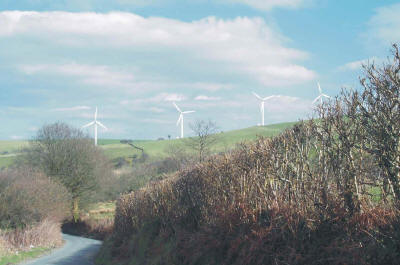
14.6.3. EXPLOITING WIND ENERGY IN PRINCIPLE
POLICY U2
PROPOSALS FOR WIND TURBINES AND WIND FARMS WILL BE ENCOURAGED IN THE
INTERESTS OF PROTECTING VALUABLE ENERGY SOURCES AND LIMITING EMISSIONS OF
GREENHOUSE GASES. DEVELOPMENT WILL BE PERMITTED IF:
1. THE SITE DOES NOT LIE WITHIN THE GLAMORGAN HERITAGE COAST;
2. BY VIRTUE OF ITS SIZE, DESIGN AND SITING, THE DEVELOPMENT WOULD NOT BE
VISUALLY INTRUSIVE IN A DESIGNATED SPECIAL LANDSCAPE AREA, OR A DESIGNATED
HISTORIC LANDSCAPE, PARK OR GARDEN;
3. BY VIRTUE OF ITS SIZE, DESIGN AND SITING, THE DEVELOPMENT WOULD NOT BE
HARMFUL TO THE SETTING OF A LISTED BUILDING OR THE CHARACTER AND APPEARANCE
OF A CONSERVATION AREA;
4. THE DEVELOPMENT WOULD NOT BE DEMONSTRABLY HARMFUL TO THE NATURE
CONSERVATION INTEREST OF THE KENFIG cSAC OR A SSSI;
THE CUMULATIVE, AS WELL AS INDIVIDUAL, IMPACT OF DEVELOPMENT PROPOSALS ON
SENSITIVE ENVIRONMENTS WILL BE ASSESSED
14.6.4. The County Borough contains landscapes, areas, sites, parks,
gardens, and buildings of national and international importance for their
intrinsic qualities (including their undeveloped character, landscape,
nature conservation, archaeological, scientific, architectural and historic
significance). It also shares a coastline on the Bristol Channel and an
attractive seascape with adjoining authorities in Wales, and off-shore areas
of South West England. Therefore, in accordance with the precautionary
principle, the Council will seek to protect the above areas from all
intrusive or harmful development, which will have an adverse impact on those
interests detailed in the criteria contained in
Policy U2.
14.6.5. DETAILED CONSIDERATIONS TO BE ASSESSED IN
EXPLOITING WIND ENERGY
POLICY U3
PROPOSALS FOR WIND TURBINES AND WIND FARMS WHICH DO NOT CONFLICT WITH
POLICY
U2 WILL BE PERMITTED PROVIDED THAT:
1. THEY WOULD NOT ADVERSELY AFFECT THE LOCAL ENVIRONMENT, INCLUDING ANY
BIODIVERSITY INTERESTS, TAKING ACCOUNT OF ANY AVAILABLE MITIGATION MEASURES;
2. THE AVAILABILITY OF IDENTIFIED MINERAL RESOURCES OR RESERVES WILL NOT BE
STERILISED;
3. APPROPRIATE ARRANGEMENTS HAVE BEEN MADE FOR THE SATISFACTORY PRESERVATION
AND/OR RECORDING OF FEATURES OF LOCAL ARCHAEOLOGICAL, ARCHITECTURAL OR
HISTORIC INTEREST;
4. THEY CAN BE SAFELY ACCESSED TO PERMIT REGULAR MAINTENANCE WITHOUT
DETRIMENT TO THE ENVIRONMENT OR THE PUBLIC RIGHTS OF WAY NETWORK;
5. THEY WILL NOT DETRIMENTALLY AFFECT LOCAL AMENITY BY REASON OF NOISE
EMISSION, VISUAL DOMINANCE, SHADOW FLICKER, REFLECTED LIGHT, THE EMISSION OF
SMOKE, FUMES, HARMFUL GASES, DUST, NOR OTHERWISE CAUSE POLLUTION TO THE
LOCAL ENVIRONMENT;
6. THEY WILL NOT LEAD TO ELECTROMAGNETIC DISTURBANCE TO EXISTING
TRANSMITTING AND RECEIVING SYSTEMS (WHICH INCLUDES NAVIGATION AND EMERGENCY
SERVICES), THEREBY PREJUDICING PUBLIC SAFETY; AND
7. PROPER PROVISION HAS BEEN MADE (IF NECESSARY, BY THE CONCLUSION OF
APPROPRIATE PLANNING OBLIGATIONS/ AGREEMENTS WITH THE COUNCIL), FOR THE
REMOVAL OF ALL INFRASTRUCTURE FROM, AND REINSTATEMENT OF THE SITE, FOLLOWING
TERMINATION OF THE USE.
14.6.6. Policies U2 and
U3 recognise the national need for the generation
of renewable energy, and the contribution which the County Borough’s
resources can make to meeting local, regional and national demands. In this
sense, provided that a proposed development has satisfied
Policy U2, it
should then be assessed upon its merits, against the detailed criteria
contained in Policy U3. All forms of development associated with the
exploitation of wind energy and their ancillary facilities are subject to
scrutiny under the above, and any other relevant Policies contained in the
UDP. In view of the presence of physical conditions and wind speeds
favourable to its exploitation, the Council expects that wind power will
continue to be the renewable resource most likely to be favoured and pursued
locally.
14.6.7. Wind turbines can differ in appearance and height and can be
sited individually, or collectively as ‘wind farms’. Until recently,
land-based locations on uplands, the coast, and particularly exposed
locations have been favoured by the industry, i.e. where the highest and
most consistent mean wind speeds are to be found, but off-shore locations
are also being currently explored. Consequently, it is expected that such
locations will continue to be sought by developers for this type of
development in the County Borough, its neighbouring authorities and
off-shore.
14.6.8. Whereas the Council exercises its planning powers over the
location of land-based renewable energy developments (including wind
turbines), decisions on any future off-shore renewable proposals, i.e.
beyond mean high water mark, will fall within the purview of other
Government Departments and Crown Agencies, but they must take into account
the policies and views of the Council. Notwithstanding this, the Council
retains powers over land-based ancillary structures which will be needed for
connections to be made to the terrestrial electricity grid, and it will
therefore be necessary for such proposals to be carefully considered in the
context of the UDP’s policies - especially as they will be situated in the
defined Coastal Zone and its setting.
14.6.9. The Council considers that, wind turbine developments should be
assessed with regard to their effects on residential amenity, and any
electromagnetic disturbances which they may cause e.g. upon the
communications of the emergency services. This is also important with
respect to any future off-shore installations, where electromagnetic effects
must not be allowed to endanger public safety in the form of marine and air
navigation. Similarly, location will be a material factor. The Council, in
taking its decisions, will balance the fact that these developments need
open, exposed locations with high wind speeds against the need to protect
the sensitive landscape areas where these criteria are often fulfilled. The
criteria contained in both Policies
U2 and
U3 reflect this rationale.
14.6.10. The form and pattern of the landscape of the County Borough is
such that it is relatively urbanised, and no part of its countryside lies
more than 4-5 miles from a main urban settlement. Therefore most ‘upland’
wind farm proposals are likely to be visible from a settlement(s). All such
proposals are to be the subject of an EIA. When determining proposals under
Policies U2 and
U3 of the UDP, the Council will also continue to be guided
by the South Wales Renewable Energy Study and will apply it as
Supplementary Planning Guidance (SPG).
14.7. Gas Services, Electricity Supplies and Other
Utilities
14.7.1. Nationally, the provision of gas services and electricity
supplies are no longer mutually exclusive industries, as the private
companies which supply those utilities are now able to commercially compete
for domestic and industrial consumers of their products. There has been a
“dash for gas” in recent years to fuel the burgeoning demand for electricity
which was previously generated mainly by the other ‘fossil fuels’ of oil and
coal, and to a lesser degree by nuclear power and renewables. Households in
the County Borough already have a selection of private gas and electricity
suppliers from whom they can choose their services, and this choice is
likely to widen over the next few years. However, the different companies
will share existing and proposed infrastructure to distribute their
products/services to residents of the County Borough. In the case of gas
services, the pipeline network is provided and maintained by Transco plc,
whereas electricity is transmitted by The National Grid Company plc,
and is distributed by Infralec (formely SWALEC) which is part of the
Hyder Group.
14.7.2 UTILITY SERVICES DEVELOPMENT AND THE
ENVIRONMENT
POLICY U4
DEVELOPMENT FOR THE PROVISION OF NEW, OR FOR THE REINFORCEMENT OF EXISTING
GAS SERVICES, ELECTRICITY
SUPPLIES AND ANY OTHER UTILITY SERVICES, WHICH DO NOT HAVE AN ADVERSE IMPACT
ON THE ENVIRONMENT OF THE COUNTY BOROUGH WILL BE FAVOURED.
14.7.3. The provision of major strategic overground and underground
utility service networks is not directly within the control of the Council
as the ‘service companies’ are ‘statutory undertakers’ under the Town &
Country Planning (GPD) Order 1995. The Council, however, is a statutory
consultee on a wide range of proposed developments by the ‘Gas Suppliers and
Electricity Undertakers’ who also have a statutory duty to have regard to
features of the environment, and to mitigate any effects of their proposals.
Policies U4 and
U5 will therefore guide the Council’s response on such
consultations and those of any other providers of utility services e.g.
cable operators. Similarly, all service companies are expected to fully
consult the Council prior to commencing their statutory operations, e.g. the
excavation of new services and lines, as a matter of Good Practice and in
order that the local planning authority can properly advise the companies
concerned of any environmental constraints which may be present within, or
be affected in the vicinity of the ‘operational land’ concerned.
14.7.4. In applying Policy U4, the Council will expect the ‘service
companies’ to route all above-ground service lines in a manner which will
minimise damage or disturbance to the environment, and reduce any potential
sterilisation of identified mineral reserves or resources to an acceptable
level. Where economically and technically feasible, and, where desirable on
environmental grounds, services should be placed underground, and adequate
restoration measures taken to minimise damage and disturbance to the
environment, especially where this would lead to important environmental
conflicts being resolved. The Council acknowledges, however that owing to
the cost, technical and maintenance difficulties associated with
environmental disturbance, it would be unusual for major power lines to be
placed underground except in exceptional circumstances, e.g. in Conservation
Areas, where services and lines should always be placed underground wherever
practicable in the interests of conserving the built heritage. Measures
should also be taken wherever feasible to rationalise service provision and
reduce its visual impact. Effective services to new developments should be
ensured by means of an orderly and co-ordinated programme of provision in
order to minimise any further environmental disturbances.
14.7.5. The ‘service companies’ themselves also have statutory duties to
have regard to features of the environment, and to mitigate any effects of
their proposals. The President of the Board of Trade is required to examine
how far the utility companies have complied with those duties in considering
proposals. Such compliance can normally only be achieved by careful routing
of lines to minimise their impact on the environment.
14.7.6. The Council is also a consultee on new high pressure gas lines,
which, after they have been laid, become notifiable for the purpose of any
future developments. There is a clear need to ensure that adequate
restoration and replacement of habitats etc. takes place to remediate the
effects of the provision of such underground services which can have an
environmental impact over a much wider area. In addition, the provision of
duplicate or back up facilities in the strategic networks can be an
important consideration in ensuring continuity of supply. However, as this
may also result in further visual intrusion, unnecessary additional
provision should be avoided and networks rationalised, when feasible, to
minimise any ongoing environmental disturbance.
14.7.7 HIGH VOLTAGE POWER LINES AND RESIDENTIAL
DEVELOPMENT
POLICY U5
(A) DEVELOPMENT OF NEW UNDERGROUND OR OVERHEAD HIGH VOLTAGE TRANSMISSION
LINES (OF 275 kV AND ABOVE AND THEIR RELATED INFRASTRUCTURE) WHICH HAS
REGARD TO:-
1)
THE AMENITY OF THE OCCUPIERS OF RESIDENTIAL PREMISES; AND
2)
THE NEED TO MITIGATE ANY VISUAL IMPACTS OF PROPOSED TRANSMISSION
LINES (INCLUDING THEIR TOWERS AND INFRASTRUCTURE)
WILL BE FAVOURED.
(B) DEVELOPMENT PROPOSALS IN THE VICINITY
OF EXISTING UNDERGROUND OR OVERHEAD HIGH VOLTAGE TRANSMISSION LINES (OF
275 kV AND ABOVE) WHICH HAVE REGARD TO:-
1)
THE AMENITY OF FUTURE OCCUPIERS OF NEARBY RESIDENTIAL PREMISES;
2)
ANY RELEVANT ELECTRICITY COMPANIES' REQUIREMENTS FOR ACCESS TO THEIR
LINES;
3)
ANY STATUTORY SAFETY CLEARANCE THAT MUST BE MAINTAINED BETWEEN, FOR
EXAMPLE, OVERHEAD LINES (AND/OR THEIR TRANSMISSION TOWERS) AND THE
GROUND, ROADS, TREES, AND OTHER PERMANENT STRUCTURES ON WHICH PEOPLE
MAY STAND; AND WHICH INCORPORATE
4) THE NEED TO MITIGATE ANY VISUAL
IMPACTS OF EXISTING TRANSMISSION LINES (INCLUDING THEIR TOWERS AND
INFRASTRUCTURE) THROUGH THE CAREFUL USE OF LANDSCAPING AND DESIGN WITHIN
THEIR OVERALL LAYOUT
WILL BE FAVOURED.
14.7.8. Bridgend CBC is a statutory consultee (‘relevant planning
authority’) on applications for new overhead high voltage power lines and
its necessary infrastructure. The Secretary of State for Trade and Industry
considers these applications, any observations made by the Council and
others, and determines them under Section 37 of the Electricity Act 1989. As
with other development, any such proposals coming before the Council will be
considered with due regard to all relevant policies contained within the UDP
and to any other material planning considerations. However, it should be
noted that the Council will be particularly concerned to protect those areas
of the greatest landscape and/or nature, urban or historic conservation
importance (as identified within the relevant policies of the UDP), and it
will in all cases seek to achieve sustainable solutions to such utility
service provision. However, proposals for other development, which fall to
the Council as LPA to determine, in the vicinity of existing underground or
overhead high voltage transmission lines (of 275kV and above), will
similarly be expected to comply with the relevant electricity companies’
requirements for access to their lines and infrastructure, and to fully meet
any statutory safety clearances which may be applicable and in force,
otherwise they will not be permitted.
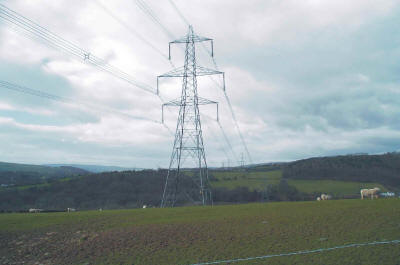
14.7.9. High voltage overhead transmission lines (275kV and above), their
carrying towers and other infrastructure can have a dominant visual impact
on the landscape. However, the careful design, layout, and landscaping of
new development could mitigate such effects. The Council recognises that
some concern has been raised over the perceived health risks associated with
overhead power lines (or Electro-Magnetic Fields), and it will have
particular regard to any relevant advice of the National Radiological
Protection Board (NRPB) and/or any competent UK/EU Public Agency (which may
be advised in any future Planning Regulations and national guidance), when
it considers any new underground or overhead HVP lines of 275kV and above.
Where it is not technically feasible and/or prohibitively expensive for
power lines to be diverted or placed underground, careful layout, design and
landscaping of proposed development co-ordinated with appropriate building
orientation should be used to minimise any adverse impact of towers and
cables. All proposals for development will be expected to comply with the
relevant electricity companies’ requirements and to fully meet any statutory
safety clearances which may be applicable and in force.
14.8. Water Supplies
14.8.1. Following the privatisation of the water industry, the management
of water supplies and sewerage services in the County Borough are now the
responsibility of Welsh Water/Dwr Cymru, (WW) now owned by Glas Cymru
a new 'not for profit' organisation. The Council continues to act in its
capacity as an agency of the company, and with respect to its delegated
responsibilities from the Environment Agency - Wales (EAW).
14.8.2. Strategic water supplies to the County Borough are provided by
means of a trunk main which abstracts from the Llyn Brianne Reservoir which
is situated in the Afon Tywi catchment in West Wales. However, this is
supplemented from local groundwater sources and rivers especially for
industrial purposes. The licensing and subsequent enforcement of water
abstractions from surface and groundwater sources is the responsibility of
the EAW. The latter also have a duty to secure the proper use of
water resources, including assessing the need for related developments and
ensuring that the most appropriate schemes are licensed. The EAW may
also enter into, and maintain operating arrangements with WW, and
collate and publish information from which assessments of actual and
prospective demands for water and available resources are co-ordinated.
‘Droughts’ are managed using a system of ‘Drought Permits, Drought Orders
and Environmental Drought Orders’ which are designed to optimise water
supply at times of shortage, while protecting the water environment.
14.8.3. The functions of the EAW with respect to protecting the
water environment, minimising flood risk and ensuring water quality are
addressed in the Environment Chapter (Sections
3.8 and
3.10 refer) which
also contains appropriate planning policies (Policies
EV16 and
EV17 refer).
14.8.4. In general terms, it is the view of the EAW and WW
that the planned overall growth in demand for water in the County Borough
should not be so great as to lead to any future shortages in supplies.
However it is important that any further new development continues to be
encouraged to seek locations which maximise existing provision and/or which
supplement current supplies without detrimental environmental impact i.e.
that water resources should be sustainably managed in order that future
changes in climate and resultant changes for water demand can be met in the
urban areas of Wales. Therefore:-
14.8.5. WATER SUPPLY DEMAND AND DEVELOPMENT
POLICY U6
DEVELOPMENT WHICH WOULD RESULT IN DEMAND FOR WATER THAT CANNOT BE MET
WITHOUT DETRIMENT TO EXISTING USERS, AND/OR WHICH WOULD CONFLICT WITH
POLICY
EV17, WILL NOT BE PERMITTED.
14.8.6. As in the remainder of Wales, land-use and water resources are
closely linked in the County Borough. Development in rural areas and its
economy require local water supplies to be available, however land drainage,
urbanisation and aforestation can all have a significant impact on the flow
of rivers, ultimately affecting reservoir catchments and groundwater
sources. Similarly, any increases in levels of water abstraction can have a
direct impact on biodiversity and the natural environment. It is the duty of
the EAW to balance these needs by means of their licensing regimes,
and water efficiency is seen as an essential element in achieving that aim.
The EAW are therefore seeking to promote water efficiency by both
urban and rural users, in order that they abstract only the quantities of
water which they ‘really do need’.
14.8.7. Housing and industry will remain the major urban consumers of
water supplies, therefore the Council will continue to direct new
development in the UDP primarily to the existing urban areas of the County
Borough, where the strategic network can provide the most efficient
economies of distribution and supply.
14.8.8. ENHANCING WATER SUPPLIES
POLICY U7
DEVELOPMENT WHICH WILL REINFORCE STRATEGIC OR LOCAL WATER SUPPLIES WITHOUT
HAVING A DETRIMENTAL IMPACT ON THE ENVIRONMENT WILL BE FAVOURED.
14.8.9. In rural areas of the County Borough, the agricultural industry
is the main user of water, and permitted development rights extend to
‘structures and excavations which are reasonably necessary for the purposes
of agriculture, within an agricultural unit of 5ha. or more’. A reservoir
for irrigating farmland would generally be regarded as reasonably necessary
for this purpose, however, the classification of an on-farm reservoir as an
‘excavation’ or a ‘building, structure or works’ would reflect the physical
form of the development. Where a planning application is required for the
construction of an on-farm reservoir the Council will therefore generally
favour it, provided that it will not adversely affect interests of
acknowledged environmental importance, that the necessary safeguards are
observed throughout its construction, and it is appropriately landscaped to
maintain local visual amenity.
14.9. Sewerage Facilities and Sewage Disposal
14.9.1. Domestic and industrial sewage disposal in the County Borough
takes place at the main sewage treatment works (STWs) upstream from the
River Ogmore estuary (the Penybont STW), and in the Llynfi Valley (at the
Lletty Brongu STW).
14.9.2. There remains substantial capacity for further input into the
Penybont STW even after the connected improvements and reinforcements, which
have been carried out during the last 15 years to the strategic sewerage
facility network (at Porthcawl, Pencoed and Kenfig Hill/Pyle), have been
incorporated.
14.9.3. Improvements are also underway in the Llynfi Valley sewerage and
water catchment area where the Lletty Brongu STW (which has a close
relationship with the nearby ‘Fort James’ Paper Mills) is to be up-graded,
and a number of schemes (which include the upgrading and replacement of
sewers in places, and the construction of new combined storm water overflow
structures, storage tanks etc. at locations progressing down the valley from
Caerau in the north) is already underway. The former Marlas STW at Pyle was
abandoned in 1992, and foul sewage from that area is now dealt with at the
new Afan Waste Water Treatment Works and associated outfall in the
neighbouring Neath/Port Talbot County Borough.
14.9.4. SEWAGE DISPOSAL AND DEVELOPMENT
POLICY U8
DEVELOPMENT WHICH CANNOT BE ECONOMICALLY AND ADEQUATELY SERVED BY EXISTING,
OR PROPOSED MAINS SEWERAGE AND/OR TEMPORARY SEWAGE DISPOSAL FACILITIES, WILL
NOT BE PERMITTED.
14.9.5. In order to protect the environment and local amenities from
potential pollution and detrimental impact, the Council considers that all
new development should seek locations which utilise existing and proposed
sewerage infrastructure provision where there is sufficient spare capacity
in the system to accommodate its needs. Proposed development at sites, or in
areas, where neither mains services nor temporary sewage disposal facilities
can be economically and adequately provided, will not therefore be favoured.
Policy U8 will particularly apply to housing proposals in rural areas
(except those which have been proved to be necessary for agricultural or
forestry purposes) in rural areas where problems of permanent connection to
the mains sewerage network of the County Borough may not be economical, or
would present long term pressures on public resources.
14.10. Telecommunications Services
14.10.1. It is the Government’s policy that people should have access to
a greater choice of provider and range of telecommunications services,
provided that the environmental impact of that industry’s infrastructure is
minimised. The latter can be achieved through mast and site sharing,
sensitive design, location, and securing sites for shared use by operators.
Pre-development discussions with the local planning authority, reference to
the Welsh Assembly Government's Code of Best Practice on Mobile Phone
Network Development (2003), and consideration of land-use planning and
electromagnetic field data will also assist in achieving these aims.
14.10.2.The Council acknowledges that up-to-date telecommunications
facilities are increasingly important to the well-being of local services
and the economy of the County Borough; and due to advances in technology may
reduce the need for physical journeys. Therefore, it will continue to
facilitate the growth of new and existing telecommunications systems through
its planning policies, which assess the provision of suitable sites for
proposed installations, having had regard to the technical and operational
considerations of the industry, while taking into full account any intrusion
or impact of development upon the environmental amenity of neighbouring
areas.
14.10.3. DEVELOPMENT FOR TELECOMMUNICATIONS
PURPOSES IN PRINCIPLE
POLICY U9
DEVELOPMENT FOR TELECOMMUNICATIONS PURPOSES WILL BE PERMITTED ONLY WHERE:-
1. SUBJECT TO TECHNICAL AND LEGAL LIMITATIONS, ITS SITING AND DESIGN WOULD
MINIMISE ANY HARM TO THE CHARACTER AND APPEARANCE OF THE TOWNSCAPE OR
LANDSCAPE OF THE SURROUNDING AREA OR TO VIEWS FROM ELSEWHERE;
2. ALL PRACTICABLE POSSIBILITIES OF SHARING EXISTING FACILITIES (INCLUDING
MASTS) AND SITES HAVE BEEN FULLY EXPLORED AND DEMONSTRATED TO BE UNSUITABLE;
3. WHERE NECESSARY, IT CAN BE ADEQUATELY LANDSCAPED AND/OR SCREENED; AND
4. IN THE CASE OF TV/RADIO MASTS AND SATELLITE DISHES, THERE ARE NO
ACCEPTABLE OPTIONS FOR ERECTING ANTENNAE ONTO EXISTING BUILDINGS, STRUCTURES
OR SITES.
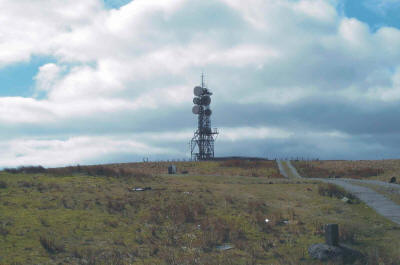
14.10.4. The installation of many telecommunications systems is covered
by permitted development rights, which may be subject to the Council’s prior
approval of details of siting and appearance. Nevertheless, it will expect
all new developments for telecommunications purposes to be sited and
designed, subject to technical and legal limitations, in a manner which will
retain the environmental quality, character and appearance of the landscape
or townscape in which they are proposed, and without detrimental impact or
harm locally to the environment either during construction or in the
post-development/maintenance periods. Similarly, proposals should not
diminish the visual amenity of those areas when they are viewed from
elsewhere.
14.10.5. Telecommunications operators are encouraged to investigate all
options to share existing facilities and sites in order that visual
intrusion into the natural and built environment is minimised.
Notwithstanding this, proposals for shared facilities whose cumulative
impact on existing buildings or structures would create visually obtrusive
features will be firmly resisted by the Council. Conversely, masts, dishes
and antennae which blend in with their backgrounds, and/or which are sited
as far as practicable to minimise their impact on the amenity and external
appearance of buildings will be encouraged. Sensitive landscaping or
screening of infrastructure (which may incorporate innovative designs in
keeping with their localities) will also be favourably considered. The
Council is compiling a list of sites in the County Borough which are
currently occupied by telecommunications' facilities. The National Land Use
database also contains similar information.
14.10.6. CONSTRAINTS ON THE LOCATION OF
TELECOMMUNICATIONS DEVELOPMENTS
POLICY U10
BEARING IN MIND THE TECHNICAL AND LEGAL REQUIREMENTS OF THE
TELECOMMUNICATIONS INDUSTRY, PROPOSALS FOR NEW TELECOMMUNICATIONS FACILITIES
SHOULD NOT ADVERSELY AFFECT:
1) THE NATURAL BEAUTY OF THE GLAMORGAN HERITAGE COAST;
2) THE NATURE CONSERVATION INTEREST OF THE KENFIG cSAC;
3) THE NATURE CONSERVATION INTEREST OF SSSIs;
4) THE CHARACTER, APPEARANCE OR SETTING OF CONSERVATION AREAS, ANCIENT
MONUMENTS OR LISTED BUILDINGS.
<<
Previous Chapter |
Next Chapter
>> |